Menu
Stories
Perspectives

Community-led monitoring in forest-risk commodity supply chains

RECOFTC is helping answer the practical question of how the next generation of farmers can be part of the solution – supporting agroforestry compliance efforts through digital data and infrastructure.
Community-led monitoring in forest-risk commodity supply chains

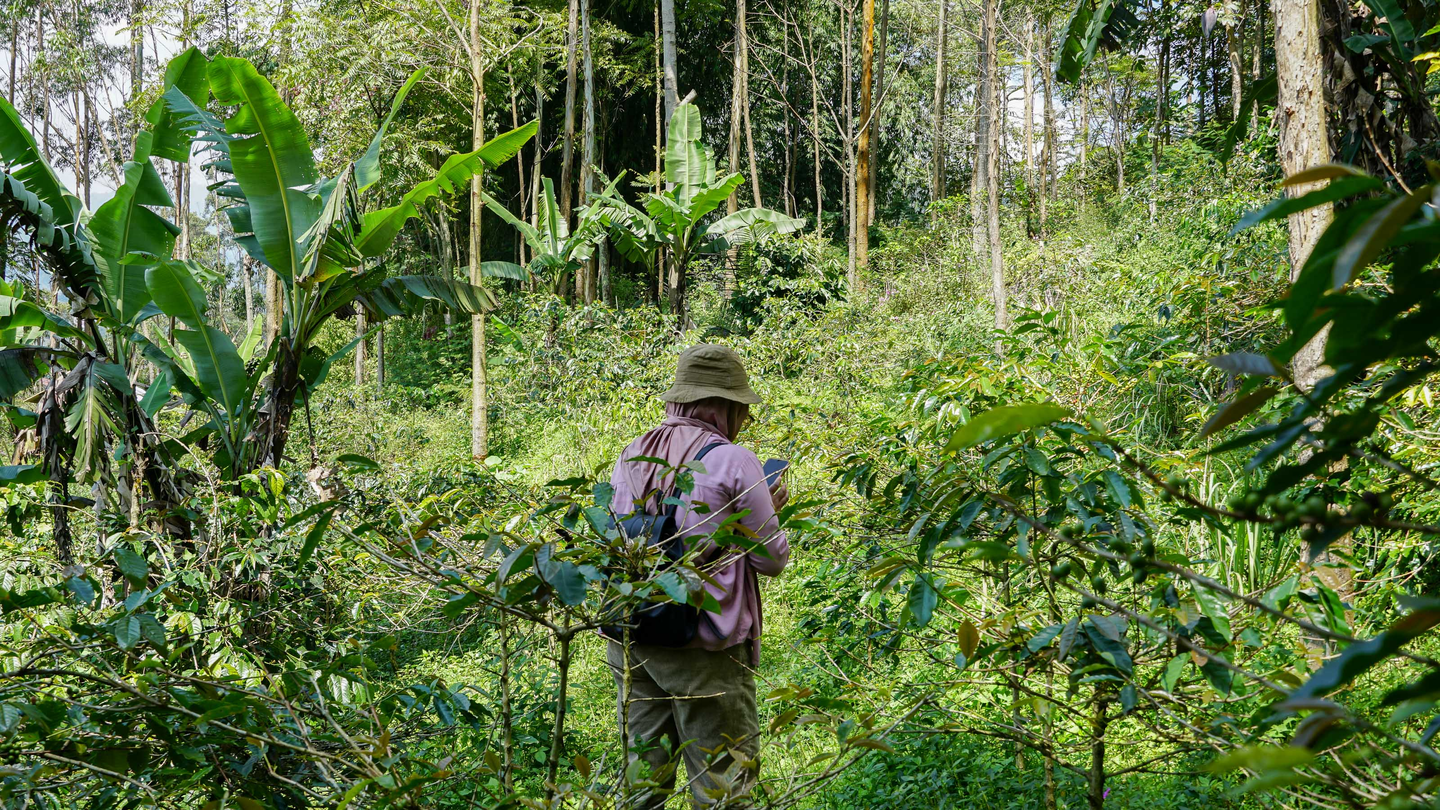
Across Myanmar, Indonesia and Viet Nam, a shared approach is taking shape. In villages in Lam Dong, Viet Nam and Lebakmuncang, Indonesia, where coffee is the main cash crop, and in villages around Inle Lake, Myanmar, where avocado dominates, sons and daughters of smallholder farmers are walking their parents' farms with smartphones. They record soil cover, agrochemical use, intercrop composition, water management practices and plot boundaries – generating information that buyers, certifiers and governments increasingly require. The data is entered into a shared mobile application managed by cooperatives and communities. 

This is the type of information sought under regulations such as the European Union Deforestation Regulation (EUDR) and certification systems such as the Forest Stewardship Council (FSC), the Roundtable on Sustainable Palm Oil (RSPO) and the Common Code for the Coffee Community (4C). It is also information that farmers and cooperatives can use for their own planning, learning and decision making.

New compliance rules and the risk of smallholders being left out
local youth surveyors have mapped coffee farms, collecting data on farm productivity, coffee varieties, management practices, soil conditions and traceability.
In Indonesia, local youth surveyors have mapped coffee farms, collecting data on farm productivity, coffee varieties, management practices, soil conditions and traceability.

By this time next year, the EUDR will require all producers and traders – including micro and small operators – of commodities such as cattle, cocoa, coffee, oil palm, rubber, soy and wood to demonstrate that their products are not linked to deforestation. Similar due-diligence requirements are emerging in other markets.

Smallholders face a real risk of being excluded from these supply chains. Independent oil palm smallholders in Indonesia, for instance, contribute about a third of regional production but only seven per cent of certified mill supply. For companies, when the cost of reaching smallholders is too high, sourcing from larger plantations becomes the easier option. For smallholder producers, the cost of adapting is often too high.

The question then is not  whether smallholders need support. It is whether they become recognized producers in compliance-driven supply chains or are pushed into less-regulated, lower-value markets where they have less bargaining power. There is a clear need to shift away from data extracted from smallholders to satisfy external requirements towards data collected and controlled by smallholders themselves. 

For RECOFTC, working with local partners to adapt participatory monitoring and learning approaches to different commodities and landscapes is key. While governments, certification bodies and international initiatives are developing traceability systems and compliance frameworks, our contribution is at the community level. We are helping farmers, cooperatives and local organizations build the capacity to collect, manage and use the information that increasingly shapes access to markets.

Three countries, one approach
Farmer Champions and youth volunteers have mapped 724 avocado plots across five villages.
In Myanmar, Farmer Champions and youth volunteers have mapped 724 avocado plots across five villages.

In Inle Lake, Myanmar, we are partnering with the Myanmar Avocado Organization to support Farmer Champions and the Pa'O Baby Avocado Network (Pado-Net) in monitoring indicators covering biodiversity, soil and water, pesticide and fertilizer use, and livelihoods. 

Building on the Farmer Field School approach first pioneered by the Food and Agriculture Organization (FAO), we are working with Farmer Champions to record conditions on individual farms, including soil cover, native flora and pollinators, water management, agrochemical use, intercrop composition, and household income. Pado-Net compiles and manages the aggregated data. 

So far, Farmer Champions and youth volunteers have mapped 724 avocado plots covering 509 hectares across five villages. This information is helping producers organize farm records, strengthen cooperative management and engage more effectively with buyers. Zaw Oo, a Farmer Champion from Tha Pyae Kone village, explains, “Recording data such as avocado farm area, number of trees and intercropped species has helped us understand and manage our farms more systematically. Seeing our plots on a map for the first time has given us a clear picture of our farms and made us more confident in our work.”

In Lebakmuncang, Ciwidey, Indonesia, 12 local youth surveyors have mapped 225 coffee farms in collaboration with the Koperasi Caringin Bumi Asih Cooperative and the Tambag Guruyung forest management group. The data, collected till April 2026, includes statistics on farm productivity, coffee varieties, management practices, soil conditions and traceability – all information needed for potential export markets. 

The week after the survey concluded, the 12 youth surveyors were invited to join the cooperative as formal management staff to support digital data collection and marketing. The intergenerational collaboration and cross learning has been extremely valuable. Kang Yana, leader of the Koperasi Caringin Bumi Asih Cooperative, reflected on the value of the process, “We didn't have traceability data ready when a buyer asked for it. But that showed us exactly what buyers want, and we are now building it, so that the next time a buyer asks, we can say yes.”

In Lam Dong, Viet Nam, the Đa Nghịt Cooperative works with Cil coffee farmers, including through our ‘Chain of changes’ project. Farmers have been monitoring indicators such as tree density, soil cover, soil quality, agrochemical use and income from coffee and intercrops. Farmers are also tracking practices such as organic fertilizer production and coffee rejuvenation. 

These records allow farmers and the supporting project to compare practices and results among households, learn from one another and adapt production practices over time. Cil Ha Sip, deputy chair of the Board of Directors of Đa Nghịt Cooperative notes, “Through the participatory monitoring, evaluation and learning data collected every quarter, we can better understand members’ farming practices. We can then identify farmers who meet production requirements and connect them with high-quality buyers. The data also helps us provide more suitable support to each household.”


Partnership terms that work both ways

What links these three examples is not the commodity, but the architecture. Where supply chains requires it, plot mapping complements the farm practice data. And the Farmer Field School approach anchors community-led research and learning. These practices complement each other and differentiate the current work from a conventional monitoring exercise. Farmers are identifying indicators that align with market and legal requirements, testing them on their plots and can adjust practices based on what they observe.

Producers are creating the evidence they need to ensure market access, strengthen negotiating power and demonstrate the value of sustainable production practices. In the process, they are also creating value for buyers and investors by investing in and instituting systems and processes that provide greater confidence in legality, sustainability and traceability.

Leveraging four decades of community-based forestry experience
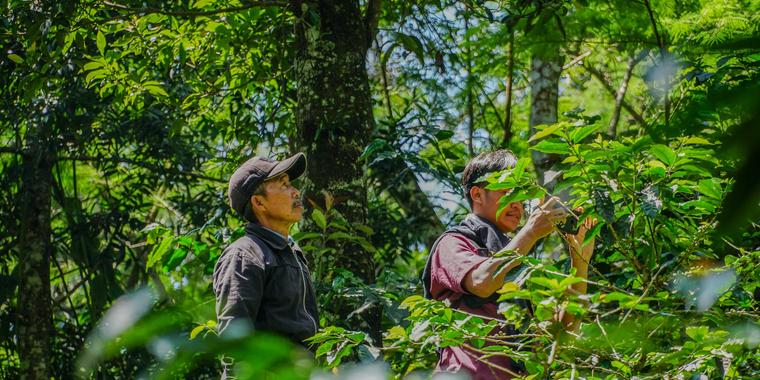
In Lam Dong, Viet Nam, the Đa Nghịt Cooperative works with Cil coffee farmers.

The technical systems behind compliance, open-source digital public infrastructure, satellite verification, certification standards and national traceability platforms are being built elsewhere – by global initiatives, national governments and the certification bodies themselves. 

We work at the village level, connecting communities, governments and supply chains. We are helping answer the practical question of how the next generation of farmers – the sons and daughters who already hold the smartphones – can be part of the agroforestry workforce. Younger generations, with their native digital literacy and guidance on market mechanisms, can produce and process the data the cooperatives need to comply and negotiate collectively with buyers.

These efforts are situated within RECOFTC’s larger body of work at the landscape level. As Secretariat of the Regional Model Forest Network–Asia, we have been supporting Model Forests across Asia to co-develop and refine the indicators by which sustainable, equitable landscape management is measured. The experience of the youth from Koperasi Caringin Bumi Asih in Indonesia, the Pado-Net of Myanmar and the Đa Nghịt cooperative's efforts in Viet Nam are giving us early signals of how these indicators can perform when smallholders themselves hold the data. Each community is adapting the approach to its own conditions. Across landcapes, what we are learning is that empowering smallholders to comply and empowering them to negotiate are the same work.

Young women working on monitoring via cell phone

 ###

Martin Greijmans is programme lead for ‘Increased economic benefits for communities’ at RECOFTC.

Story details

Thematic area
Economic benefits for communities
Geographic focus
Indonesia
Myanmar
Viet Nam