Menu
In focus

Bhutan meeting signals new chapter for Asia’s Model Forests

Representatives from Wokhu Damchi Community Forest
Representatives from Bhutan's Department of Forests and Park Services and Wokhu Damchi Community Forest sharing insights on their landscape with Model Forest members.

The 2026 annual advisory committee meeting of the Regional Model Forest Network–Asia (RMFN–Asia) in Paro, Bhutan brought together representatives from eight Model Forests – landscapes where diverse stakeholder groups manage natural resources under a shared strategy. The meeting marked two years since RECOFTC took on the role of Secretariat for RMFN–Asia.

Representatives from Model Forests located in China, India, Japan, Indonesia, the Philippines and Thailand came together at the event to strengthen partnerships, explore Bhutan’s interest in joining the network and review progress under RMFN–Asia’s Strategic Plan 2025–2030.

Speaking at the event, Preecha Ongprasert, Director of Forestry Foreign Affairs at Thailand's Royal Forest Department and Chair of the RMFN-Asia, said “Bhutan is renowned for its profound commitment to forest stewardship. Here we have a unique opportunity to learn from each other, Model forests and Bhutan alike, for a more sustainable future.”

With more than 70 per cent forest cover and a development vision grounded in Gross National Happiness, Bhutan offers a compelling example of how people, forests and landscapes can thrive together. Its forests store more carbon than they emit, making Bhutan one of the few carbon-negative countries in the world.

“Our forests embody the spirit of Gross National Happiness,” said Karma Tenzin, Director of the Department of Forests and Park Services in Bhutan's Ministry of Energy and Natural Resources. “It is this philosophy that we hope will enrich our collective dialogue on the Model Forest approach.”

The Wokhu Damchi Community Forest landscape.

Partnerships for progress

The Model Forest concept was developed by the Government of Canada in the early 1990s to bring stakeholders together to manage forest landscapes sustainably. Its early success led Canada to launch the International Model Forest Network (IMFN) to encourage other countries to explore the approach’s potential. Established in 2000, RMFN–Asia is one of six regional networks under the IMFN.

During the annual advisory committee meeting, representatives of the Asian Model Forests presented their achievements from the past year, particularly across the four focal areas of the RMFN-Asia’s Strategic Plan: climate resilience; forest landscape restoration and livelihoods; gender, youth and social inclusion; and sustainable finance.

The meeting also brought together partners including representatives from Model Forest networks in in the Mediterranean and northern Europe, the IMFN Secretariat in Canada, the Center for International Forestry Research and World Agroforestry (CIFOR-ICRAF), the International Union for the Conservation of Nature (IUCN), the Asia-Pacific Network for Sustainable Forest Management and Rehabilitation (APFNet), and Kasetsart University Faculty of Forestry.

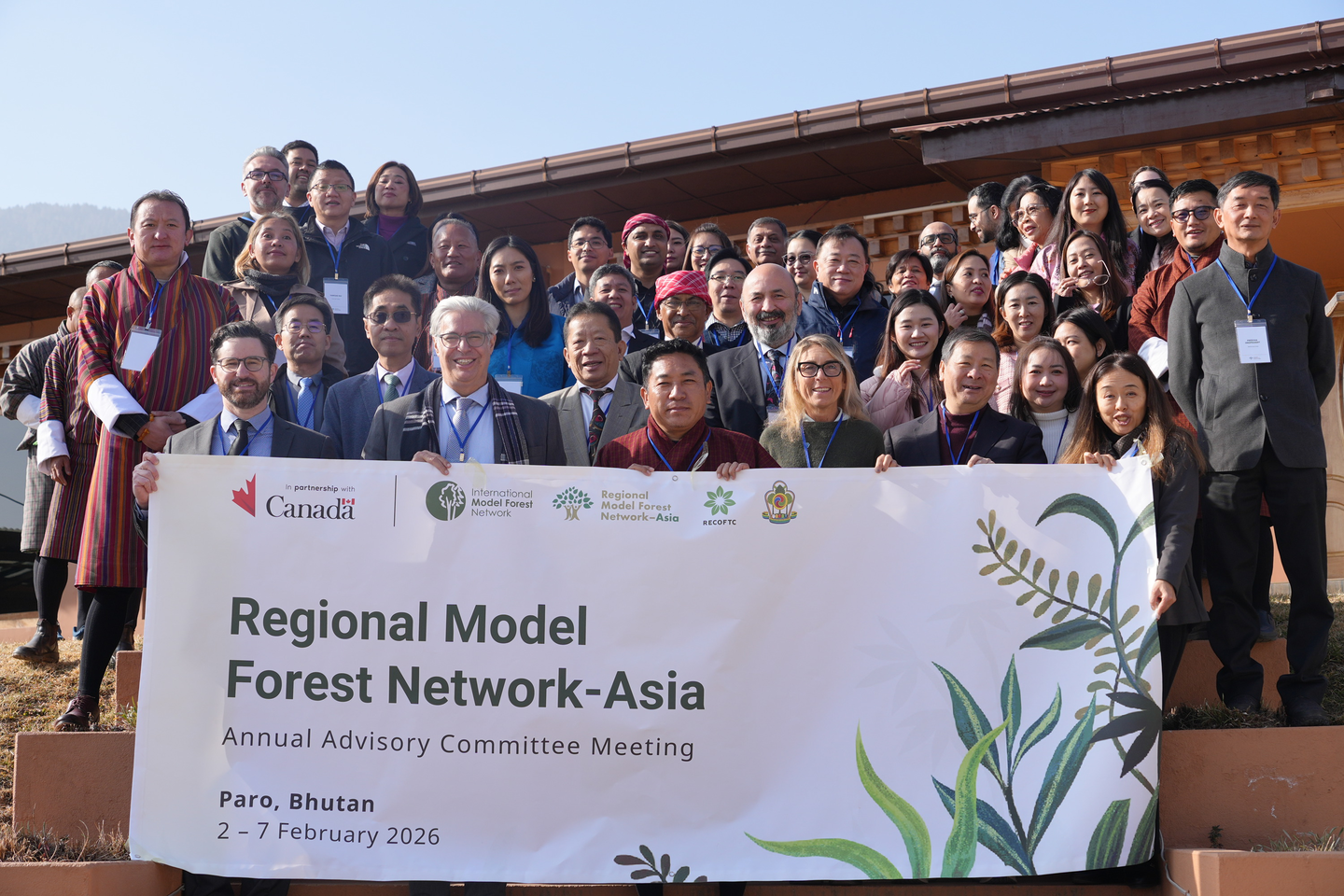
Group photo at RMFN–Asia's 2026 annual advisory committee meeting
Group photo at RMFN–Asia's 2026 annual advisory committee meeting in Paro, Bhutan.

The Mediterranean Model Forest Network and the European Boreal and Temperate Model Forest Network identified shared areas of interest with RMFN–Asia, spanning forest therapy, ecosystem services, landscape restoration and forest-water management. The IUCN led sessions on forest landscape restoration, gender-responsive approaches and effective communication for community forestry. CIFOR-ICRAF presented work on bringing lessons from Model Forests into academic and professional education. Similarly, Kasetsart University showcased achievements in sustainable forest landscape management through education and research.

The Asia-Pacific Network for Sustainable Forest Management and Rehabilitation (APFNet) also participated. APFNet introduced its work promoting sustainable forest management across the Asia-Pacific region and identified opportunities for collaboration with RMFN–Asia on landscape restoration, community-based fire management and knowledge sharing.

Strategy and framework for monitoring progress

“Since the RMFN-Asia Secretariat was established, communication and collaboration with other supported partners have significantly improved,” said John Novarly, from Margowitan Model Forest in Indonesia. “The Secretariat has also opened up pathways for resource mobilization that were not as accessible before.”

RECOFTC has supported RMFN–Asia to develop its five-year strategy and the Model Forest Indicator Framework, which monitors progress by measuring indicators of ecosystem health, human wellbeing, good governance and production.

Representatives of Ngao Model Forest in Thailand and Carood Watershed Model Forest in the Philippines shared experiences from pilot testing the monitoring framework, reporting positive trends over the past five years. In Ngao, community members described marked improvements in forest condition, with greater availability of bamboo shoots and mushrooms, and diverse tree species. In Carood, production systems have become more organized, biodiversity awareness has increased, and governance and community participation have strengthened.

Presenters also highlighted challenges, including gaps in capacities for data management and analysis.

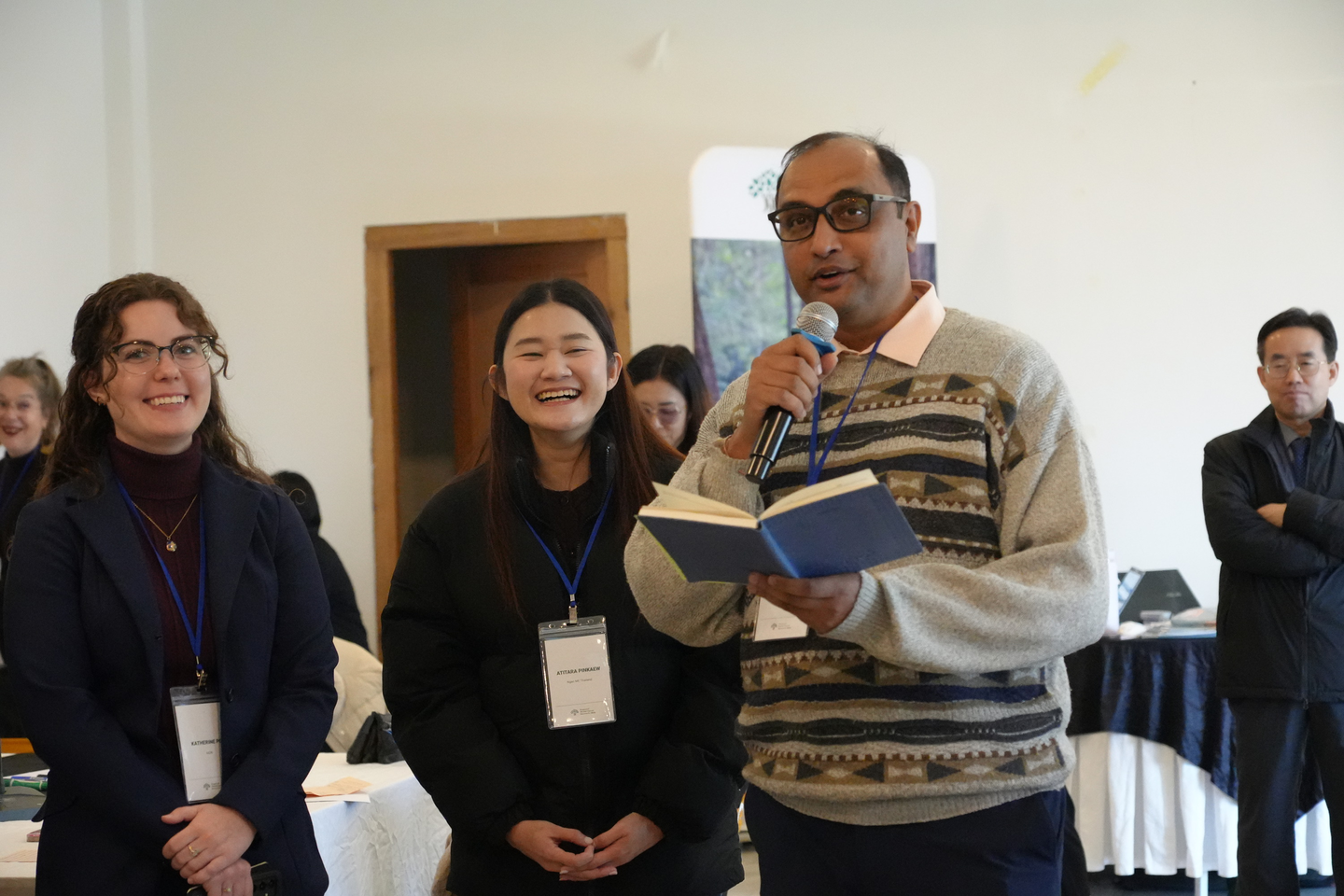
Model Forest members and partners exchanging their insights on the Model Forest Indicator Framework. 

A new Model Forest

The meeting was an important step in Bhutan’s journey toward establishing its own Model Forest. Participants visited the candidate site – the proposed Punakha–Wangdue Model Forest landscape – where they met with local stakeholders and learned about community forestry, sustainable agriculture and eco-tourism practices.

The proposed landscape is notable for its exceptional ecological diversity, hosting eight distinct forest cover types and flagship wildlife species such as snow leopard, tiger, red panda, takin, black-necked crane, and the white-bellied heron.

Participants travelled to the Wokhu Damchi Community Forest, which has 35 members and a woman village head. The primary sources of income for the community forest members are agriculture and the collection of non-timber forest products. They all take part in the conservation of the forest and have access to its resources.

Following the meeting, Bhutan submitted a letter of intent to establish the Model Forest and join the IMFN. “Joining the network would provide us access to global best practices and innovation in forest governance,” said Sonam Tobgay, Chief Forestry Officer for the Forest Resources Planning and Management Division of Bhutan’s Department of Forest and Park Services.

“This would also strengthen partnerships for research, funding and capacity building for sustainable forest management in the country,” he said. “We could share Bhutan's experience in terms of linking policy, culture and community led conservation as a model for resilience.”

###

The Regional Model Forest Network–Asia is supported by the Global Leadership Program under the Department of Natural Resources, Government of Canada. RECOFTC is the Secretariat of RMFN–Asia.

Story details

Thematic area
Climate change
Economic benefits for communities
Gender equality and social inclusion
Governance and rights
Geographic focus
Regional