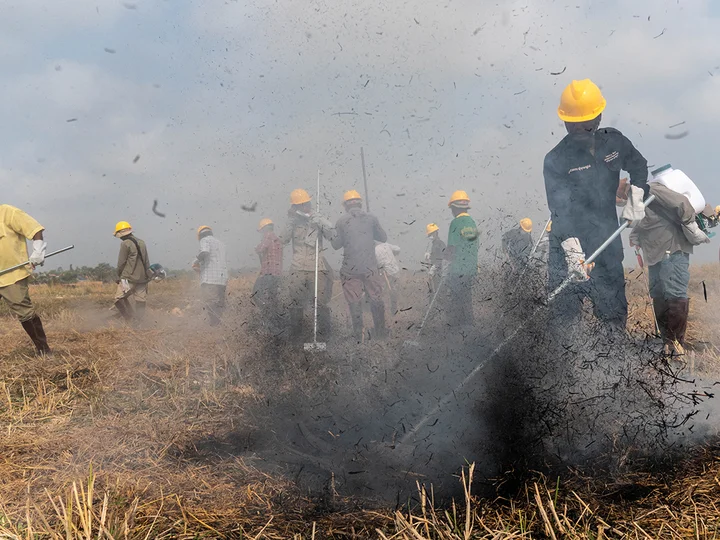
Resilient communities, equitable and sustainable forest landscapes
What we do

We strengthen capacities, rights and governance to ensure that local people can maintain and benefit equitably from sustainable forest landscapes in the Asia-Pacific region. We do this through training, network building, research, demonstrating landscape interventions, convening, policy analysis, advocacy and outreach. We collaborate with governments, communities, businesses, academia and civil society organizations.
By addressing climate change, advancing gender equality, promoting good governance and fostering economic benefits for communities, we strive to contribute to building resilient communities and equitable and sustainable forest landscapes.

Climate change adaptation and mitigation
With global temperatures rapidly threatening to overshoot the 1.5-degree limit set in Paris, the need to mitigate greenhouse gas emissions while simultaneously adapting to climate change is more pressing than ever.
Climate change mitigation through nature-based solutions is an important part of RECOFTC’s overall approach, underscored by Indigenous Peoples’ and local communities’ rights, tenure, participation and fair benefits.
Our climate mitigation engagement strategy includes engagement with carbon markets. This includes voluntary carbon markets, jurisdictional initiatives and compliance markets. It is essential that forest carbon initiatives strive for and adhere to the highest integrity standards for people and the environment.
Recognizing that irrespective of our mitigation effectiveness, we will still need to grapple with climate change impacts, we are advancing adaptation models that are anchored in forest landscapes.
Our landscape-based approach recognizes that for land management to be truly sustainable and fair, multiple stakeholder groups and sectors must find opportunities to establish their respective and shared priorities and concerns.

Gender equality and social inclusion
Marginalized groups, including women, youth, Indigenous Peoples and local communities are often the custodians of forest landscapes. However, they have inequitable rights and limited access to justice and resources, with only very few in positions of authority and decision-making.
Sustainable landscape management practices become possible through efforts towards gender equality and social inclusion, leading to effectively managed and sustainable forests.
RECOFTC promotes inclusive participation in policy formulation and implementation of sustainable landscape management and community forestry. We do this through awareness raising, communities of practice, multistakeholder dialogues, trainings and the integration of gender equality and social inclusion into government priorities.
To amplify our efforts in gender equality and social inclusion, we train trainers, support university curricula and partner with civil society and non-governmental organizations.
We work with communities to help create safer and more inclusive environments in forest landscapes where women’s participation and leadership flourish and contributions of marginalized groups are valued.

Governance and rights
Good forest governance improves livelihoods, fosters social equity and ensures sustainable forest management. RECOFTC’s work on governance is built around three pillars – policies, legislation and institutions; participation in decision making; and implementation and enforcement.
We champion inclusive decision-making and multi-stakeholder processes that provide communities with a significant voice in the management of their natural resources. We work with governments and the private sector to ensure the development of strong social and environmental safeguards.
We advocate for clear, comprehensive and inclusive policy, and legal and institutional frameworks that recognize and protect the rights of communities in forest governance. Our work encourages coordination between government agencies with distinct roles and mandates.
We support long-term processes that ensure the rights of Indigenous Peoples and local communities to ensure secure land and forest tenure arrangements. We help implement mechanisms that provide free access to information on rights, forests and resources.

Economic benefits for communities
Inclusive community enterprise development ensures that the direct and indirect outcomes of benefit-sharing mechanisms flow to all community members.
With tenure secured, communities are motivated to invest in sustainable forest management over longer time periods. Similarly, with technical services and enabling policies, communities can access finance for enterprise development and organize themselves into networks to attract private sector investment.
Continuous capacity development and monitoring ensure that governance principles are abided by and that all community members continue to benefit.
RECOFTC advocates for sustainable natural resource management practices across forest landscapes in Asia. Our work on livelihood and enterprise development builds market access, promotes self-sufficiency and helps provide foundations for legality among Indigenous peoples and local communities.
We support capacity development and long-term processes that increase trust and enable sustainable partnerships among communities and the private sector. RECOFTC’s facilitation ensures that expectations of both communities and the private sector are reflected in partnership agreements.
Our approaches
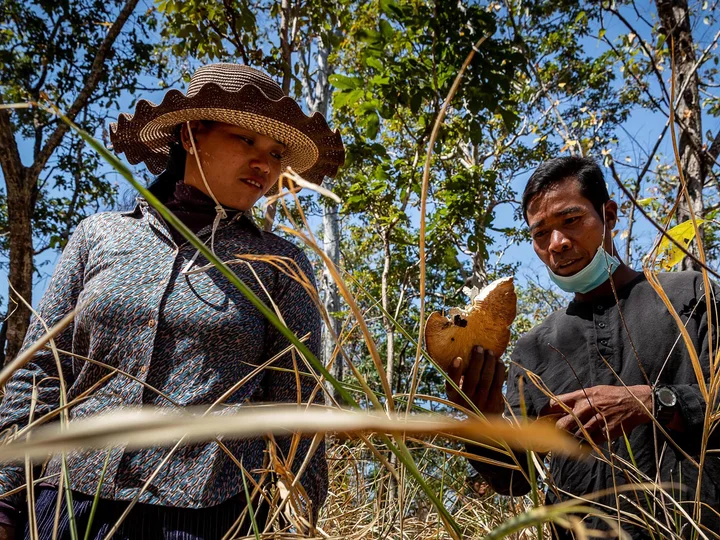

Climate and conservation financing for IPLCs

Nature based solutions