
A knowledge tree for decision making for effective, efficient and equitable social forestry
The social forestry knowledge tree

What is the knowledge tree?
The knowledge tree is a rich source of information about social forestry practices in Southeast Asia.
It is a compilation of intelligence gathered by the ASEAN Working Group on Social Forestry since 2005. The work of partners under the ASEAN Swiss Partnership on Social Forestry and Climate Change has enriched this body of knowledge.
The knowledge tree supports decision-making processes during the design and implementation phases of effective, efficient and equitable (3E) social forestry.
It also contributes to the United Nations Sustainable Development Goals by achieving multidimensional social, economic and environmental outcomes in an effective, efficient and equitable way.

Contextual Building Blocks
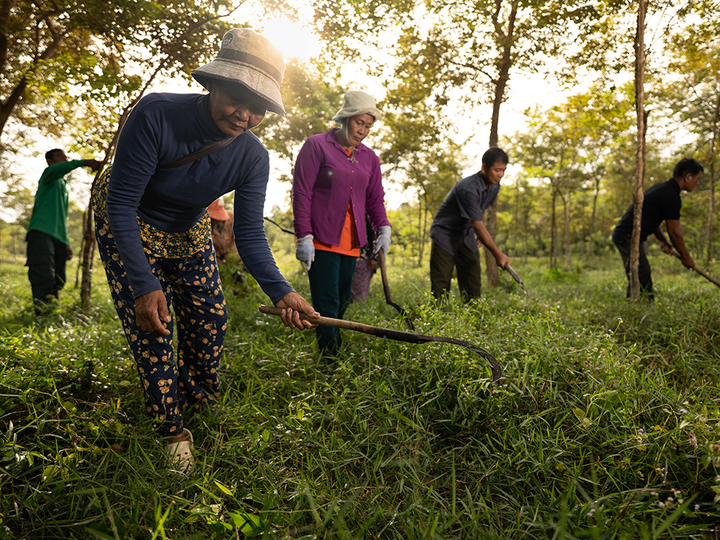
Social forestry operates in a specific context and involves people with varied values and interests. It is important to understand this when planning social forestry programs to ensure they are implemented following the 3E criteria.
Successful social forestry programs include the following contexts:
- Local aspirations
- Rights and tenure
- Forest potentials
- Capacities and institutions
- Enabling policies
- External actors and markets
These contexts are not necessarily sequential and do not guarantee a particular set of outcomes. Each context, question and resource can be used independently depending on the needs and interests of users.
Under each context, there is a set of checklist questions and resources.
The checklist questions are framed around the 3E criteria to consider when planning, implementing and evaluating social forestry programs. They are not exhaustive and exclusive within each context.
There may be cross-cutting questions, and other questions may be relevant to some users. The resources include evidence, lessons learned and tools that can be used as reference or adopted and adapted as needed.






What is ASFCC
ASEAN-Swiss Partnership on Social Forestry and Climate Change
Contributing to food security through sustainable, efficient and effective use of land, forest and aquatic resources