Menu
Stories
Practitioner's insights

The invisible bridges behind effective community forest management

For two decades, RECOFTC Cambodia has connected communities, government and other stakeholders to strengthen community forestry and community-protected areas through neutral facilitation
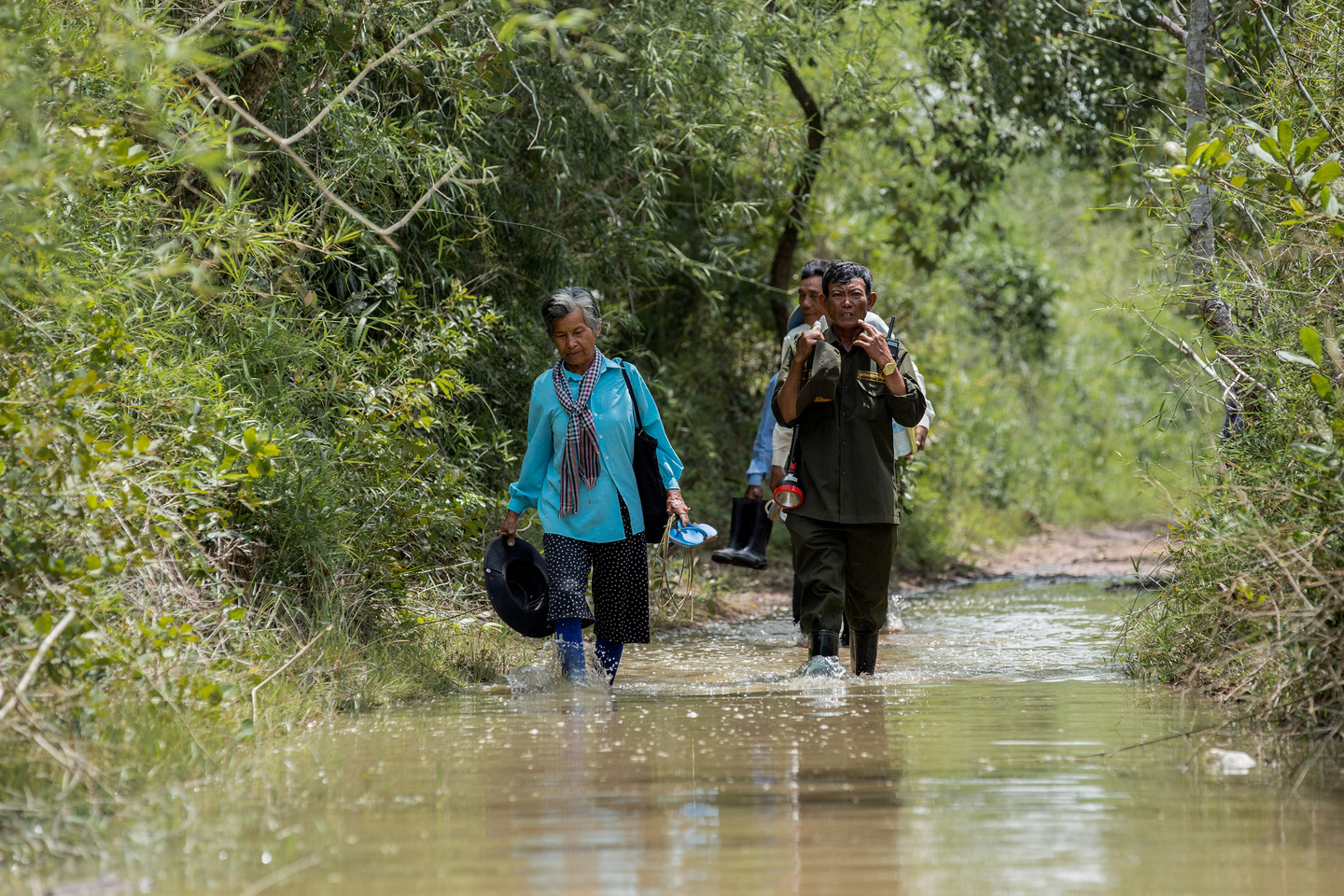
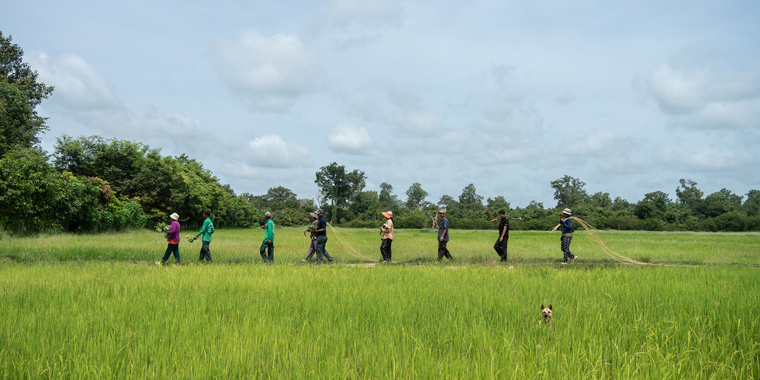
Landscape and community harvest rattan

Search online for images of ‘community-based forest management’ and you will usually find pictures of people planting trees, patrolling forests or posing with harvested products. Something more difficult to capture with a camera is the easily overlooked but equally important work of bringing people together.

In Cambodia, community forestry and community protected areas require cooperation between village-level institutions, government agencies, civil society and, increasingly, the private sector. Progress often depends on helping these disparate groups understand each other and work effectively together. This is a role RECOFTC Cambodia has played for more than 20 years as a neutral facilitator.

Facilitation is one of those unhelpful terms of development jargon that can mean almost anything. For us, it means bridging gaps between different groups in ways that foster shared ownership, address conflicts, harness the power of networks, and ensure policies fit on-the-ground realities.

Our aim is to promote and support the effective and equitable implementation of community-based natural resources management. Rather than carrying out every activity ourselves, we connect communities with government agencies that have technical expertise and legal authority, while working alongside nongovernmental organizations (NGOs) and development partners that can provide financial support and practical assistance.
Building stakeholder relationships

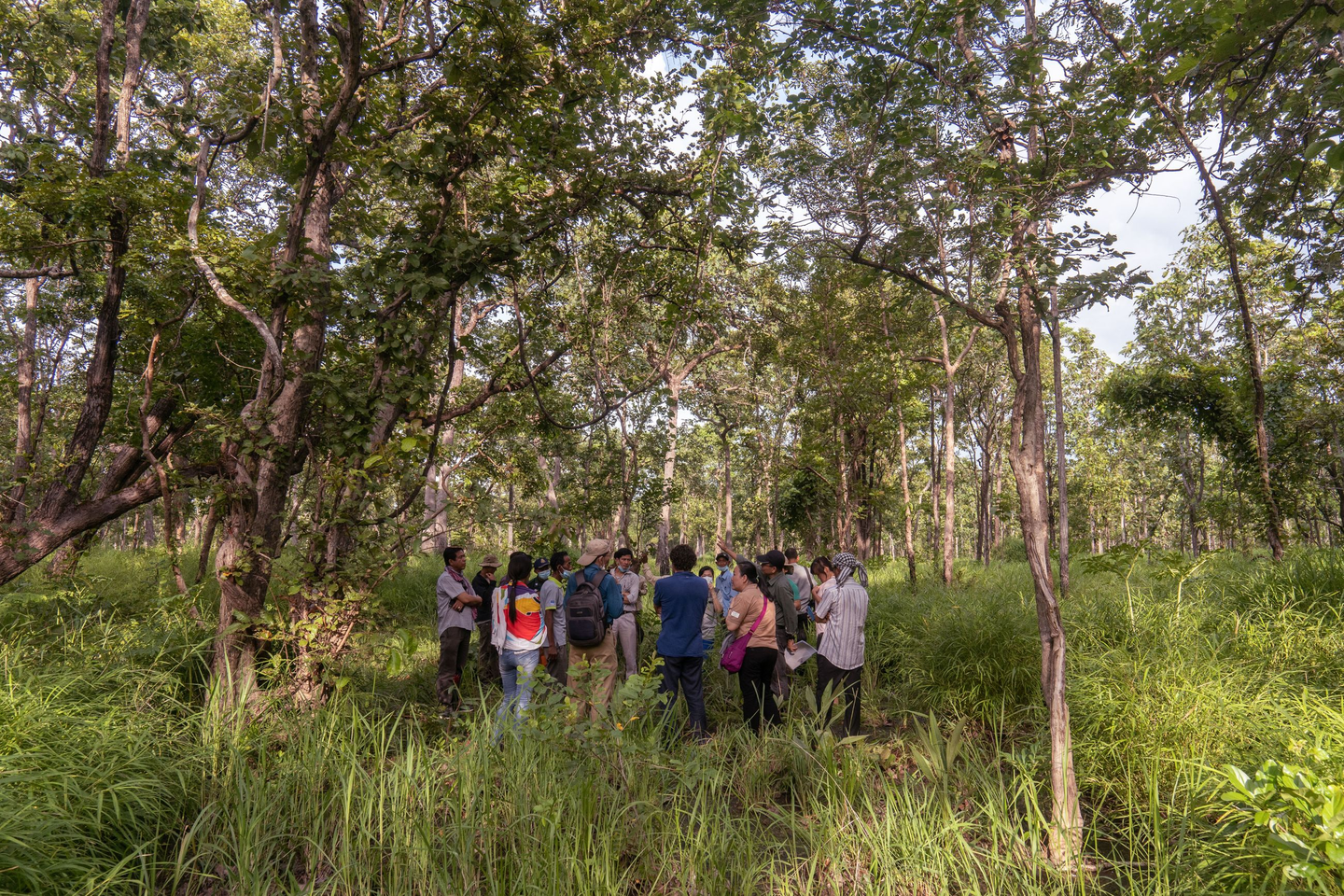
A donor and partner visit to O Tanoeung community forest in Kratie province to learn about their progress and challenges

Our approach has emerged from observing that many well-intentioned initiatives do not always have lasting impacts. Where donor-funded organizations working with communities involve government agencies only at the end of the process, the initiatives lose momentum once the projects end. Without government ownership, community rights remain insecure.

Collaboration must be present from the start. Improving relationships between stakeholder groups is among the most valuable outcomes of facilitation. Communities need government agencies to provide legal recognition and technical support. Government agencies need communities to manage local forests effectively. And while NGOs can provide funding, technical expertise and capacity building, they need to understand and operate within the legal framework.

Instead of working with communities, government officials and NGOs in parallel, we bring them together. In our earliest training sessions, discussions could become tense, with NGO participants blaming government agencies for failing to recognize their work and government officials questioning why they should approve projects they know little about.

Using practical exercises and real-world cases, we have worked to help each group understand the others’ perspectives, roles, rights and responsibilities, shifting conversations from blame to collaboration.

Over the years, we have also helped establish provincial and national community forestry networks, federations of community protected areas, and women’s networks that enable community representatives to share experiences, solve common problems and support one another.

These networks create opportunities for peer learning that continue long after individual projects have finished. It is a measure of success that these networks increasingly function without our direct involvement.

Addressing conflicts

Facilitation also means helping to resolve difficult conflicts. We have done this at several points. In the 2010s, in Pursat province, during a disagreement about the location of a community forest that overlapped with a land concession, we brought government officials to see the site, together with representatives of the company holding the concession. We supported the community to provide evidence of their claims to the land in a meeting. This enabled the stakeholders to find a solution together and resulted in the community gaining secure rights to that site.

More recently, in 2022, in Kampong Thom province, a local businessperson tried to encroach on a community forest, prompting residents to confront him and assert their rights to the land. The businessperson then falsely accused the community members of violence. Two community leaders were arrested and held in pre-trial detention.

Through a provincial coordination mechanism that we helped establish and meetings that we coordinated, community representatives were able to engage with forestry officials, NGOs and legal authorities. By sharing evidence about the case through proper channels at both provincial and national levels, they secured the release of the jailed men. The outcome depended on trusted relationships, credible information and established processes.

Improving legal frameworks

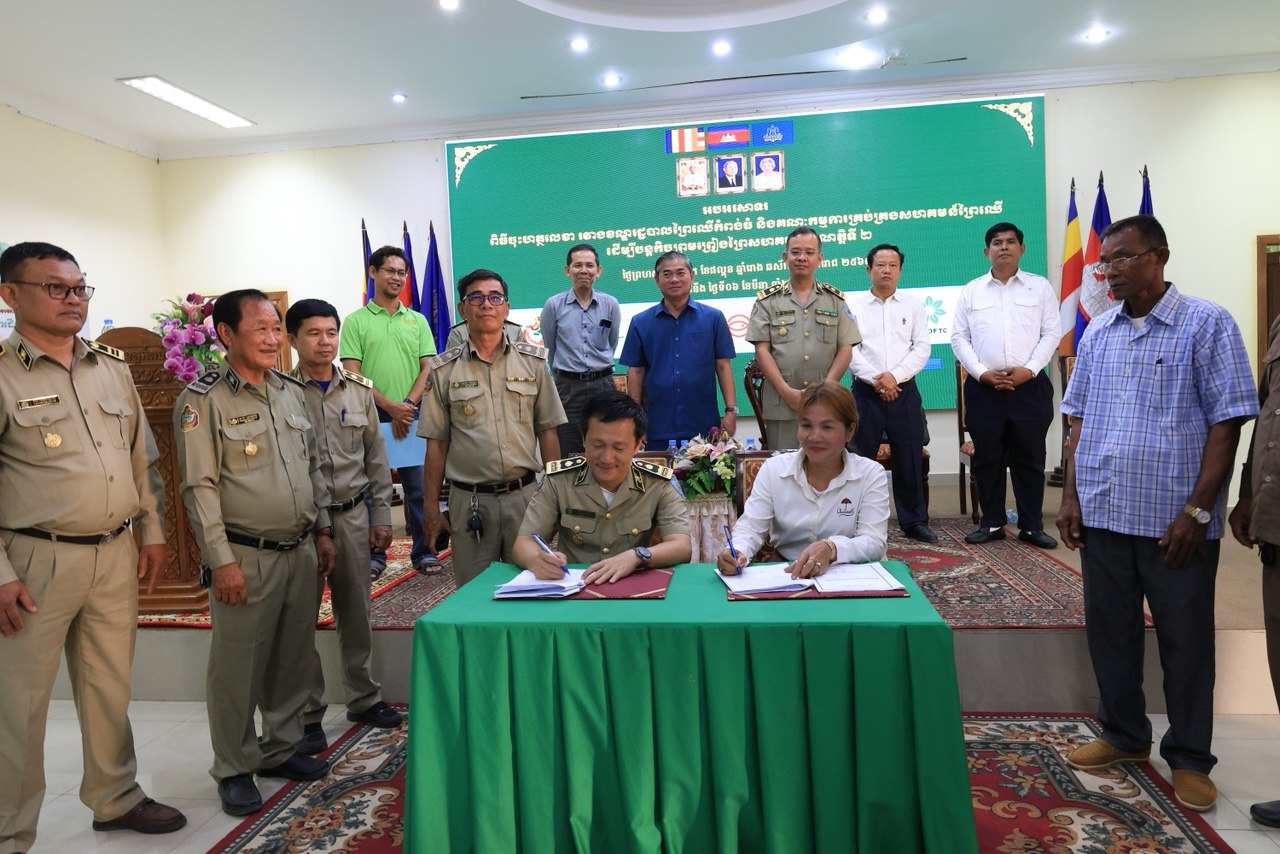
Community forestry committee chief Im Nou signs an agreement with the Forestry Administration Cantonment.
RECOFTC has helped facilitate community forestry agreements to enable communities to sustain their rights to manage community forests. Here, Im Nou (right), chief of the Preah Sophear Community Forestry Management Committee, is pictured signing the committee’s second agreement with the Forestry Administration Cantonment.

These experiences illustrate another important aspect of our work as facilitators – helping communities to understand and use existing legal frameworks and helping government agencies to improve them.

The laws and regulations governing community forestry and community protected areas can be complex. Communities often need support to understand tenure rights, reporting procedures, permits and administrative processes. Government agencies likewise benefit from feedback on regulations that may be outdated or difficult to implement.

Our role includes not only translating policy into practice but also bringing practical experiences into policy discussions. A key moment for RECOFTC Cambodia was when we supported stakeholder discussions that produced the draft revised forestry law. The draft has been submitted for government approval. If approved, the current duration of community forest management agreements will be extended from 15 to 25 years. This would be a massive win for community forestry in Cambodia.

Community forestry management committees have long argued that the original duration was too short for meaningful investment in forest protection, tree planting and livelihood development. A 25-year term strengthens tenure security, allows community members to develop long-term plans and makes community-based enterprises more attractive to potential private-sector partners.

An evolving role

Over time, our role has shifted from delivering training and designing interventions towards coaching, mentoring and providing technical backstopping while partners and communities increasingly lead the work. This is a reflection of what good facilitation can achieve – ensuring that capabilities expand and sustain under their own momentum.

Community members in Prey Thbong Domrey community forest in Kampong Thom province.

Looking ahead, new challenges are emerging. Carbon markets, biodiversity credits, REDD+ initiatives and ecotourism all present opportunities for communities managing local forests. But they also carry significant risks. Communities may be asked to sign agreements that they do not fully understand or negotiate with organizations that have far greater technical knowledge and resources.

This is another area where neutral facilitation will remain essential. Communities need access to clear information, government agencies need to recognize the critical role of communities in such projects, and responsible private-sector partners need transparent processes that build trust and security among all participants. We will continue to work to ensure that everyone understands both the opportunities and the responsibilities involved before decisions are made.

Why neutrality matters

Over more than 20 years, neutrality has remained one of our defining principles. We do not advocate for one stakeholder against another. Instead, we rely on evidence, legal frameworks and practical experience to help different groups understand each other’s perspectives and find common ground.

Ultimately, we aim to leave behind stronger relationships, more effective institutions and communities better able to shape their own futures. The bridges we build may be invisible, but their effects can be seen in community forests and community protected areas across Cambodia: communities with secure rights, government agencies and local people working together, village-level institutions continuing to function after projects have ended, and forests managed sustainably by those who depend on them.

##

Kalyan Hou is country director of RECOFTC Cambodia.

Story details

Geographic focus
Cambodia