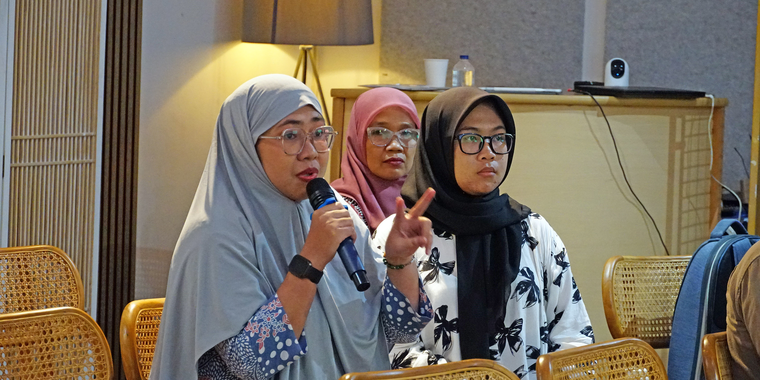
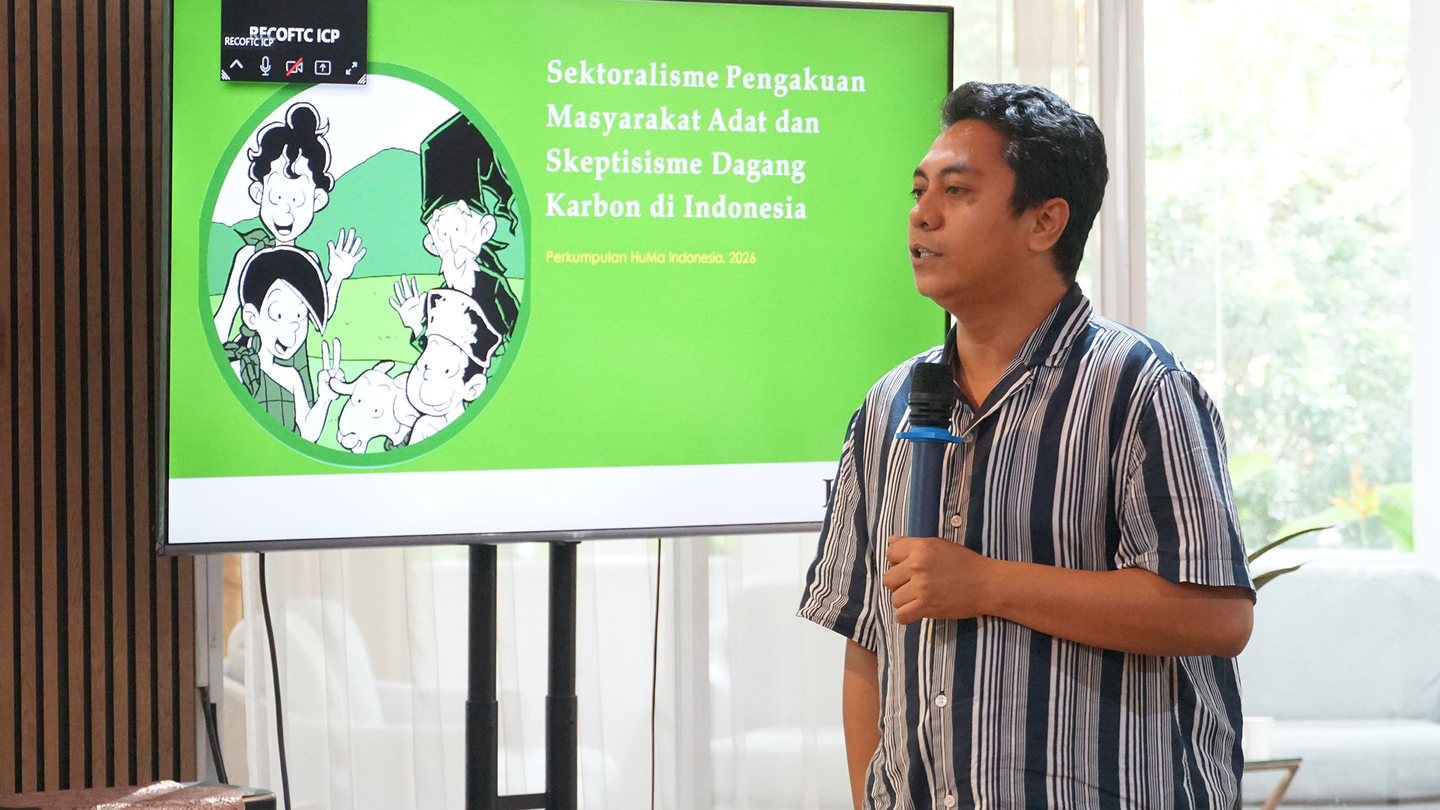
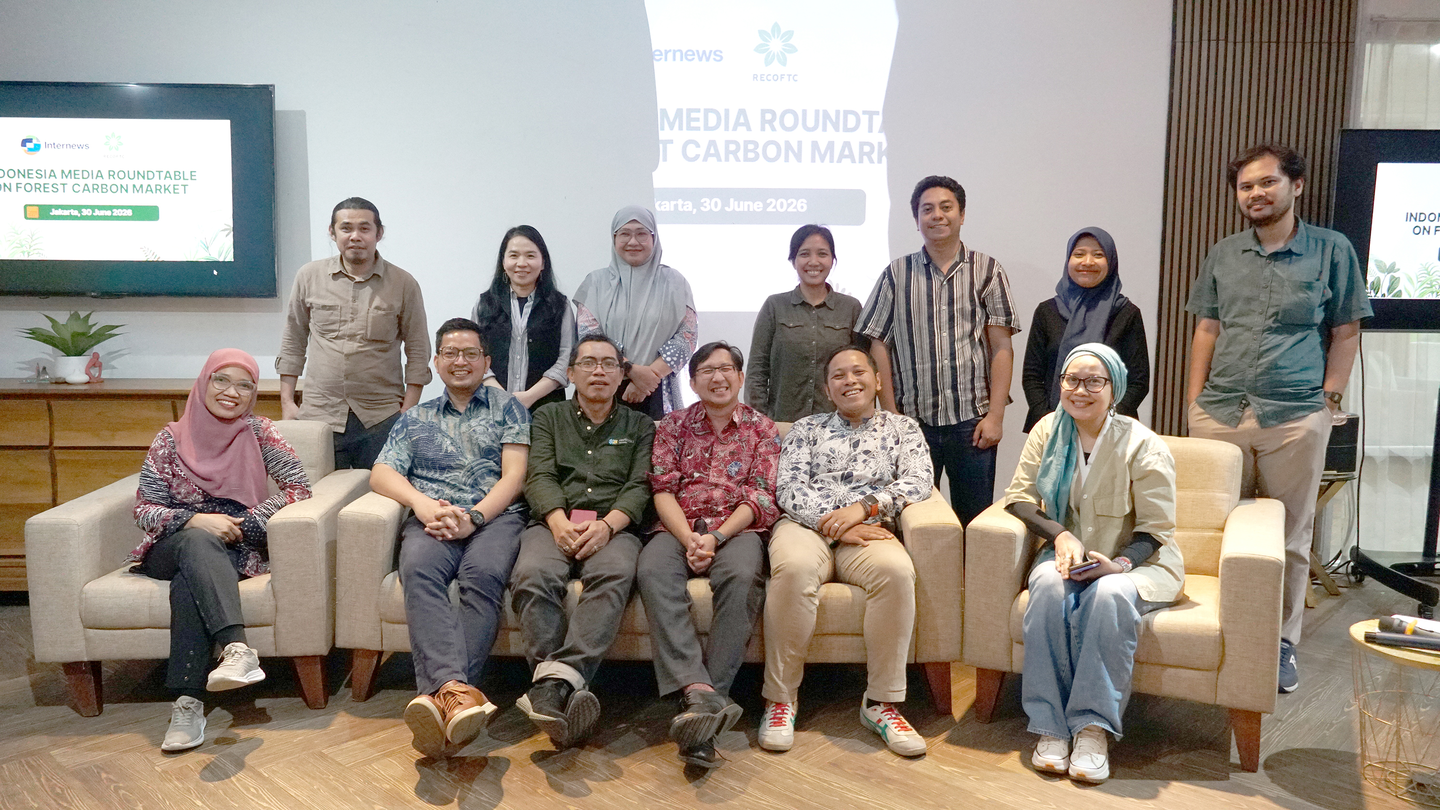
The event brought together journalists from media outlets including Mongabay, The Jarkarta Post, Detik, KataData and Kompas TV. Also present were representatives from the World Resources Institute, the United Nations Environment Programme and prominent non-governmental institutions such as Konservasi Indonesia, Auriga Nusantara, Madani Berkelanjutan, HUMA and KKI WARSI.
Opening the event, Gamma Galudra, country director of RECOFTC Indonesia noted that Indonesia has reached an important stage in developing its forest carbon market. While new regulations present opportunities for climate finance, he stressed the need for safeguards that protect biodiversity, Indigenous Peoples' rights and community benefits.
Discussions focused on carbon market integrity, blue carbon and Indigenous Peoples' rights. Together, participants and organizers explored how media reporting can better reflect the realities of communities affected by carbon projects.
“Stories about carbon markets need to go beyond numbers and credits,” said Nurul Fitria, a journalist from Mongabay Indonesia present at the event. “They need to show how these initiatives affect communities, their rights and their livelihoods.”
Presentations also highlighted the role of transparent governance, credible carbon accounting and strong safeguards in building trust in carbon markets. Community perspectives remained central throughout the discussions. KKI WARSI shared how revenue from the Bujang Raba Community Payment for Ecosystem Services initiative in Jambi has funded village infrastructure, scholarships and support for elderly and disabled residents while helping conserve forests.
New collaborations
Beyond knowledge sharing, the roundtable created new opportunities for collaboration between journalists and civil society organizations. Participants identified joint reporting opportunities on carbon and deforestation in national parks, blue carbon, Indigenous communities in Riau and women's leadership in community-based carbon projects.
The discussions also led to several concrete reporting collaborations. These include KataData and Konservasi Indonesia investigating deforestation in a national park, coverage of blue carbon by the Indonesia Data Journalism Network and Konservasi Indonesia, reporting by Mongabay and Kompas TV on Indigenous communities in Riau with HUMA and stories on women's leadership in community-based carbon initiatives.