
Menu
News

From SAGE findings to action

Strengthening equitable governance in Nepal’s community forests
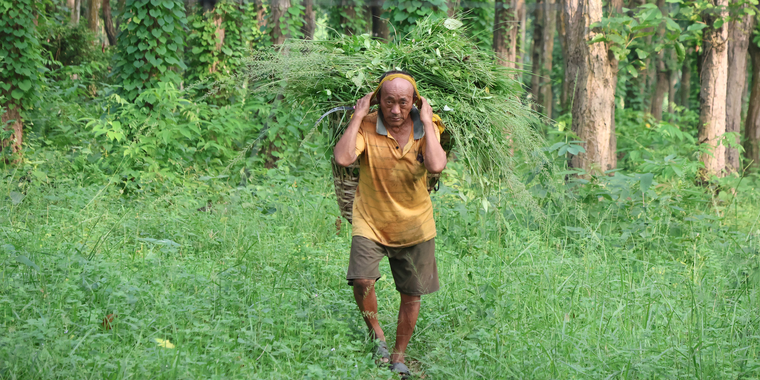
Fodder collection in community forest, Nepal

On 23 and 24 June 2026, RECOFTC Nepal conducted two capacity-building training workshops on equitable benefit sharing, grievance redressal mechanisms and inclusive leadership at the Barandabhar Protection Forest Area in Chitwan.

These trainings were developed in response to governance challenges identified through the Site-level Assessment on Governance and Equity (SAGE) process across eight protected and conserved areas in Nepal. The workshops covered modules 3 and 4 of the training package developed under the ‘Scaling-up equitable governance in area-based conservation’ (SEGA) project through a consultative process.

Building skills for fairer and more inclusive forest governance

Participants explored practical tools for equitable benefit sharing and effective grievance redressal mechanisms. They also looked at management and handling of these mechanisms, relevant legal frameworks and the role of inclusive leadership in strengthening community-based conservation institutions.

Saurab Chepang, vice secretary of Shri Kalikhola Deurali Community Forest User Group, noted, “Community forests have the potential to do much more than just manage forest resources. Like local governments, they can lead the entire community and become a strong platform for reducing poverty and uplifting marginalized and low-income groups.”

He added, “If we are able to put these lessons into practice, our community forest can become a model for others.”
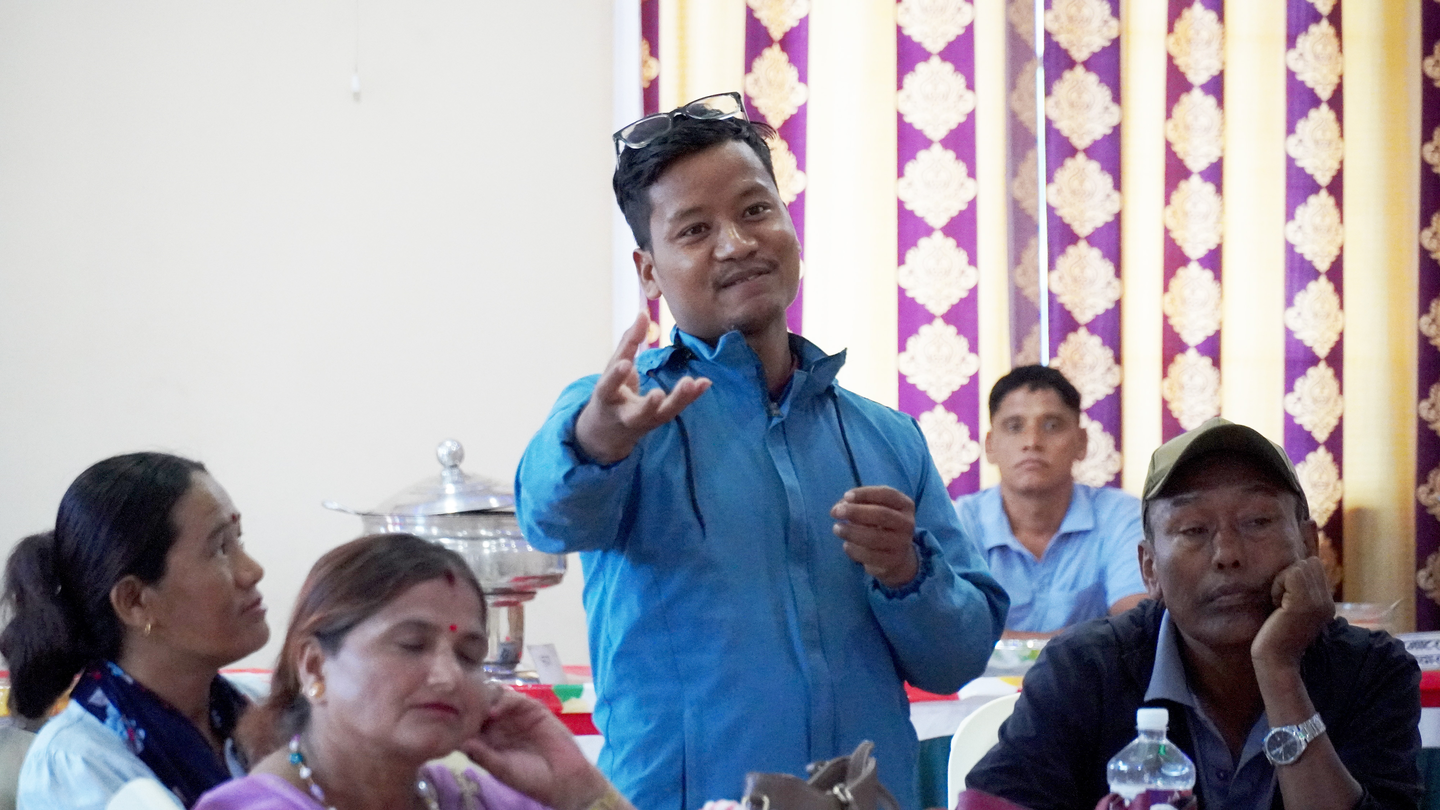
Saurab Chepang, vice secretary of Shri Kalikhola Deurali Community Forest User Group addressing the participants and organizers.

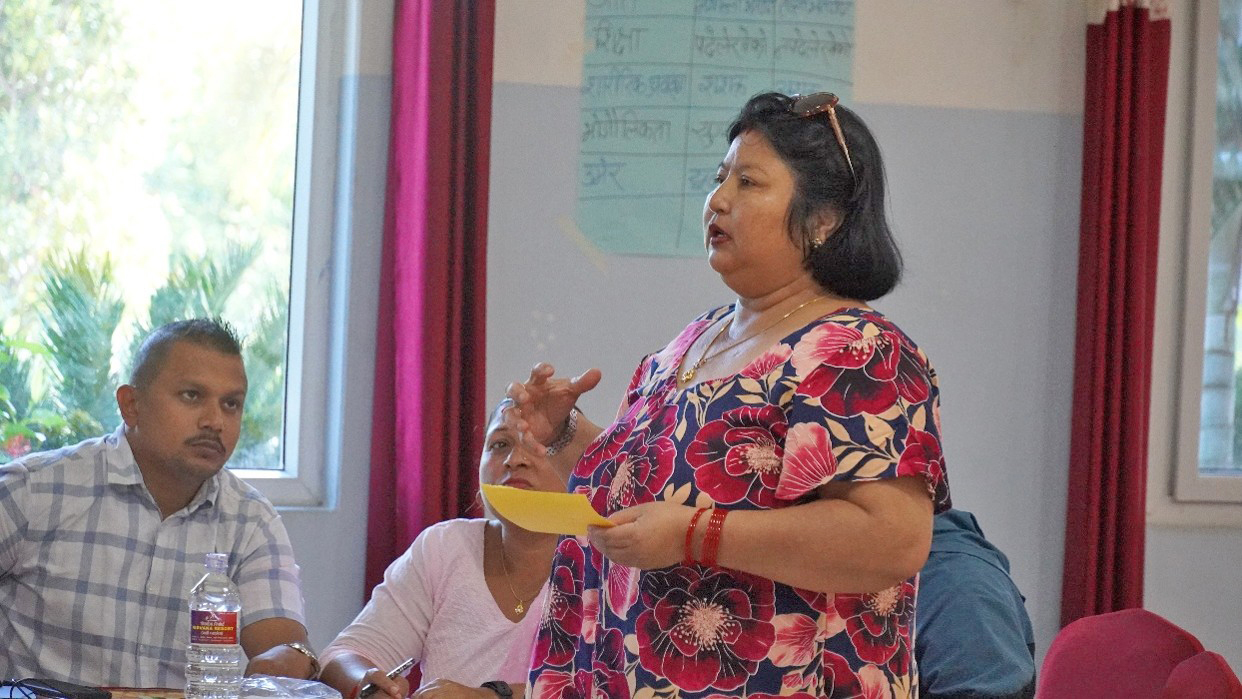
Similarly, Mindra Kumari Shrestha, chairperson of the Jaldevi Community Forest User Group, emphasized the value of the training workshops in strengthening both governance and women's leadership. "The sessions on the grievance redressal mechanism were especially insightful,” she said. “I learned the different stages and proper process of handling grievances. We also gained a better understanding of equitable benefit sharing.”

Shrestha said that another important aspect of the training was its contribution to strengthening women's leadership. “Programmes like this one help build women's knowledge skills, and confidence to take on leadership roles.”

Mindra Kumari Shrestha, chairperson of the Jaldevi Community Forest User Group, discussing the value of the training in strengthening governance and women's leadership.

Learning through participation and reflection

Designed as interactive learning spaces, the workshops employed experiential methods such as role play, group discussions, brainstorming exercises, games, case analyses and visioning exercises. Rather than focusing solely on theory, participants reflected on the realities within their own community forest user groups and identified equity and governance gaps.

By the end of the two trainings, each set of participants had identified practical actions to improve transparency, accountability and fairness in benefit-sharing and grievance redressal processes. They will apply these actions within their respective community forest user groups.

###

Barshani Joshi is knowledge management and communication officer at RECOFTC Nepal.

‘Scaling-up equitable governance in area-based conservation’ (SEGA) is a four-year project that aims to promote equitable governance in protected, conserved and biodiversity-rich forest areas in Nepal. The project uses the Site-level Assessment on Governance and Equity (SAGE) tool to assess governance and equity in biodiversity conservation and oversee ecosystem services, including benefit-sharing schemes. Through the application of SAGE, site-level actors are empowered to improve social and conservation outcomes.