
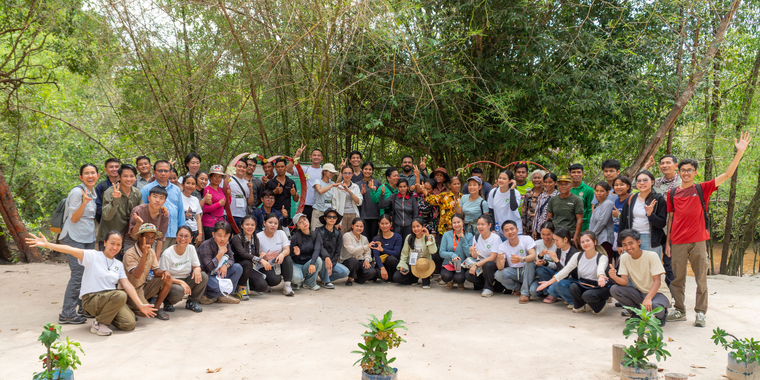
From 13–15 June 2026, around 40 young participants from Cambodia, Indonesia, Lao PDR, Myanmar, Nepal and the Philippines gathered in Kampong Thom province, Cambodia for a three-day youth camp under the ‘Youth as guardians of the forests’ project. They included representatives from Indigenous and community groups, students, researchers and staff from non-government organizations and government offices.
News
Youth camp empowers young forest guardians through peer learning and community engagement
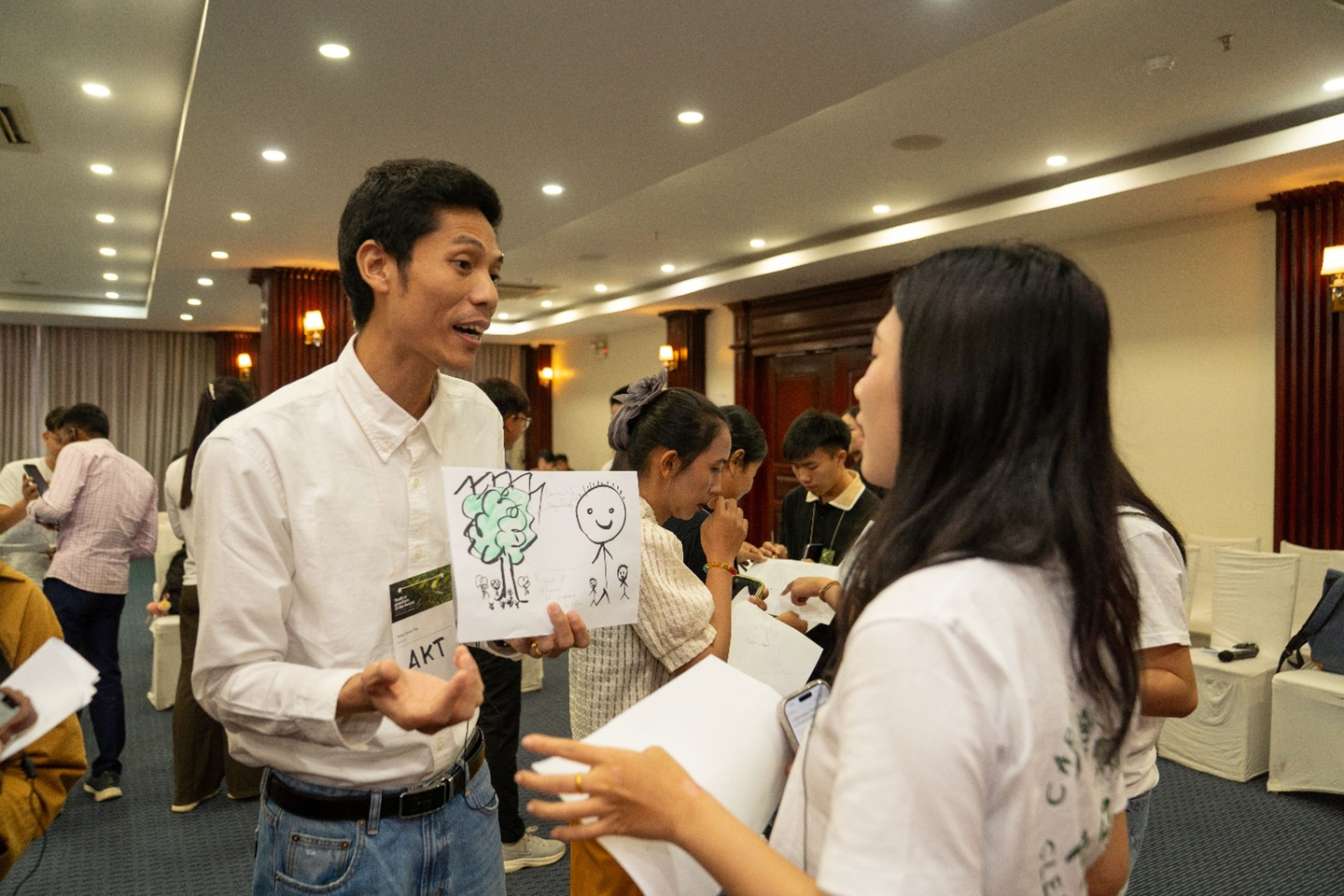
Youth interact during a sharing session, speaking about their individual connections to the forest.
Knowledge building and field experience
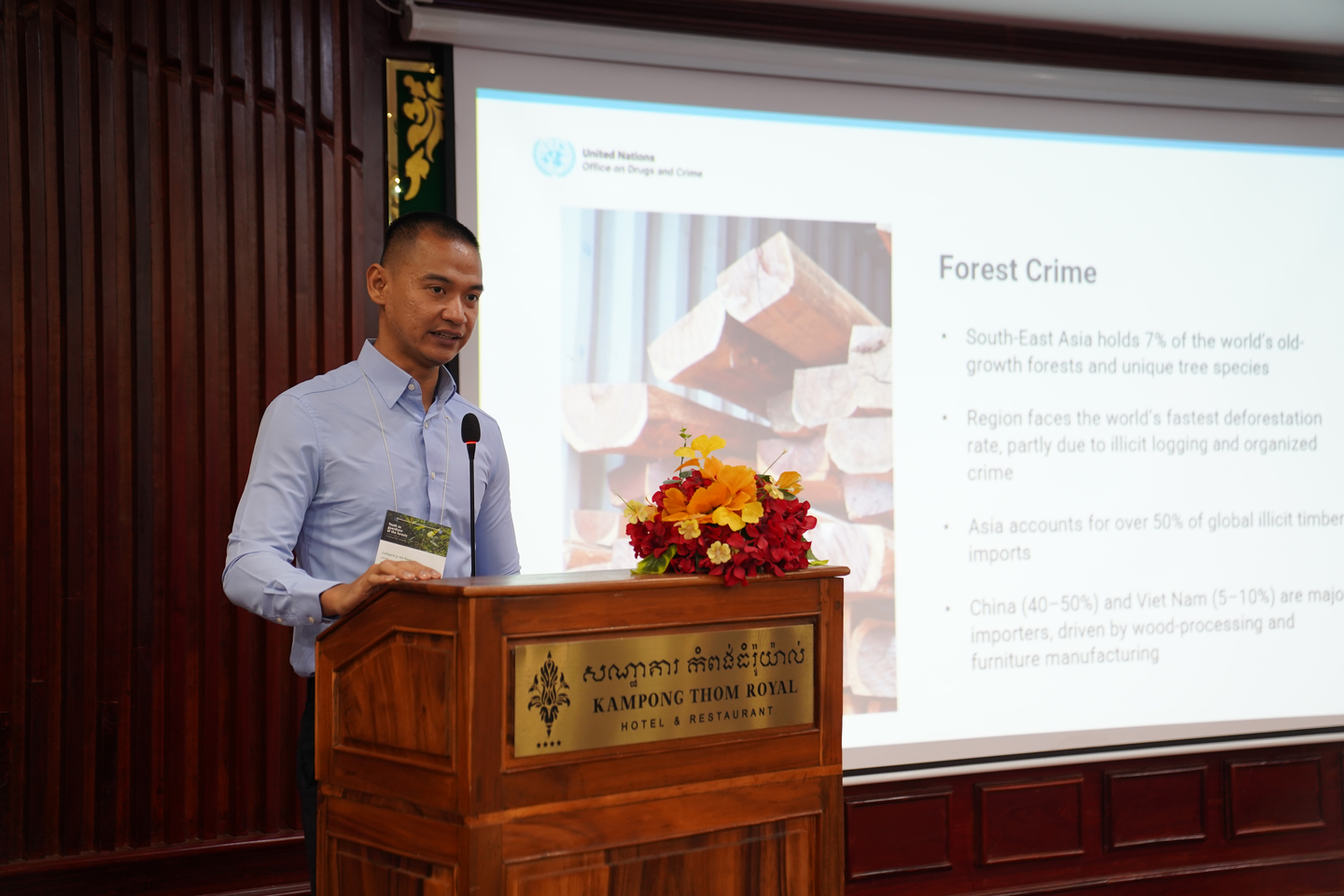
Garie Rigor, programme management officer at UNODC, delivers a thematic lecture on forest and wildlife crimes.
The event centered on thematic learning and facilitated knowledge sharing about regional wildlife and forest crimes, their impacts on biodiversity, ecosystems and local livelihoods, and the role of youth in promoting responsible actions. Youth compared experiences from their communities, discussing everything from community-led conservation successes to the challenges of sustaining local initiatives with limited institutional support.
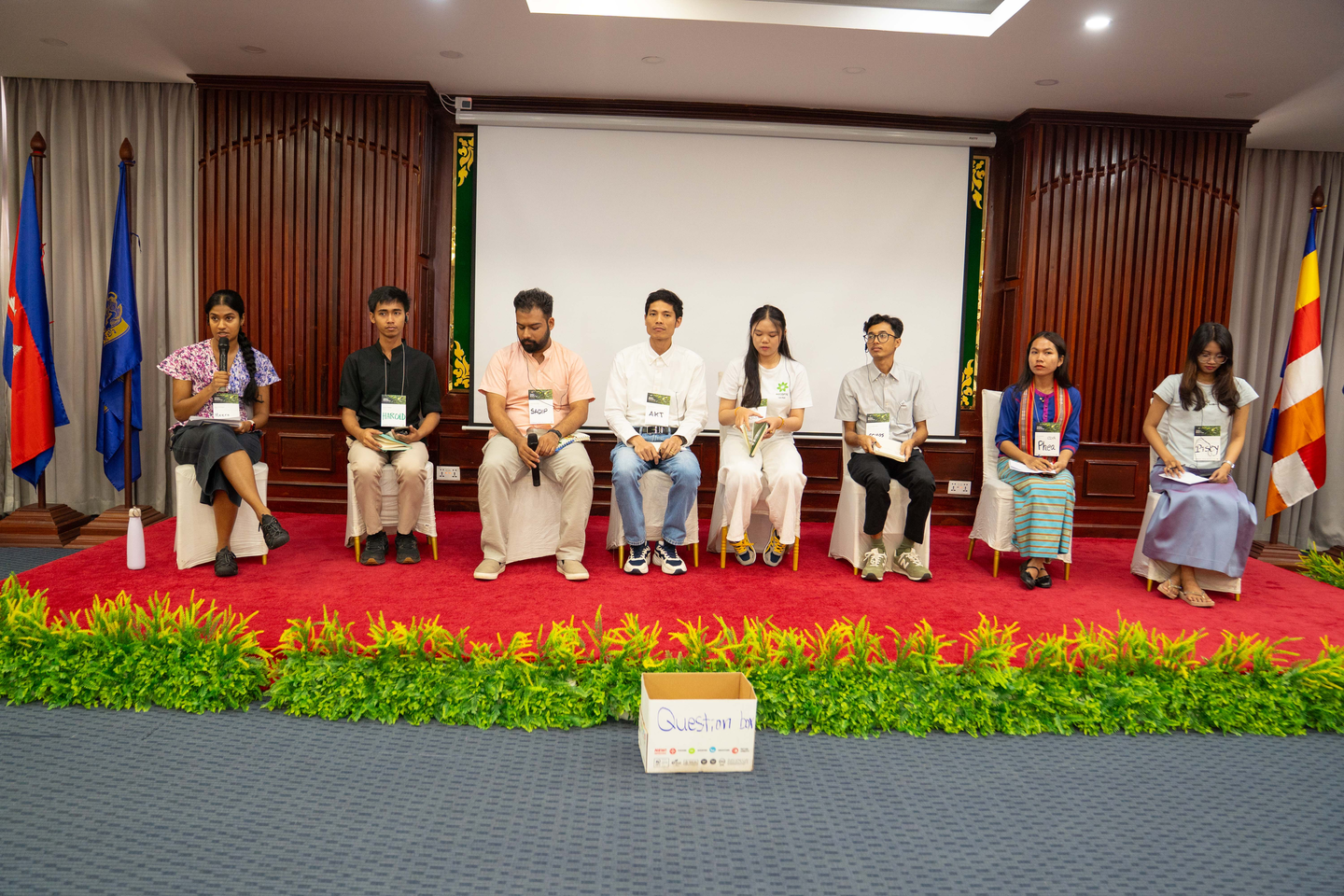
Youth panelists share perspectives on community forestry from their respective countries.
A key highlight was a field visit to O Poung Rong Community Forest, where participants engaged with community members to learn about its community forestry work and governance structure. Community representatives explained how patrol duties are organized, demonstrated silvicultural practices and showed how income is generated from non-timber forest products, ecotourism and other ecosystem services. Participants joined a simulated patrol exercise and observed how different community members, including youth, contribute to forest management.
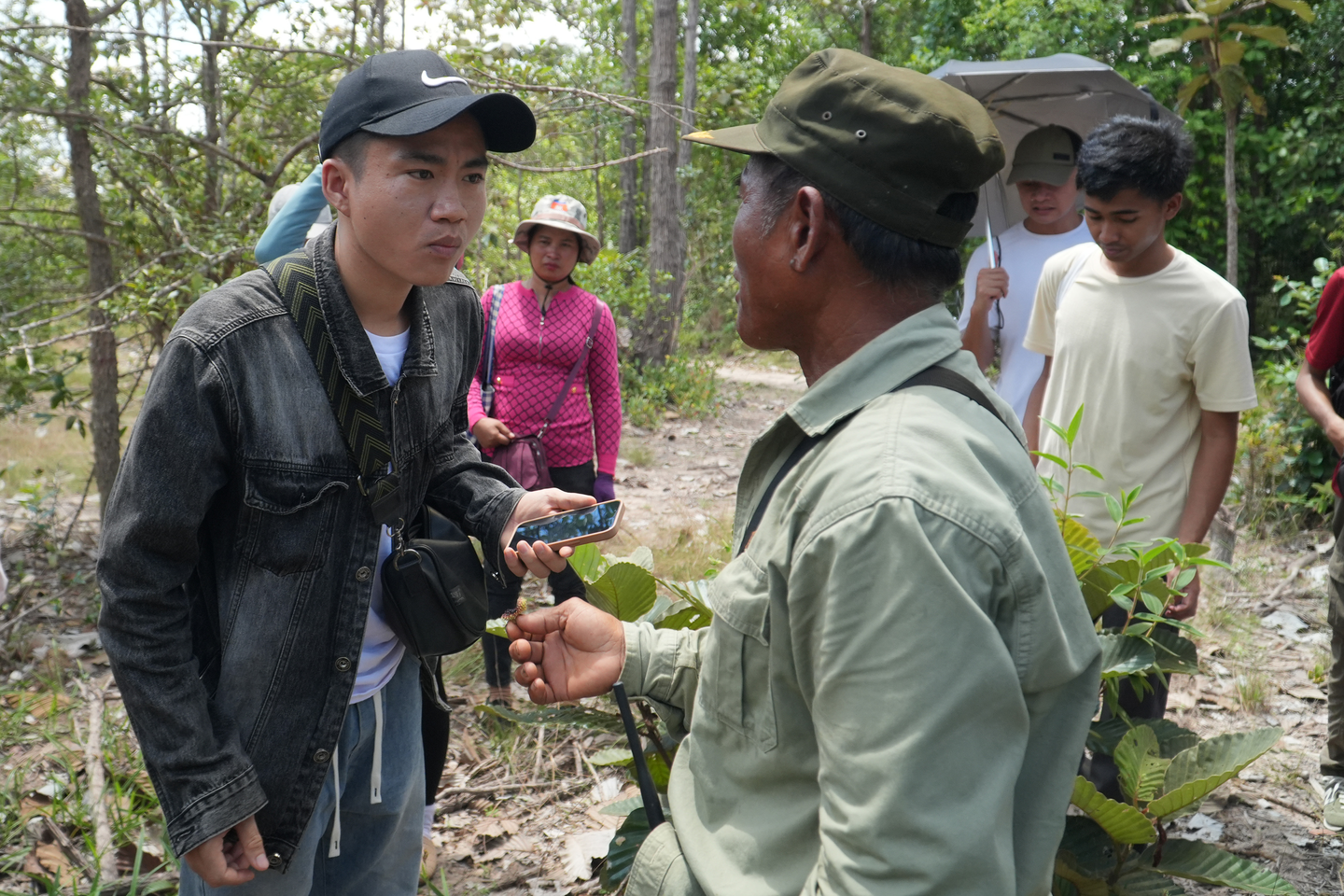
Bounmy Thammavong from Lao PDR asks a community member about thinning techniques.
The visit offered practical insights into how community forestry functions on the ground. Participants also heard directly from local youth involved in forest governance. Rith Ratana, a member of the O Poung Rong Community Forestry Management Committee, reflected on her role in supporting the community forest. "As a youth member of the community forestry management committee, I want to continue learning from the senior committee members," she said.
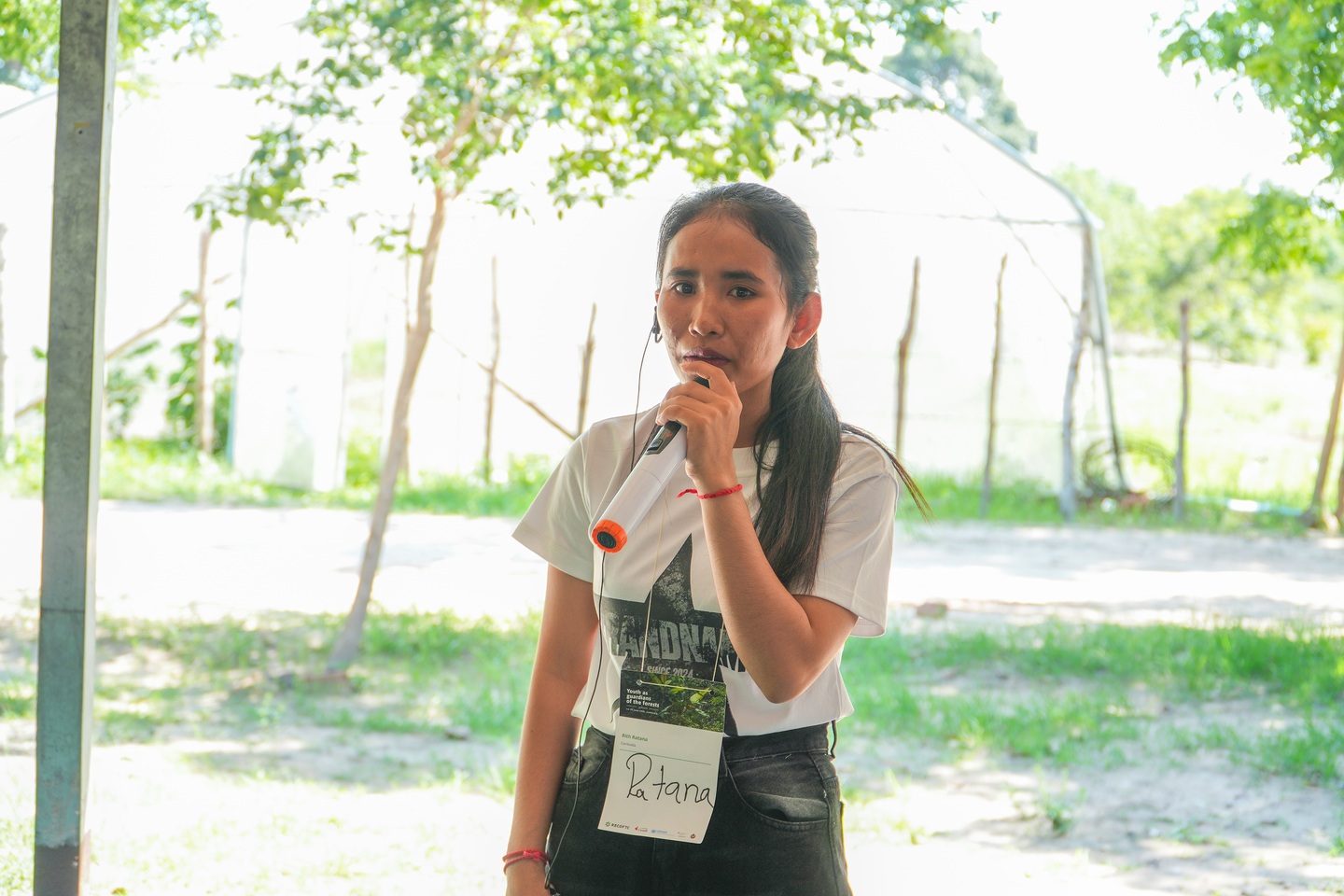
Rith Ratana, a member of the Ou Poung Rong Community Forestry Management Committee, Cambodia.
Advocacy exchange and youth leadership development
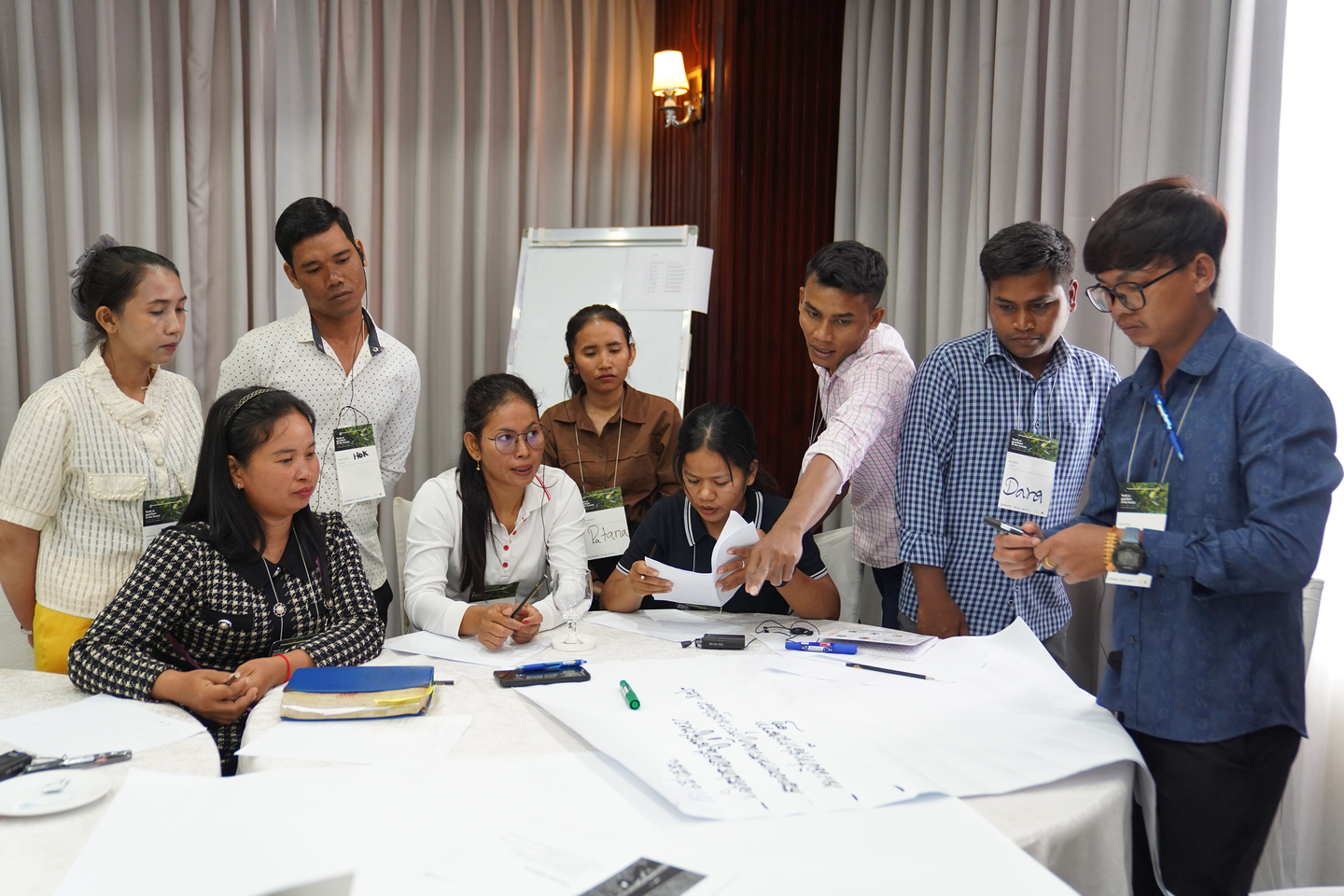
Cambodian youth refine their group campaign plans.
Beyond knowledge building, the camp placed strong emphasis on youth-led advocacy and awareness-raising. Through role-play performances, video storytelling and group exercises, participants explored ways to engage different audiences and strengthen their advocacy messages. These discussions were then shared online, with participants calling for greater youth involvement in forest protection.
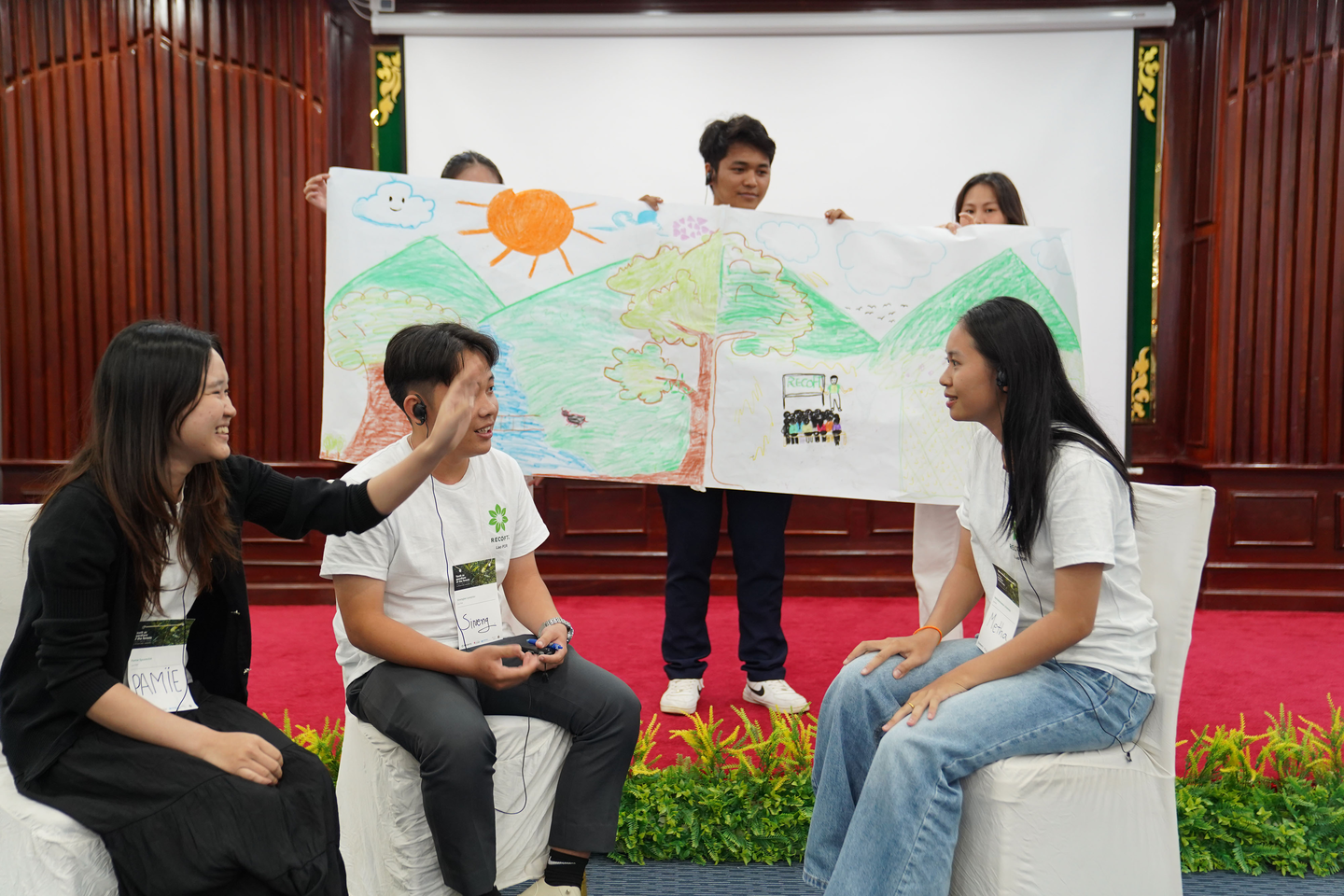
Lao youth share their campaign successes and challenges in an interview format.
Envisioning the future and renewing youth commitments
On the final day, participants were introduced to RECOFTC’s youth engagement strategy, which provides a framework for strengthening youth roles in forest conservation and community development. Working in groups, they imagined what successful youth leadership in forestry could look like years from now and mapped backwards to identify the actions, partnerships and support needed to get there.
Reflecting their strengths – ranging from direct involvement in conservation work to communication and advocacy skills – participants also identified areas where external support is needed, including mentorship, networking and partnerships. As certificates were exchanged and final reflections shared, participants spoke about applying new ideas at home and staying connected through a growing regional network of young forest guardians.
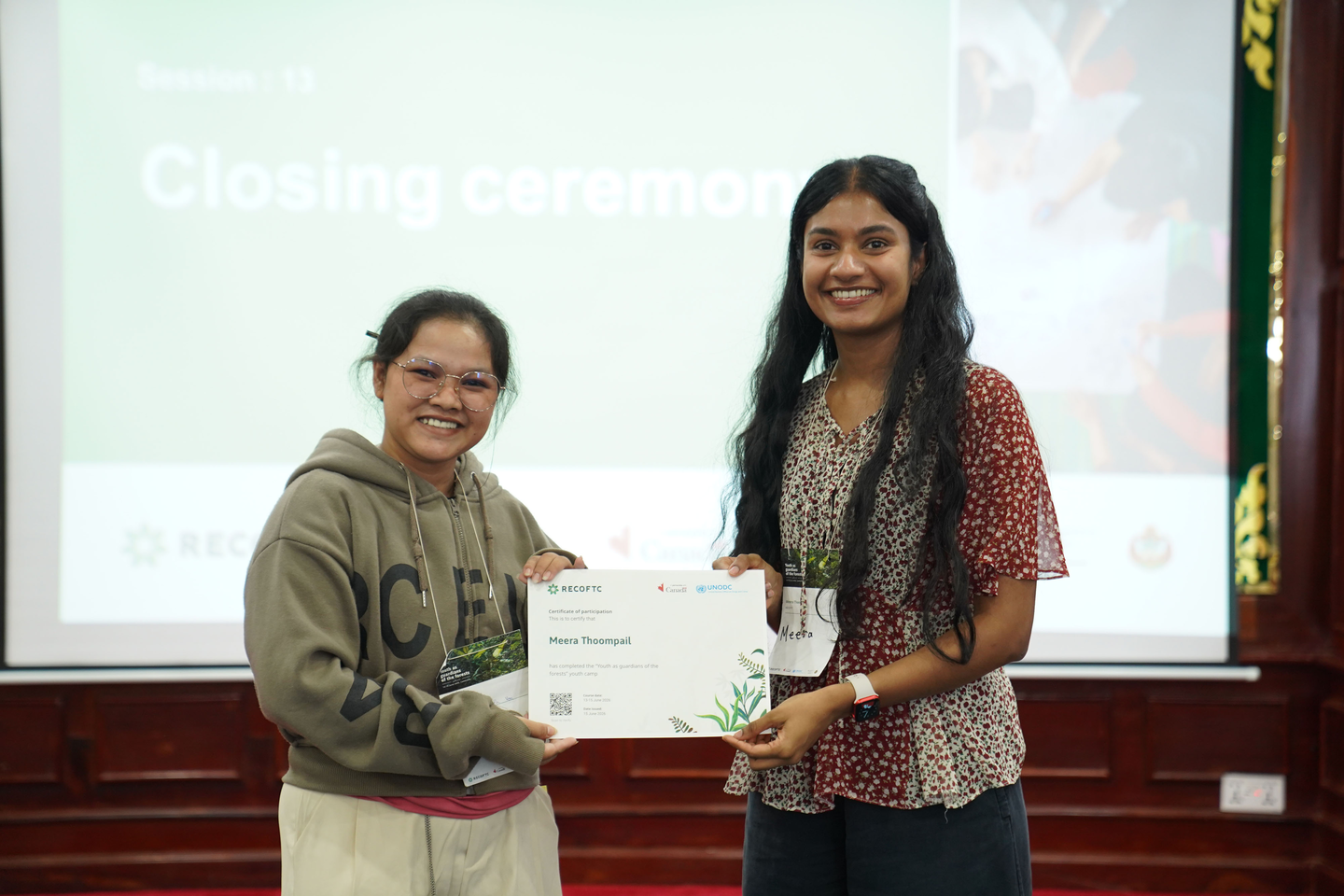
Youth present camp certificates to their fellow participants in a relay format.
###
Lu Qian is a communication and project support coordinator (on secondment from APFNet) at RECOFTC.
The ‘Youth as guardians of the forest’ project aims to create a new generation of forest guardians in Cambodia and Lao PDR. It focuses on enhancing youth awareness about forest conservation, wildlife and forest crimes and sustainable forest management practices. It is supported by the United Nations Office on Drugs and Crime (UNODC) through generous funding provided by the Government of Canada.