
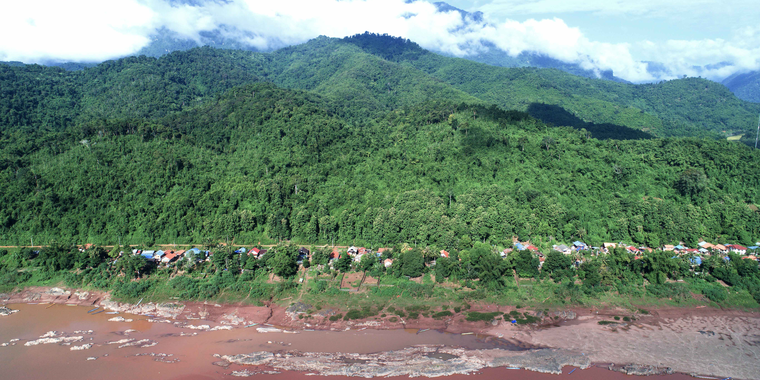
RECOFTC and the Wyss Academy for Nature are inviting proposals from Master and Ph.D. students conducting fieldwork on people and forests in Thailand. All prospective grantees must be affiliated with Kasetsart University. While we invite proposals from scholars working in field sites across Thailand, we will prioritize those related to research in Nan province, especially Phu Kha sub-district.
RECOFTC works towards a future where resilient communities with respected rights thrive in forest landscapes that they manage sustainably and equitably. The Wyss Academy for Nature offers a new, systemic approach to pressing issues at the intersection of climate change, biodiversity loss and land use change that affect equality and human wellbeing.
The Wyss Academy for Nature, in partnership with RECOFTC, is offering research grants to support Master and Ph.D. students conducting field-based research in Thailand. Research topics may include, but are not limited to, the understanding and improvement of human and nature co-benefits, community forestry, and landscape management practices.
Wyss Academy and RECOFTC are delighted to partner with Kasetsart University in supporting research in Southeast Asia with this research grant scheme. Through this grant programme, the Wyss Academy and RECOFTC aim to support emerging researchers in generating evidence, testing new ideas, and contributing to knowledge that addresses the root causes of environmental and biodiversity issues while enhancing human wellbeing.
Objectives
- Support research initiatives through financial assistance for graduate students to conduct fieldwork that contributes to the understanding and improvement of human and nature co-benefits, community forestry, and landscape management practices in Thailand, especially in Nan province
- Promote sustainable practices to encourage research that identifies and promotes human and nature co-benefits through sustainable land-use strategies, thereby enhancing landscape resilience against climate change and other environmental challenges.
- Foster collaboration to facilitate partnerships between students and local communities, ensuring that research outcomes are grounded in local realities and can effectively inform policy and practice for further development programmes in Thailand, specifically in Nan province.
The aim is not only to advance academic research but also to create meaningful impact within communities by fostering sustainable practices that enhance landscape resilience.
Potential research topic may cover but are not limited to the following areas:
Biodiversity and Natural Resources
Potential of Phu Kha Subdistrict’s biodiversity and human wellbeing for Other Effective Area-based Conservation Measures (OECMs)
Feasibility analysis of Payment for Ecosystem Services (PES) including community-based tourism or ecotourism in the Phu Kha landscape
Ecological significant species for biodiversity conservation in Phu Kha and potential co-benefits for nature and people
Community-led biodiversity conservation in community forests
Land Use and Governance
Lessons learned and implications from land allocation under the National Land Policy Committee Act (2019) in Nan Province or Northern Thailand
Community perceptions and implementation effectiveness of the National Park Act (2019) in Phu Kha landscape
Gaps and opportunities in forest and land-use governance in the Phu Kha landscape
Nature-positive Livelihoods and Well-being
Cost–benefit and scalability of agroforestry systems: Including return on investment, economic viability, and enabling conditions for scaling up; a case study of Pang Yang or other areas in Nan province
Value chain analysis and sustainable business opportunity for Non-Timber Forest Products or Payment of Ecosystem Services such as ecotourism in Phu Kha, or Nan or Northern Thailand
Sustainable finance opportunities for landscape restoration and nature-positive solutions contributing to natural resource conservation and local livelihoods in Phu Kha or Nan Province
Local wisdom and cultural practices for promoting forest-human wellbeing, co-benefits, and youth engagement in nature-positive livelihoods in the Phu Kha Landscape
Climate Change
Climate vulnerability assessment of upland farming and potential solutions in Phu Kha or Nan Province or Northern Thailand
Innovations in water management for climate resilience in upland agriculture and forestry
Imagining climate-resilient land use futures in Nan Province or Northern Thailand
Assessing the climate vulnerability of key species in the Phu Kha Landscape and its implications for conservation planning
Eligibility
- Affiliated with Kasetsart University or enrolled in a Master and Ph.D. programme at the university in forestry, agriculture, environmental science, economics, or a related field with a focus on community engagement and sustainable practices (with an emphasis on integrated solutions for agriculture, watershed management and/or forestry).
- Research focus on Thailand, with preference for research performed in Nan Province.
- Research methodology must be participatory and actively involve local communities, CSOs, government, or private sectors.
- Researchers must be committed to sharing findings with stakeholders, including local communities and policymakers.
Note: The funding period covers November 2026 – October 2027.
Process
- Proposal development: Interested students and advisors should prepare a detailed research proposal outlining their research questions, methodology, expected outcomes, and how the project will benefit local communities.
- Submission: The proposals must be submitted along with relevant CVs highlighting the prospective grantees’ academic achievements and field experience by the specified deadline (15 September 2026).
- Review process: Submitted proposals will be evaluated based on relevance to the objectives outlined by RECOFTC and Wyss Academy for Nature and their feasibility, potential impact on community forestry practices and engagement with local stakeholders.
- Grant award notification: Successful applicants will be notified and provided guidelines for managing the grant funds effectively (30 October 2026). Grant agreements will be signed by the student and their adviser before 15 November 2026.
- Grant inception and onboarding: Successful applicants will go through an inception workshop with RECOFTC and Wyss Academy for Nature in November 2026. This will cover the subgranting guidelines, code of conduct, and introductions.
- Fieldwork implementation: The approved fieldwork will have to be conducted according to the proposed timeline while maintaining regular communication with RECOFTC and Wyss Academy mentors for guidance and support (November 2026 to October 2027).
- Reporting:
- Grantees must submit short quarterly update and a 6-month progress report in English, highlighting key progress, issues or challenges in conducting the field research, proposed any adaptive interventions.
Upon completion of the fieldwork, grantees must submit a comprehensive report in English (not more than 6 pages) and presentation detailing their findings, analysis results, challenges faced during the research process, and recommendations for future initiatives.
Hold a 60-minute online or in person learning session with presentation in English to RECOFTC and Wyss Academy’s members and other interested audiences within 30 days after the completion of the field work.
Share a final research document that has been approved by his or her supervisor and the Department (Kasetsart University designated focal point).
Budget
Applicants should present a rationale and motivation, along with a detailed budget with expenses clearly linked to the specific steps of their fieldwork. The budget may range between USD5,000 - 10,000. Depending on the grant submissions received, there will be up to five grants offered. Fieldwork should be carried out in Thailand. The grant can cover only direct costs associated with the field of research activities. It does not include human resources, capital investments over USD 1,000, honoraria, compensation, or consultancy fees.
Application requirements
The application should be submitted to [email protected] by 7:00 p.m., Bangkok time, on 15 September 2026. Applications submitted after the deadline will not be considered.
The application package should be in English and contain the following:
- Motivation letter
- Research plan – should not exceed six pages (including the following sections)
- Title
- Background and rationale
- Research aims and partners
- Research methodology
- Timeline
- Anticipated results
- Detailed budget plan
- Support letter from advisor
Grant selection criteria
Technical appropriateness of research
- Relevance to the priority research themes, geographic focus, and the objectives of the Wyss Academy for Nature and RECOFTC.
- Scientific quality and technical soundness of the proposed research.
- Potential impact on biodiversity conservation, integrated landscape management, community forestry, and nature-positive livelihoods.
- Practical application and scalability of the research findings to inform policy, practice, or landscape interventions.
- Meaningful engagement of local communities, government agencies, and other relevant stakeholders.
- Quality of the research methodology, including feasibility within the proposed timeframe.
- Knowledge sharing and communication to ensure research findings reach intended users.
- Realistic work plan, budget, and value for money.
- Co-funding or institutional support, where applicable.
Grant recipient qualifications
- Academic background
- Interest, involvement and experience working on the research topics
- Commitment to involve local communities and other relevant stakeholders in the research process
- Support from advisor and committee members
Budget plan
- Clear, detailed budget plan
- Realistic costs
-----------------------------------------