Smallholder farmers in Myanmar and Viet Nam face numerous challenges, including market changes, climate pressures and the need for better farming techniques. To help address these, RECOFTC has built on the Food and Agriculture Organization (FAO)’s 2016 Farmer Field School guidance document: Planning for quality programmes and other existing materials to tailor the Farmer Field School (FFS) approach.
RECOFTC’s Farmer Field School: Empowering local research and learning, published in July 2025, is a guide for practitioners, including field officers, coordinators and farmer champions. It is a practical, step-by-step resource that helps farmers learn by doing, improve their practices and build stronger farming communities.
Why FFS?
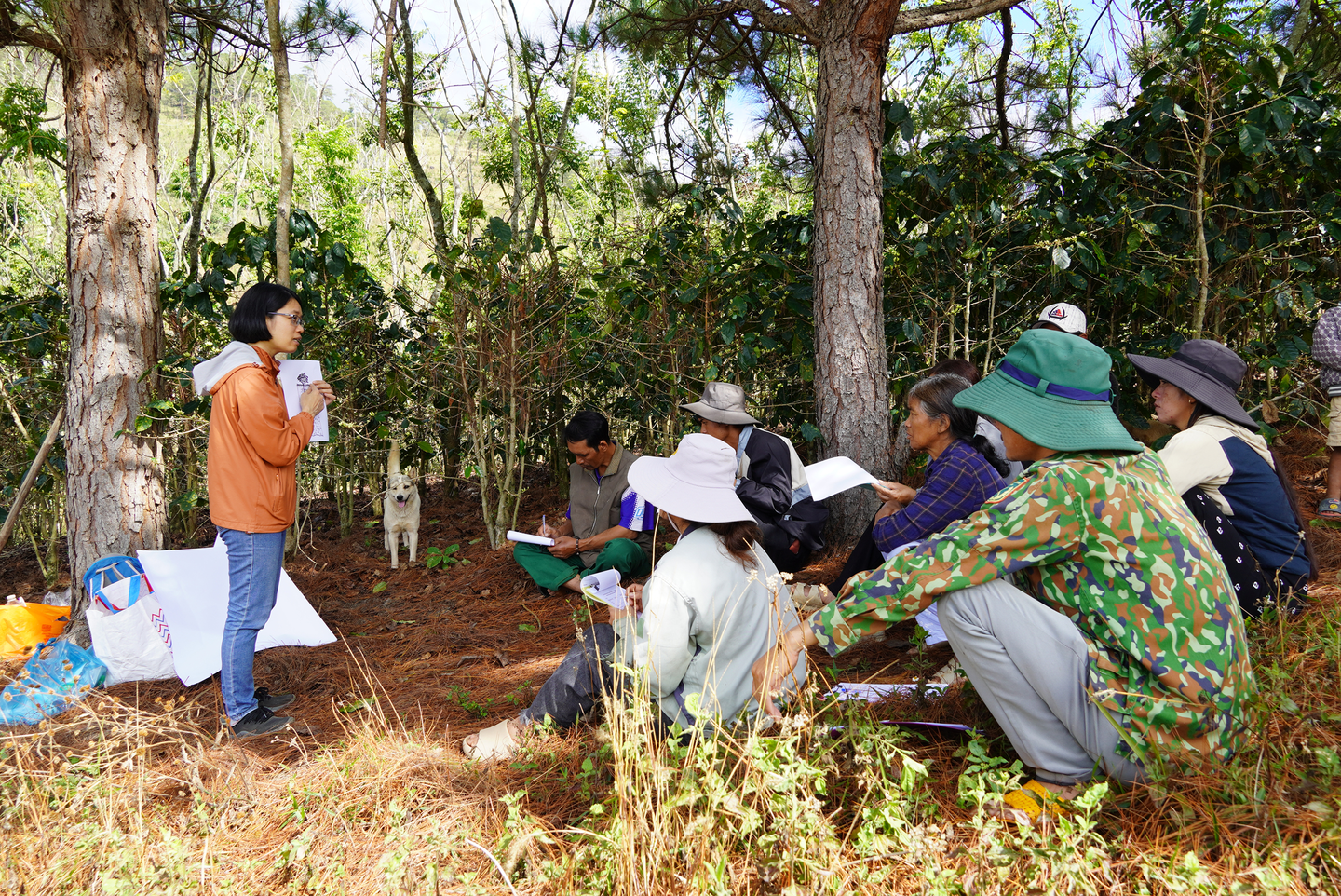
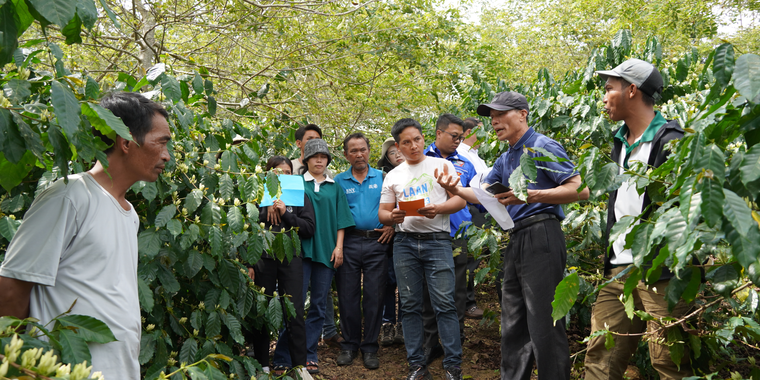
FFS brings farmers together for hands-on, field-based learning. It is sometimes referred to as ‘schools without walls’ as it provides group-based adult learning. Farmers regularly meet with facilitators, engage in interactive discussions and conduct field experiments to solve problems together.
The FFS approach is about creating a learning space in the field, where farmers observe, experiment, share experiences and make decisions together. Farmers become problem-solvers, not just recipients of advice.
Our FFS guide was developed for use in project sites of the ‘Chain of changes’ project funded by the Reversing Environmental Degradation in Africa and Asia (REDAA) programme. It can be easily adapted to other contexts and is relevant for all farmers who collaborate with practitioners to promote locally-led research and nature-positive solutions.
Benefits for farmers
As farmers in Myanmar and Viet Nam increasingly adopt high-value commodities like avocado and coffee, they also face new sets of challenges. The FFS guide provides crucial guidance and support on managing pests, improving post-harvest practices, accessing markets and adapting to the impacts of climate change while ensuring sustainability.
In Myanmar, avocado growers are learning grafting techniques, pest management, natural fertilizer production and Good Agricultural Practices (GAP) through hands-on sessions. The guide is helping support the process of transforming learning for avocado farmers by moving training from the community hall to the farm, encouraging farmer-to-farmer exchange and hands-on practice. We are strengthening efforts to establish farmer champions, collective group leaders, and women-led households to work together, tackle challenges like pests and diseases, and apply sustainable avocado farming practices tailored to their local context.
In Viet Nam, coffee farmers have started using FFS to meet international sustainability standards, improving both quality and income. Its step-by-step structure provides farmers vital information on a clear, comprehensive process that covers local needs assessments and outcome evaluation while ensuring gender and social inclusion. FFS implementation is promoting hands-on, experiential learning for farmer champions, enabling them to test and apply techniques directly on their farms.