
Explore conducted its first regional learning workshop, ‘Tools and approaches to enhance forest landscape governance’, on 29 January 2026. The online event brought together 114 participants, including Explore-funded researchers, members of its programme advisory committee and other stakeholders.
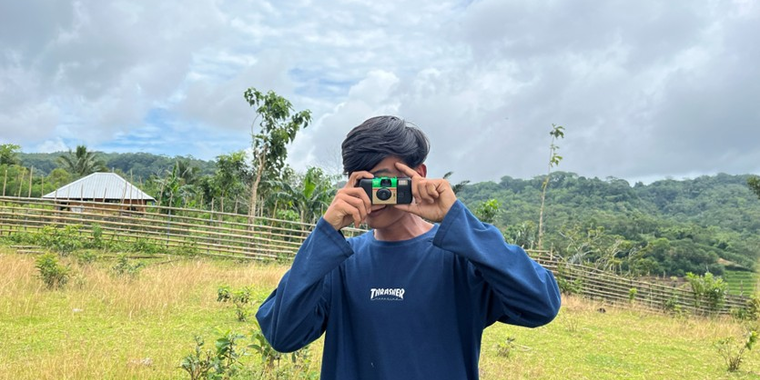
Researchers presented two case studies, one from Indonesia and another from the Philippines. They detailed how, instead of surveying communities as passive sources of data, research approaches can emphasize knowledge coproduction, shared learning and collective action. Among the tools discussed were Photovoice, a method that equips residents with cameras to visually document local issues for policymakers. Another tool was the participatory agroforestry land capability assessment and mapping (ALCAMS) where locals measure soil, slope and vegetation to map land suitability for agroforestry.
Discussion sessions examined how research tools can shift who generates evidence, whose knowledge counts and how decisions on forest landscapes are shaped. A recurring theme was the interface between participatory knowledge and technical systems. One of the presenters, Leila D Landicho – principal investigator of the RISE-SEA project, University of the Philippines Los Baños – reflected, “The co-designing processes take time. It is not something that can happen in a day, but it certainly ensures genuine participation and establishes project ownership.”
Technical integration was also highlighted in the discussions. Participants outlined the processes for converting community-generated maps into compatible GIS formats. They also reviewed methods for pairing local ecological knowledge with biophysical characterization, testing how to ensure the resulting data is both scientifically robust and policy relevant.
The structure of the Explore Community of Practice (CoP), established during an in-person workshop in November 2023, was also revisited. Operationally, principal investigators and co-principal investigators affiliated with Explore will continue to form the core group of the CoP and provide strategic and methodological guidance. The larger CoP remains open to a broad circle of Explore-affiliated practitioners, policymakers and stakeholders, helping create pathways for outreach, evidence uptake and policy dialogue. The virtual CoP will maintain operations on the Agroecology TPP Communities platform.
In 2026, Explore will organize quarterly regional learning workshops featuring our research teams. These sessions will provide regular spaces for methodological exchange, peer learning and reflection on governance outcomes.
###
Utsav Maden is communication and knowledge management officer at RECOFTC.
Explore is a research network and community of practice dedicated to expanding and applying knowledge on forest landscape governance in Southeast Asia. The network is funded by the government of Sweden. It is hosted by RECOFTC, in partnership with the CIFOR-ICRAF, in collaboration with universities, research institutes, governments, civil society organizations, local communities and the private sector in Southeast Asia.
To learn more about Explore and upcoming learning workshops, contact [email protected] or visit the Explore page. www.recoftc.org/explore