Luckily, that kind of pressure from outside can be countered by committed allies. The members of the community forest at O Taneung believe they can count on a growing body of public officials, such as those on the local commune council, to help them secure their precious land.
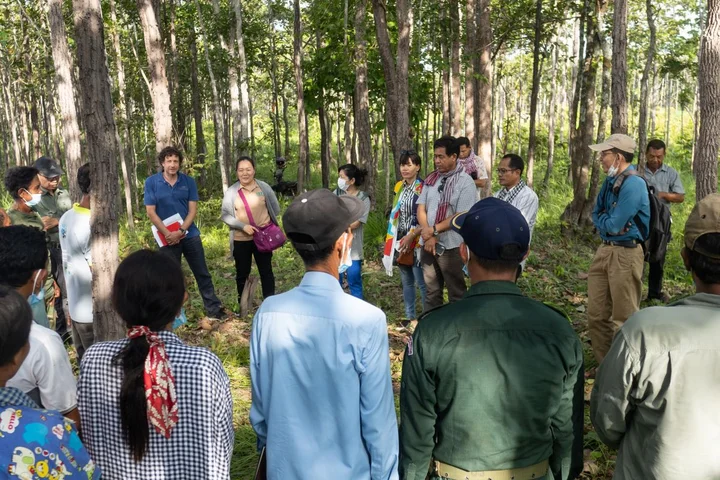
Commune council representative, Tom Them, joined the community members ahead of the SDC visit and spent most of the day in the forest. In the afternoon, he told a small group gathered in a shady spot that the commune leadership was proud of the work being done by the community forestry group.
“We’ve had a relationship since the community forest was established, but it has grown closer over time,” he says. As the community forest has developed, he explained, the commune has worked directly with its emerging leaders to provide support or seek out partnerships.
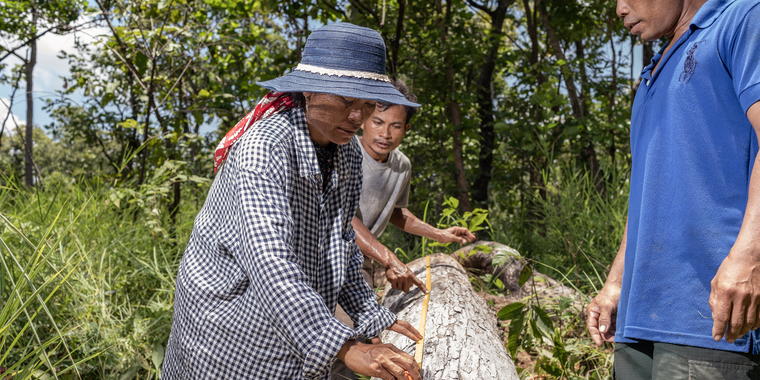
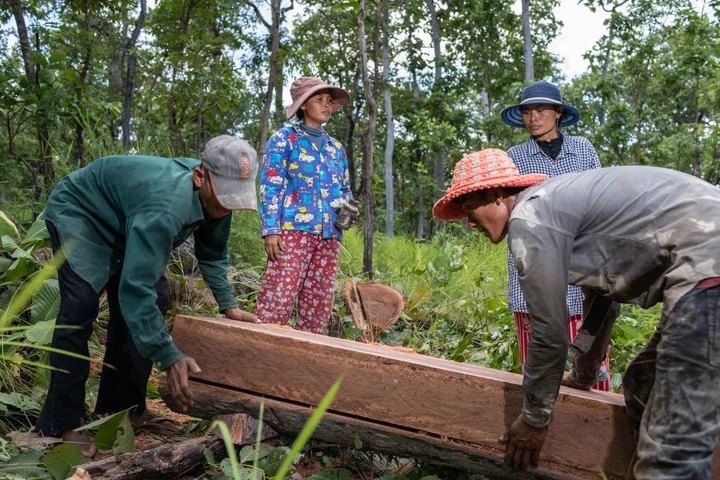
So far, the commune has been able to provide some of its law enforcement capacity to address issues in and around the forest. The commune and the community forestry group have also been able to collaborate on a bridge built with timber sourced from the community forest. In exchange for the timber, the community forestry group secured a portion of the tolls paid by outsiders to cross the commune bridge.
Such negotiations speak to the delicate balance in community forestry between protecting natural resources and finding sustainable ways to use them for the greater economic good. Besides the deadwood harvesting program, since 2018 O Taneung has also been making use of a community forest credit scheme launched with US$1,000 in seed funding from RECOFTC and the SDC.
Tuy Sophon, a longtime community forest member and chief of the credit scheme, said the fund has already expanded its credit pool to more than US$3,000 and now serves 35 families.
“As this develops, I hope everyone in the community can borrow in the future,” Tuy says. As of now, he explained, the loans have mostly been to fund agricultural projects outside the forest, such as small investments of seed, fertilizer and other materials used by the villagers.
The interest rates the recipients pay is a little higher than what they would find at a microfinance institution or bank, Tuy says, but the proceeds of these loans stay firmly in the community, where they are reinvested in the credit scheme and in forest management.
In the future, Ray Seakla and others hope the growing capital pool from the credit scheme, and the money made on interest, can fund more ambitious improvement projects such as the construction of a seedling nursery for reforestation, a firebreak to prevent the spread of forest fires and even renovated roads to allow them to more quickly get around the woods and respond to illegal actions there.
For those currently enrolled with the program, that community-building aspect helps make the scheme an attractive option, as does the trust extended to borrowers.
“We’ve had no issues with lack of payment, but there are sometimes late payments,” Tuy says. “But we are all neighbours here, so we do get paid back, even if it takes some extra days.”
That flexibility is part of the appeal of the program, which does not require collateral from those who take out loans. The application process is also simpler than those provided by microfinance institutions. And, while the program maintains an official structure to ensure accountability of the money, community members say they have a faster and more convenient experience borrowing from their neighbours than they would get from an outside institution.
With the money they are building with the new initiatives, Tuy and other community members say they have already been able to defray the costs of management while expanding their ambitions. Though their labour is still offered on a volunteer basis, community members like Thon Phanny can now use group funding to buy petrol, food and other supplies for forest patrols.
“The community forestry group is more active than it was before,” Thon says. “There is more patrolling, more money to do activities now.”
While Thon is pleased with the growth of the community-led initiatives, she wants to see even more coordination between O Taneung and the outside world, particularly with figures at the national level.
Community forest chief Pao Kosal has a similar feeling. Acknowledging the increasing security that has come through integration with the local and district authorities, Pao made an appeal for even deeper partnerships in the years ahead.
“Even though we have come a long way from starting with nothing, we still need support,” says Pao. “The community alone can’t do it all yet. But we’re going to climb up the mountain—we’re going to get to the top.”
###
RECOFTC’s work is made possible with the support of the Swiss Agency for Development and Cooperation (SDC) and the Swedish International Development Cooperation Agency (Sida).