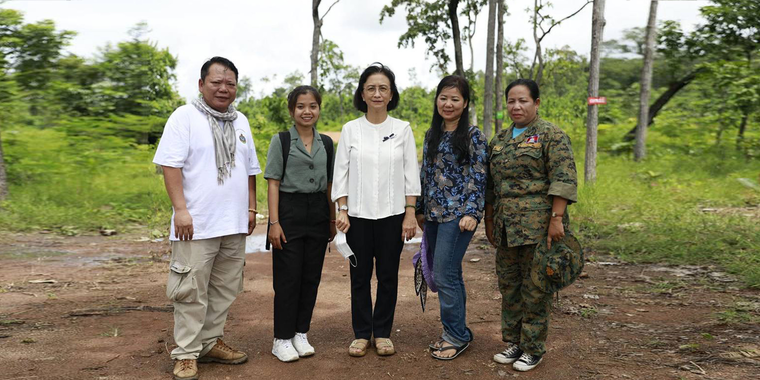
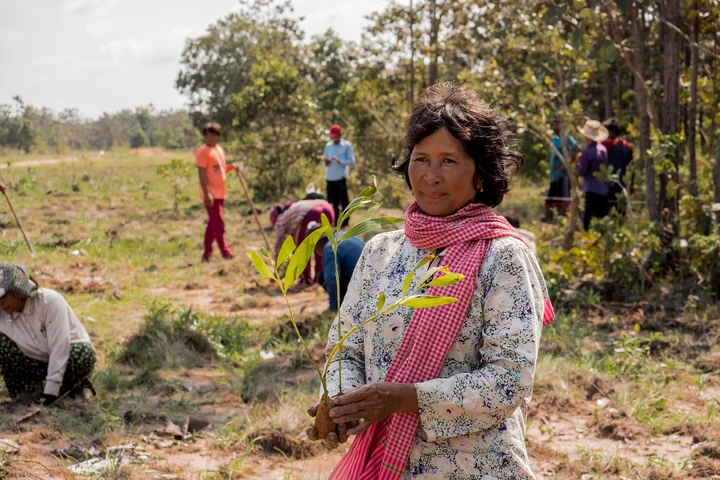
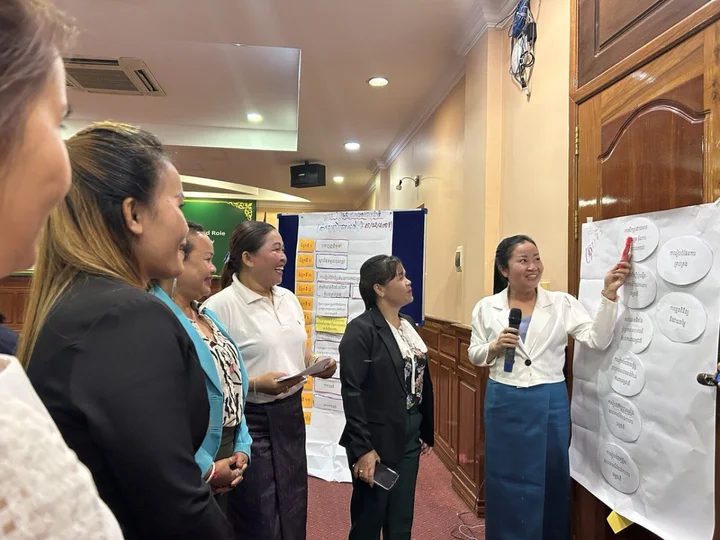
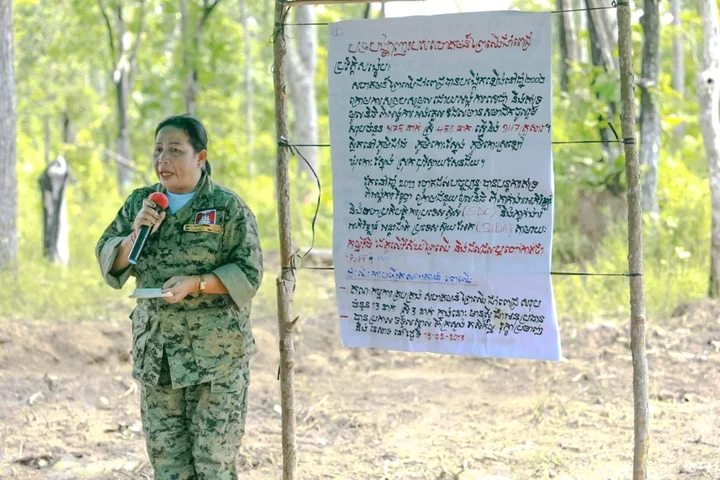
By voicing their opinions in meetings, the women have overcome their shyness. By growing confident, they have become role models for other women and girls in their community.
“The community forestry women’s network changed me, from a person who wasn’t willing to speak up to one who speaks for others, it has changed my perspective and opened my eyes to see the importance of women in community forestry.” - Keo Vannai, a member of the Tropaeng Prey Community Forest in Kompong Thom Province.
Another woman whose life has changed is Sou Sunary, a member of the Pou Chrey Community Protected Area in Mondulkiri Province. Previously, she thought the community protected area network had nothing to offer her, but a friend encouraged her to take part.
“Participating in the women’s network provided the knowledge and opportunities for me to get to know and communicate with other organizations and local authorities,” she says. “It has improved my capacity. I am so proud of myself.”
“Being a member of the network also provided me with opportunities to use my talents and show what I can do with confidence,” she says. The village leaders saw her potential and encouraged her to seek election to the commune council, which turned triumphant for her.
As the network members improve their knowledge and skills, they also influence their family members and their wider communities in positive ways, helping to improve their communities and protect their local forests in the long term.
“The other women in the community also have a chance to learn from the network,” says Bou Khamtong, a member of the Champich Community Forest in Steung Treng Province who is also a member of the district council. “Whenever I return from meeting with the network, I share knowledge, information and photos with them.”
By empowering their members, the networks encourage other women to participate in the management of community forests and community protected areas and then to join the networks. This process contributes to the gender-equality goals of the Ministry of Environment and the Forestry Administration.
Looking to the future
RECOFTC Cambodia Country Director Hou Kalyan emphasizes four steps to build on the networks’ achievements.
“First, we need to focus on ensuring that the networks are strong and independent,” she begins. “Second, we must ensure that some members can represent the network or take on roles as focal points for building up the capacities of other women in their network and their community.”
“Third, the networks need support from and close collaboration with the gender working groups in the Ministry of Environment and the Forestry Administration,” she says. “And fourth, we need funding to implement activities promoting women’s participation in the forest and environment sector.”
The government agencies responsible for community-protected areas and community forestry are committed to the networks.
“The Ministry of Environment maintains its support in providing advice and other administrative or legal function for the community protected areas women’s network,” says Ly Sophorn. “If needed, capacity building will also be provided with the collaboration of related stakeholders.”
Adds Vong Sophanha of the Forestry Administration, referring to the forest sector’s gender-inclusive ambitions for 2021–2025: “We will need to support the community forestry women’s network by providing technical support as well as improving women’s capacities.”
Keo Vannai of the Tropaeng Prey Community Forest is also looking ahead. “My hope for the community forestry women’s network is to support more young women in the network because they are the future leaders.”
###
This story is produced with the financial support of the Partnership for Forestry and Fisheries Communities in Cambodia (PaFF) - Phase 3. The Swiss Agency for Development and Cooperation (SDC) and the Swedish International Development Cooperation Agency (Sida) are co-funding the third and final phase which runs from July 2021 to June 2023. A consortium of four organizations is implementing PaFF: RECOFTC, the Non-Timber Forest Products Exchange Programme Asia (NTFP-EP), World Wide Fund for Nature (WWF) and the Culture and Environment Preservation Association (CEPA). For more information visit www.recoftc.org/en/cambodia/projects/paff
RECOFTC’s work is made possible with the support of the Swiss Agency for Development and Cooperation (SDC) and the Swedish International Development Cooperation Agency (Sida).