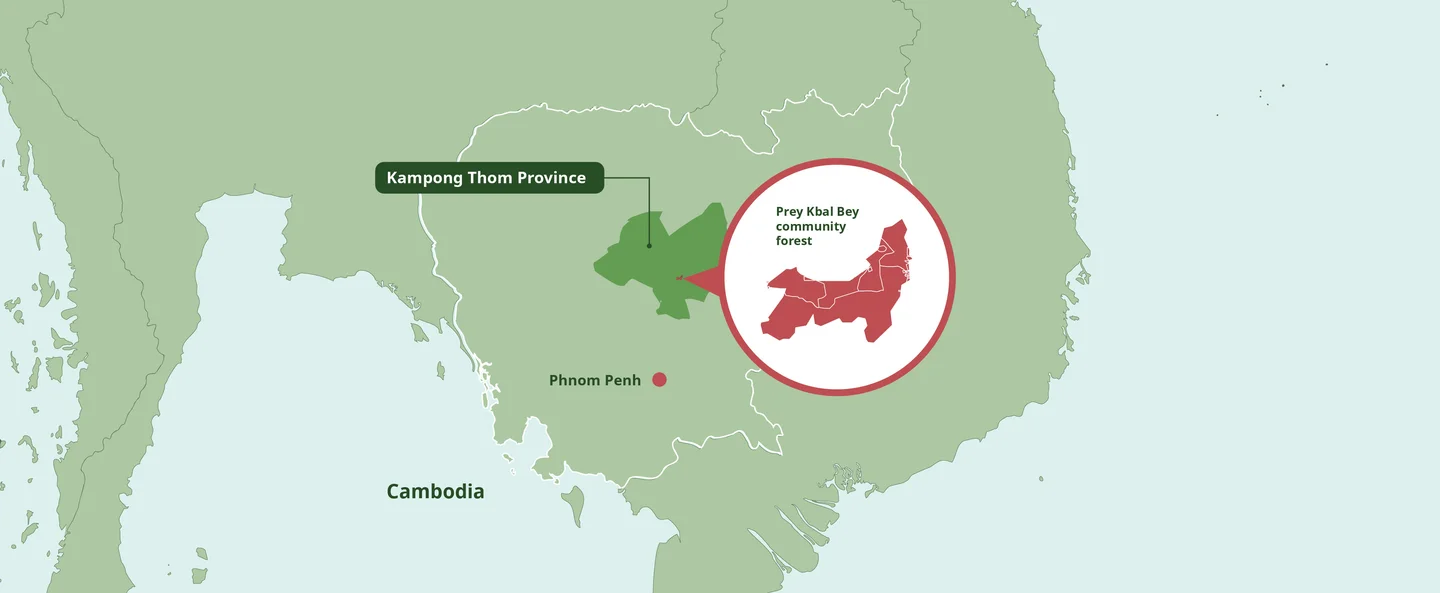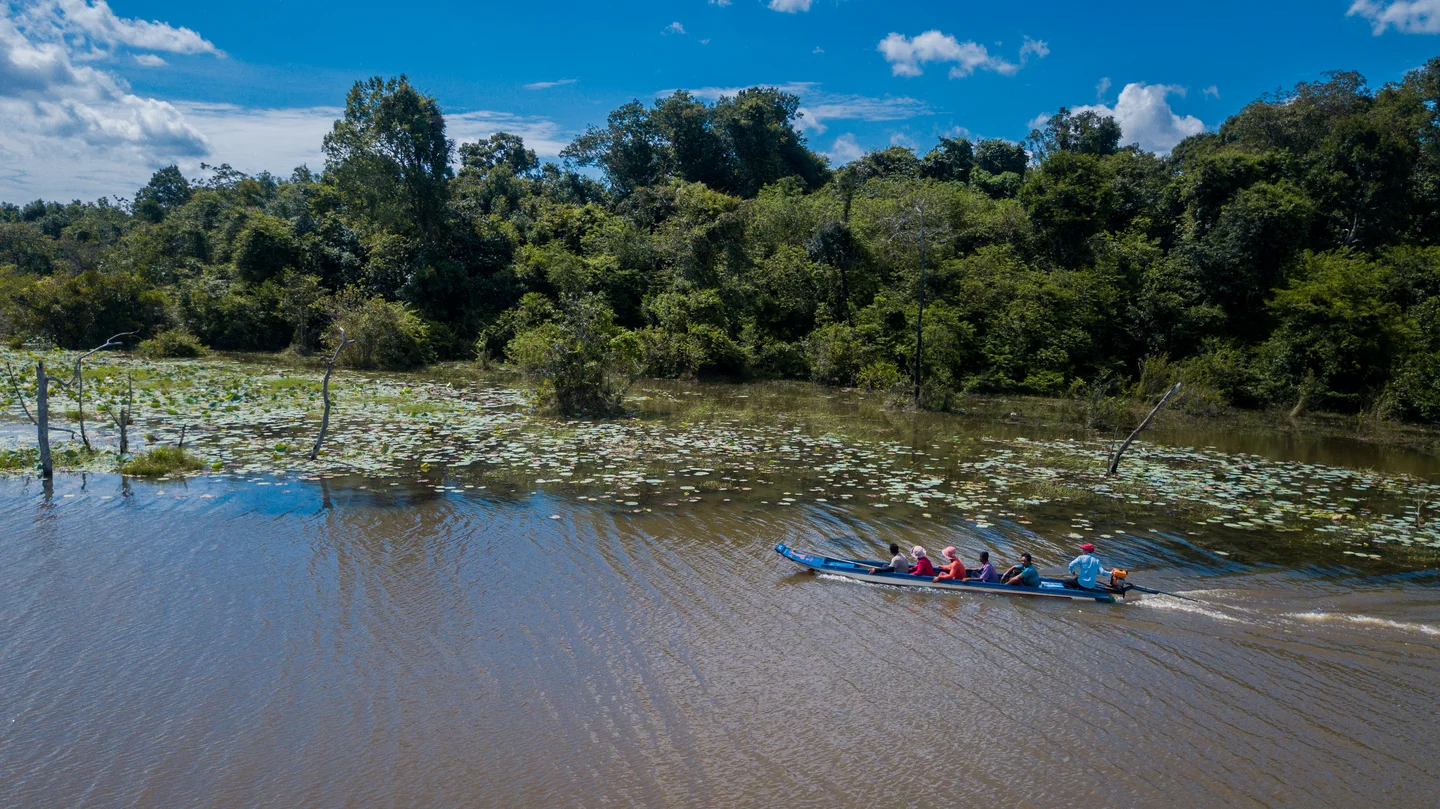
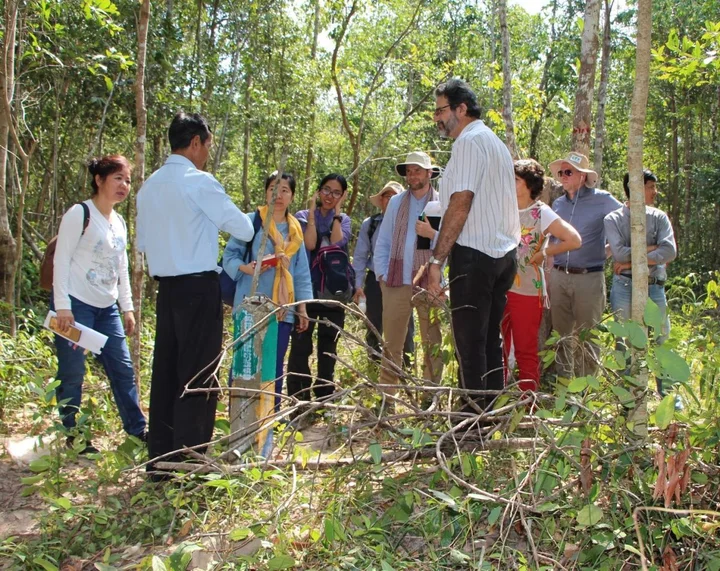
To Khoun Mon, the forest that shades him as he talks with delegates from the Swiss Development Cooperation (SDC) is radically different than that of his childhood. In the 1970s, harvesting charcoal left the land severely degraded. After decades of logging and economic development, the forests surrounding Prey Kbal Bey in Cambodia’s Kampong Thom Province were close to disappearing.
“There was a lot of shifting cultivation and no thoughts on legality occurring in my community from 1979 to early 2000s,” said Khoun. “Our livelihoods depended on the forest and we could only use the resources for subsistence.”
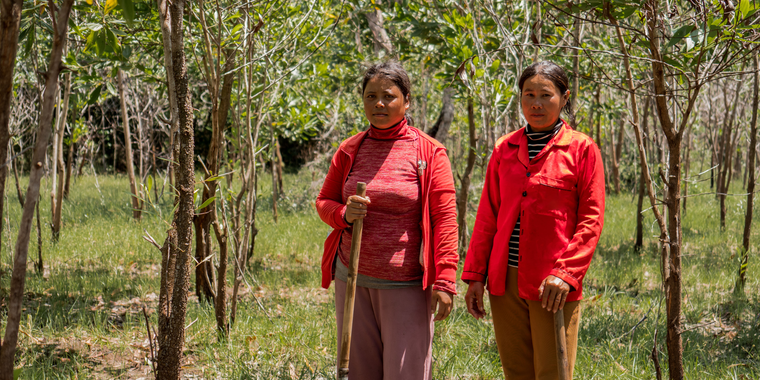
However, this changed over 10 years ago when community members established their community forest. Khoun is now his hometown’s community forest chief.
“This area had no trees when we started the community forest, but now we can see trees growing again,” said Khoun to the delegates from SDC, who were visiting Prey Kbal Bey to learn more about the Partnership for Forestry and Fisheries (PaFF) project.
PaFF, funded by SDC, is an eight-year project to improve communities’ resilience to economic and natural shocks through community-based natural resource management. It is a partnership among the World Wide Fund for Nature (WWF), RECOFTC, the Non-timber Forest Product Exchange Program (NTFP-EP) and Cambodia’s Culture and Environment Preservation Association (CEPA).
Since 2015, PaFF has helped Khoun and the 62 families of Prey Kbal Bey community forest implement their management plan.
Community forests in Cambodia are considered state public property by law. The Community Forestry Management Plan (CFMP) is one of the required documents communities must prepare and follow, after approval by Cambodia’s Forestry Administration, if they are to retain their rights over a community forest.
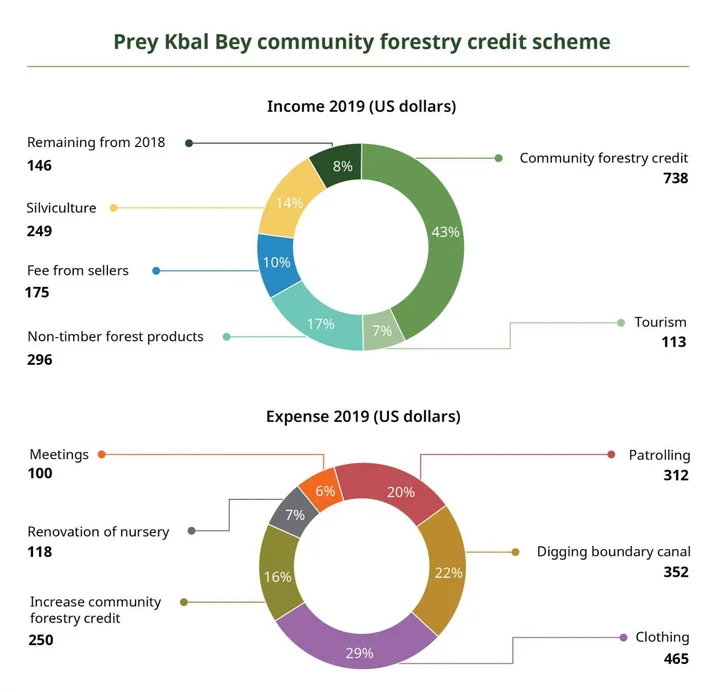
According to Khoun, community members are now able to collect non-timber forest products and timber poles to sell. Their efforts have generated more than 500 US dollars.