
Menu
Stories
Practitioner's insights

Cultivating gender leadership for sustainable forest management

RECOFTC’s work supports women and underrepresented groups with a gender transformative and leadership development approach, creating safe spaces to address challenges and build confidence. Through our Waves programme, we foster leadership among early-career professionals, helping tackle systemic inequities and marginalization in forestry and forest landscape management.
Cultivating gender leadership for sustainable forest management
Gender equality and empowerment in forestry and forest landscape management can only be achieved when systemic barriers are addressed. Transformative change requires identifying and supporting individuals working in forest landscape management to advocate for and negotiate such change at an institutional level.

How Waves is advancing gender equality in forestry and forest landscapes

Despite the integral role women play in managing forests and forest landscapes, they face significant barriers to access, participation and leadership. In the Asia-Pacific region, women continue to be excluded from decisions that affect the very forests and natural resources they protect and rely on. This exclusion not only denies women their rights but also undermines the effectiveness of sustainable forest management and climate-related initiatives.

The barriers to gender equality in forestry and forest landscape management are multifaceted. They are rooted in social, cultural and economic systems. In many parts of the world, gender norms restrict women’s roles to the private (or domestic) sphere, while men dominate the public sphere. This reinforces the stereotype that women’s contributions to forest management are secondary, even though they are often the most dependent on forests for their livelihoods.

A woman representative from Citizens’ Forest Network in Thailand once told me that she has to make multiple arrangements before she can travel to attend meetings or trainings. “I need to secure permission from my family and ensure someone accompanies me to the meeting or training. A woman travelling alone from a remote area to the city can be dangerous.”

Cultural and behavioural barriers are evident in practice. Women are less likely to participate in forestry training programmes, and when they do, their mobility is limited, they lack resources and they experience societal resistance. Even in cases where the number of women and men participating is equal, it is men who speak the most. “Women tend to keep quiet when they are placed in the same forum as men. But when women and men are separated, they feel more confident to speak and voice their opinions,” observes Atcharaporn Daisai, project coordinator of the Citizens’ Forest Network, RECOFTC Thailand.
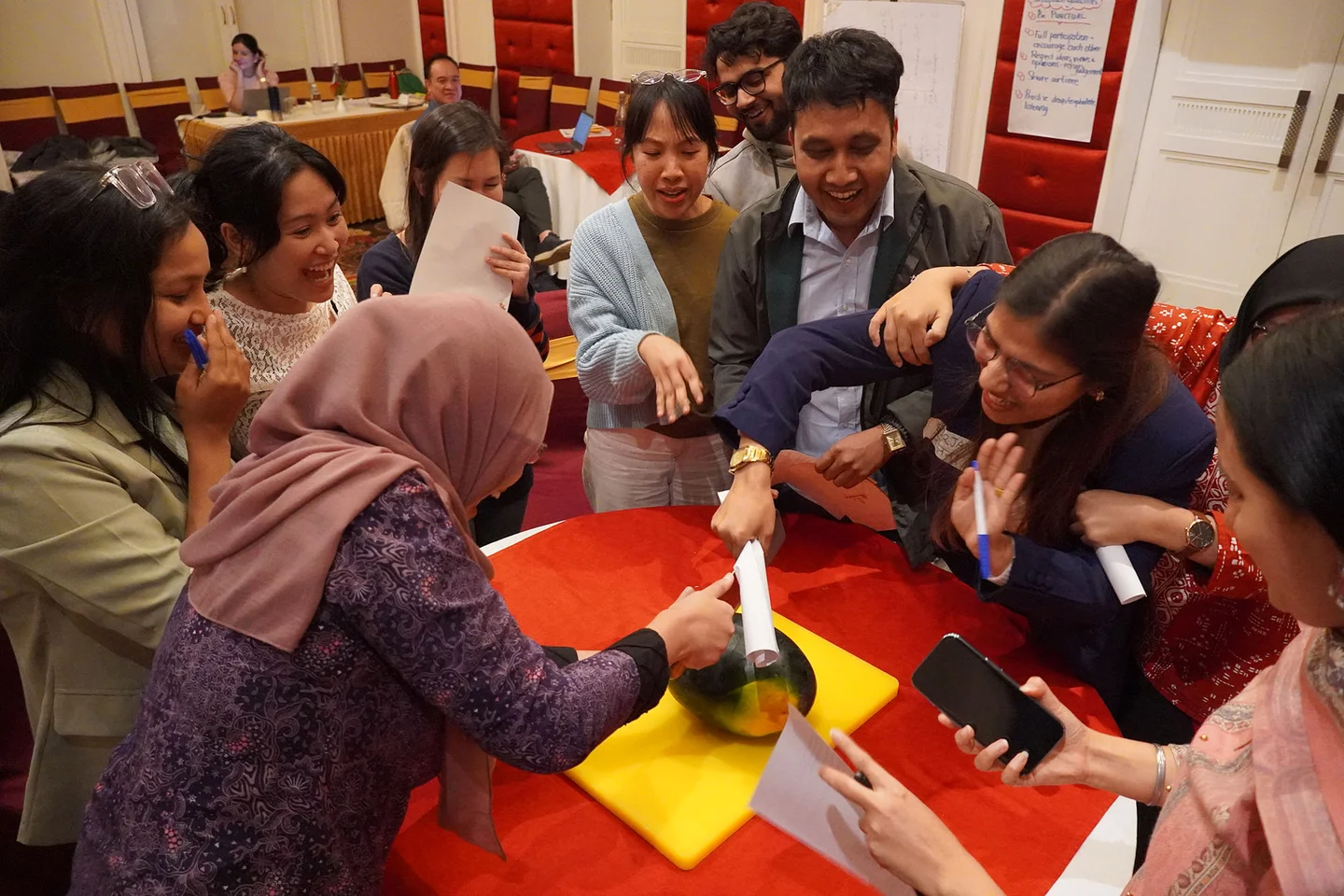
Participants in the Waves program engage in a group activity to practice negotiation skills for ethical decision-making related to gender, climate change and forestry
Waves participants during a session on practicing negotiation skills to make fair, ethical and socially responsible decisions in the context of gender, climate change and forestry.

RECOFTC’s gender transformative approach

RECOFTC has been taking a gender transformative and leadership development approach to support the empowerment of women and underrepresented groups at regional, national and community levels.

Waves – Weaving Leadership for Gender Equality – is one of our long-term leadership building programmes on gender equality and social inclusion in forestry and climate change. Launched in 2019, Waves has supported 36 gender leaders (women and men) from RECOFTC’s focal countries – Cambodia, Indonesia, Lao PDR, Myanmar, Nepal, Thailand and Viet Nam. Waves participants have established themselves as gender experts, leading and advocating for gender equality and social inclusion in forestry and climate change through their respective organizations.

Kusdamayanti, a Waves participant from 2019 to 2020, is head of the Environment and Forestry Human Resources Education and Training Center, part of the Ministry of Environment and Forestry in Indonesia. She says, “Waves has had a massive impact on my professional and personal growth. It has strengthened my critical and creative thinking around gender mainstreaming, allowing me to make better decisions.”

She also relays how her Waves experience instilled confidence, enabling her to take on a more active role in mainstreaming interventions. “It is crucial to provide more room for women and men to come together to share experiences,” she says. “This allows us to design and develop inclusive and collaborative action plans for sustainable forests.”

Through September 2024 to December 2025, Waves is supporting 21 early-career professionals with a focus on building their leadership as change agents on gender equality and social inclusion in climate change.

Equality, rights and empowerment for all women and girls

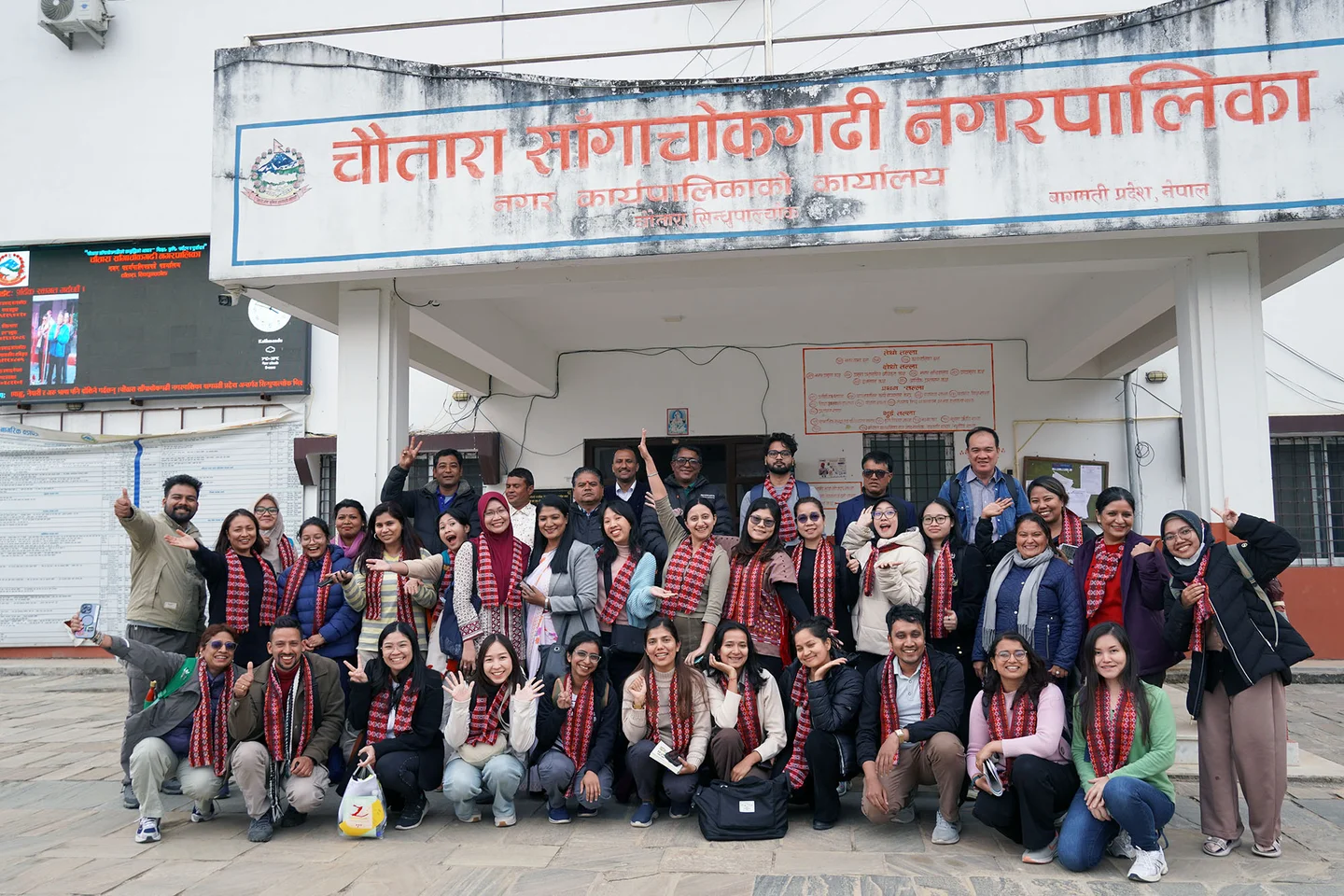
WAVES participants and RECOFTC staff pose for a group photo during a study visit to Chautara Sangachokgadhi Municipality in Nepal focused on gender leadership in forestry
Waves participants with staff from RECOFTC main office and RECOFTC Nepal during a study visit to Chautara Sangachokgadhi Municipality in Nepal. Held in February 2025, the visit provided practical experience in the field for the participants, shedding light on multiple issues, challenges, opportunities and successes related to gender leadership.

Closing the gender gap requires addressing the root causes of gender inequality, those that are steeped in historical and cultural norms. It is the imbalance of power that needs to be tackled and set right.

The theme for this year’s International Women’s Day, ‘For ALL women and girls: Equality. Rights. Empowerment’, calls for action to equal rights, power and opportunities. Empowering youth is central to this vision, a core tenet of Waves. By increasing leadership capacity among early-career professionals, we are helping tackle systemic inequities and marginalization. As stronger leadership and expertise emerge, inclusive policy processes will follow and investments will be enhanced in ways that promote gender equality.

For sustainable forest governance, gender equality and equity are essential preconditions. At RECOFTC, the empowerment of women is not just about gender equality. It is about ensuring that our forests and forest landscapes are managed in a way that is both sustainable and equitable.

Investing in the rights, equality and empowerment of women is not just a moral imperative. It is also an environmental one. As we work to build a more sustainable future, it is critical that women and girls have the opportunities, support and recognition they deserve in the forestry and forest landscape management spheres. This is essential for building a more equitable, resilient and sustainable world for all.

###

Korranat (Wad) Buranakij is programme officer for gender equality and social inclusion at RECOFTC.

Story details

Geographic focus
Regional