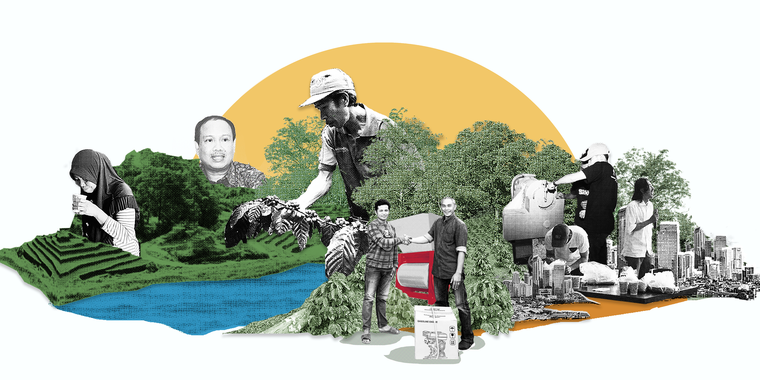
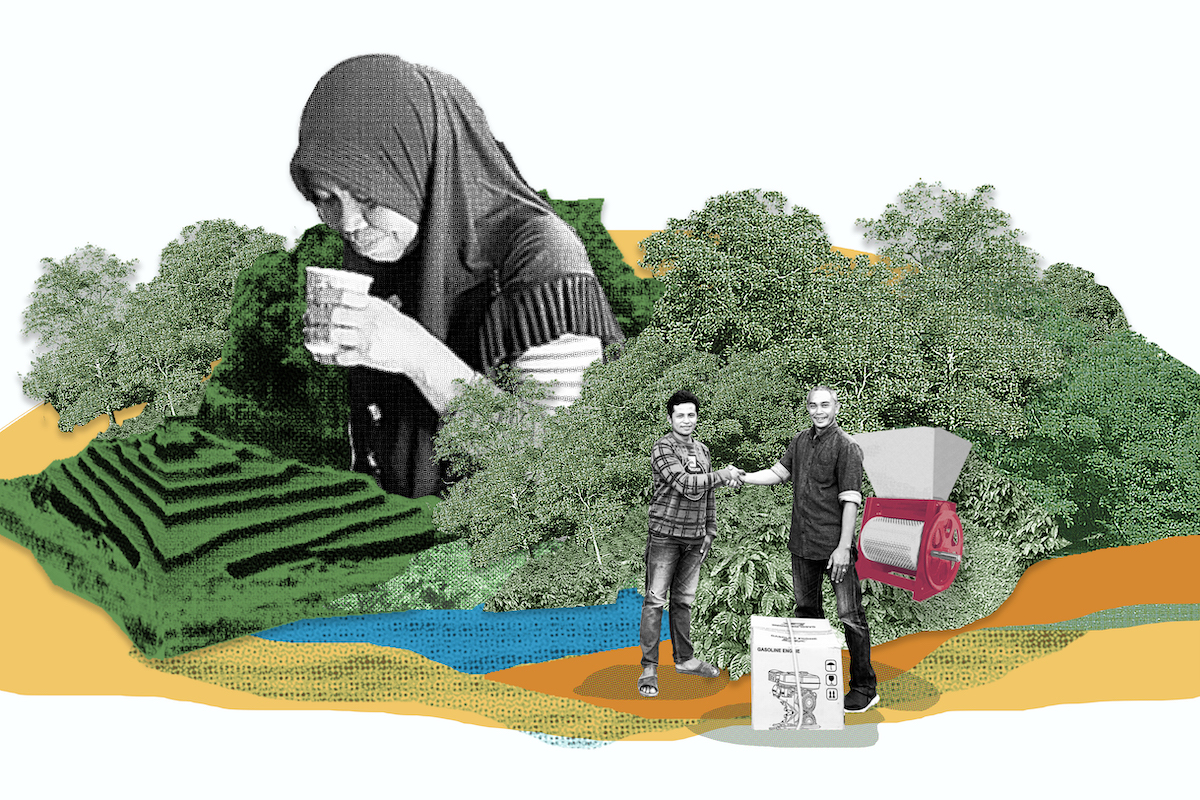
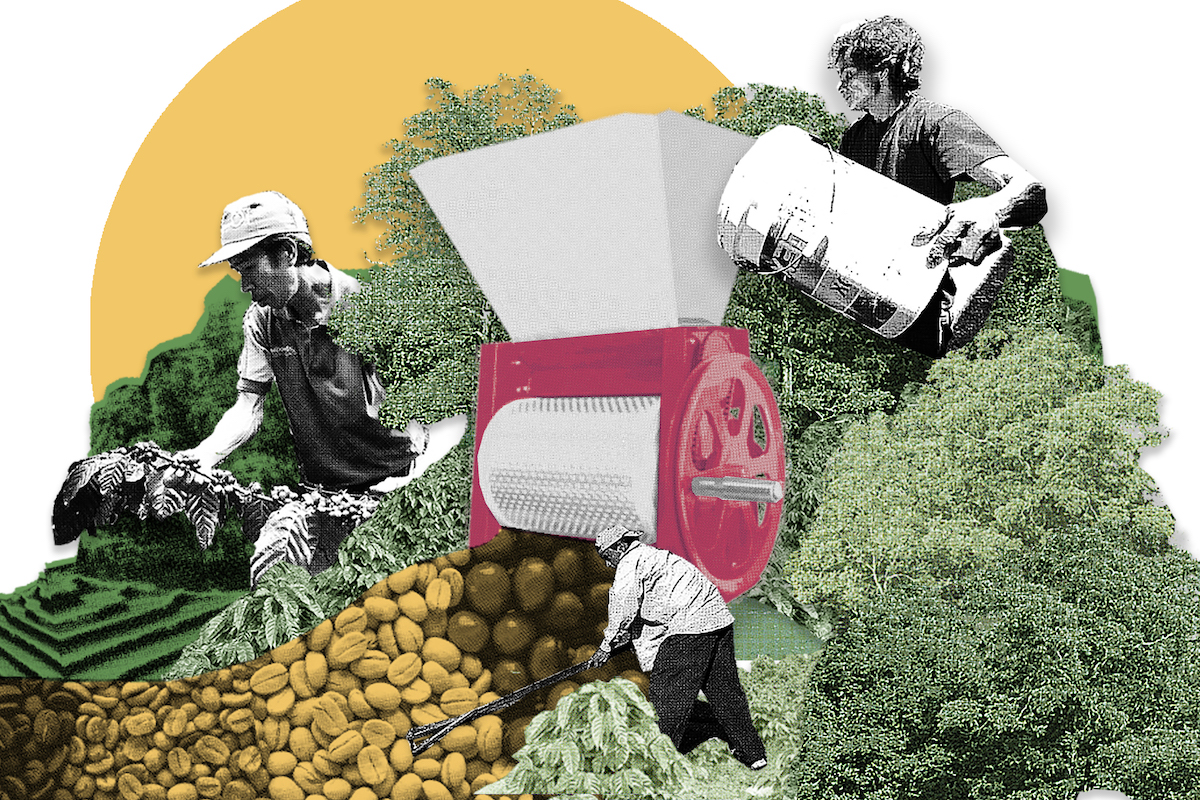
Since it was formed in 2016, the cooperative has worked to fetch higher prices for farmers. Training and information have flowed so growers can improve the quality of their coffee. Collectively, through Akar Tani, the farmers have more bargaining power to seek higher prices, rather than individually selling to unscrupulous middle men offering lower ones. Farmers have also access to pulping machines and the new roaster.
“It’s more profitable to sell roasted beans, although there are overhead costs from roasting and packaging,” says Hasri. One kilogram of roasted beans can go for 165,000 Indonesian rupiah, more than double the price of unroasted green beans at 75,000 Indonesian rupiah per kilogram.
Navigating challenges
With continuous support from RECOFTC, Akar Tani also has access to capital, including a government loan, to help build the enterprise. Members gained business and risk management skills to help navigate its early stages, and learned how to use financial planning tools. A study tour was organized to a successful coffee cooperative on Java so members could learn more about good farming and business practices.
“RECOFTC has helped us connect with government agencies for support,” says Hasri. “They have provided training, such as in how to undertake risk assessments and how to comply with government regulations.”
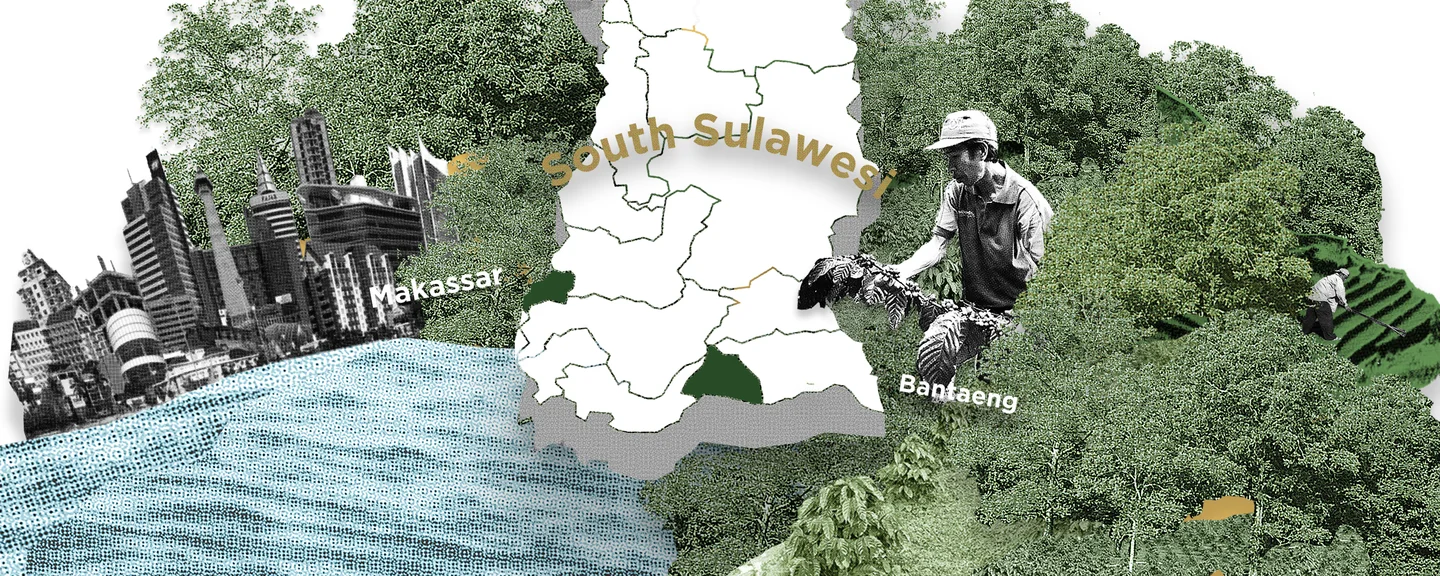
Despite the collective’s success, challenges remain. Before the COVID-19 pandemic, Akar Tani focused on increasing the quantity of coffee from farmers to meet volume requirements in larger markets, such as the provincial city of Makassar. Then it began to focus on quality. But when the pandemic hit, demand for coffee beans fell as shops and other businesses shuttered, sending prices lower. Akar Tani was forced to cut, by almost half, prices paid to farmers for their beans. As the pandemic eases, Hasri is hopeful demand will pick up again and he can resume growing the enterprise.
For farmer Marni, COVID-19 has been tough. But she is determined to build on her success, and keep supplying her beans, sometimes using unorthodox methods. Akar Tani, for the moment, is buying less, but Marni has found other buyers, and even coffee shops willing to buy from her directly. She is washing and drying the beans using simple machinery on her farm. And she has even tried roasting them herself in a kitchen wok.
Supporting local businesses
In an upmarket coffee shop in Makassar, customers have started returning to sip and chat, in the wake of the pandemic. Andimal, owner of Beans Coffee Shop, is among the baristas selling Akar Tani-branded coffee who have reopened their doors.
“My customers are coffee connoisseurs,” he says. “They really know what good coffee tastes like and they always ask me ‘where do you get your beans?’.”
Andimal is confident that with its strong, distinct flavour, Akar Tani coffee can compete in the future with larger and more established brands in the area, which has a rich history of coffee cultivation. The collective just needs a strong marketing campaign and a steady supply of consistently high-quality beans from its farmers, he says.
“I will continue to support them,” says Andimal. “I am from this island. I want people to know that the coffee from my homeland is just as good as Java and Sumatra coffee.”
In the nearby town of Jeneponto, Ika O. Turatea shares this sentiment. She manages a gallery to support local artists who gather to work and sell their handicrafts. When Akar Tani approached her eight months ago with packets of local coffee to sell in the gallery’s cafe, she didn’t hesitate.
“The coffee is good quality,” says Turatea, whose cafe draws steady crowds of young people, although numbers have dipped during the pandemic. “I was sold on the idea because the collective supports local farmers. This is the same vision for the gallery. We are trying to empower local artisans.”
RECOFTC’s work is made possible with the support of the Swiss Agency for Development and Cooperation (SDC) and the Swedish International Development Cooperation Agency (Sida).