Across Asia, forests are under growing pressure. Deforestation, land degradation, illegal activities and climate-related impacts continue to erode biodiversity, undermine rural livelihoods and weaken long-term resilience. The continent is also home to the largest population of 18- to 24-year-olds in the world, positioning its young people as powerful agents of socio-economic and environmental change.
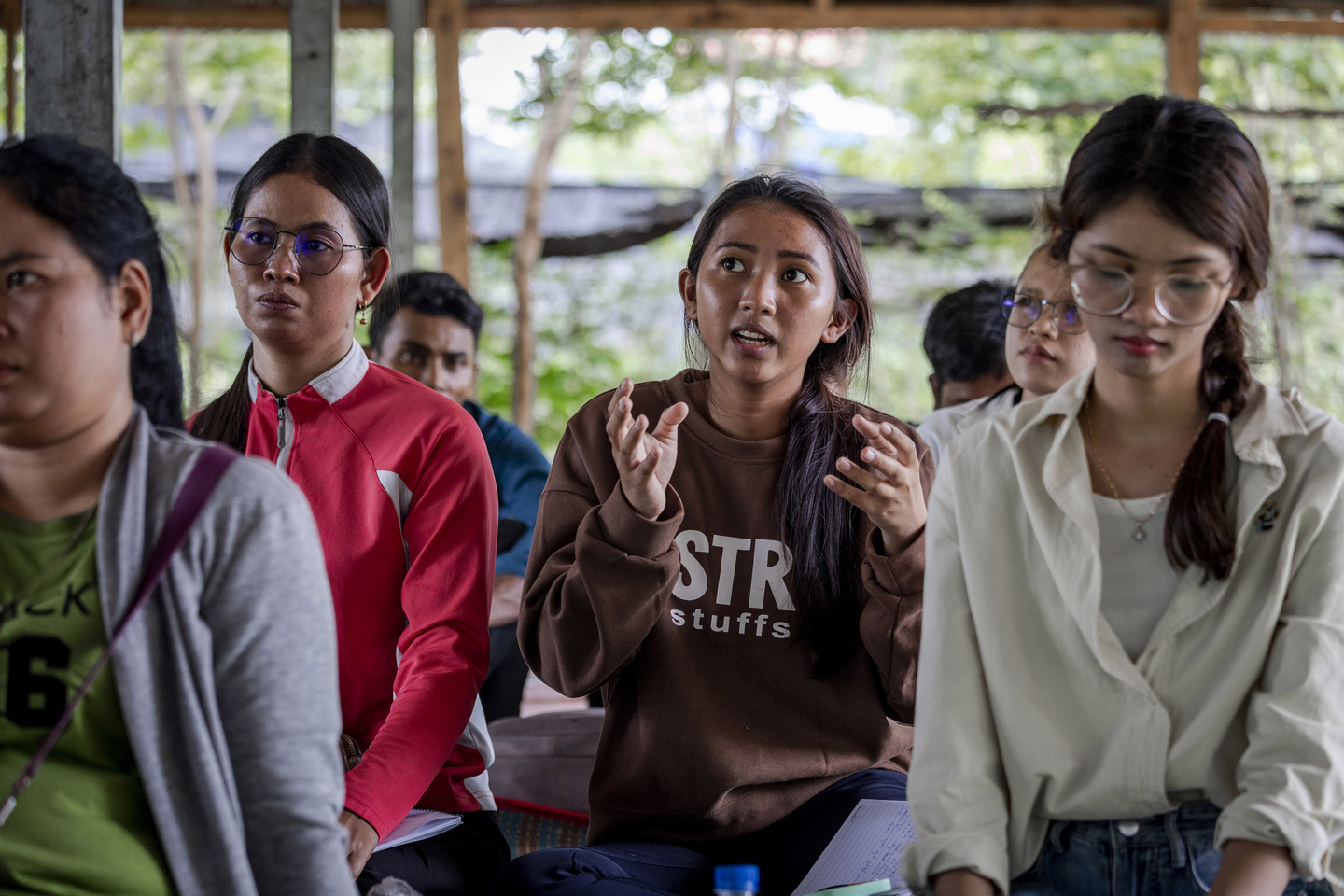
In Southeast Asia, many young people are involved in forestry and conservation through community initiatives, civil society work and projects implemented by non-governmental organizations. However, youth engagement is often informal and fragmented, with limited access to skills-building, recognition and decision-making spaces. RECOFTC is implementing the ‘Youth as guardians of the forest project’ in Cambodia and Lao PDR to help close this gap.
The stories we share here offer a snapshot of how young people are engaging more deliberately with forest governance and conservation in our project areas.
Protecting forests from within
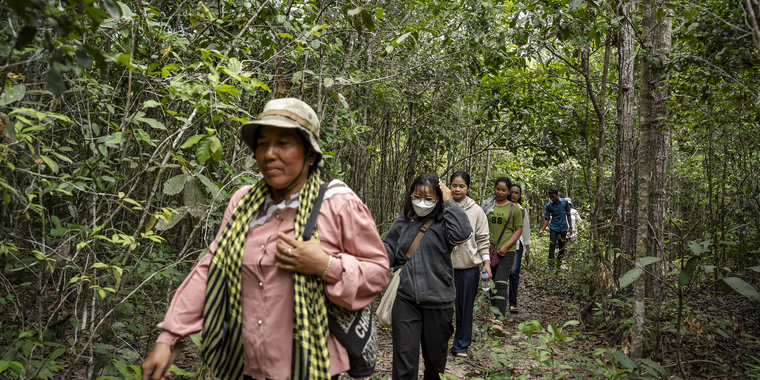
Oeurn Hok is 32 years old. He grew up in Cham Pen Community Protected Area in Cambodia’s Preah Vihear province, surrounded by the forests that sustain his Kuoy community. Today, he is part of the community protected area’s weekly forest patrols team, which responds to reports of illegal logging and wildlife poaching in the area.
“The forests are our identity,” he says. “They shape both our culture and our livelihoods.” The livelihoods of the 254 Indigenous households in Cham Pen are tied closely to the forest. Non-timber forest products provide both daily necessities and income for the community.
In October 2025, Hok attended a meeting of the Provincial Community Forestry Partnership Coordination Committee with support from our youth project. Alongside government officials, community representatives, civil society members and other stakeholders, Hok listened and participated in discussions ranging from silviculture and REDD+ to community credit schemes and collaborative governance.
The experience broadened his understanding of how decisions affecting forests are made beyond the village level. It also sparked practical ideas. As chief of his community’s credit scheme committee, Hok plans to allocate funds this year to support patrol teams, helping ensure sustained resources for forest and wildlife protection.