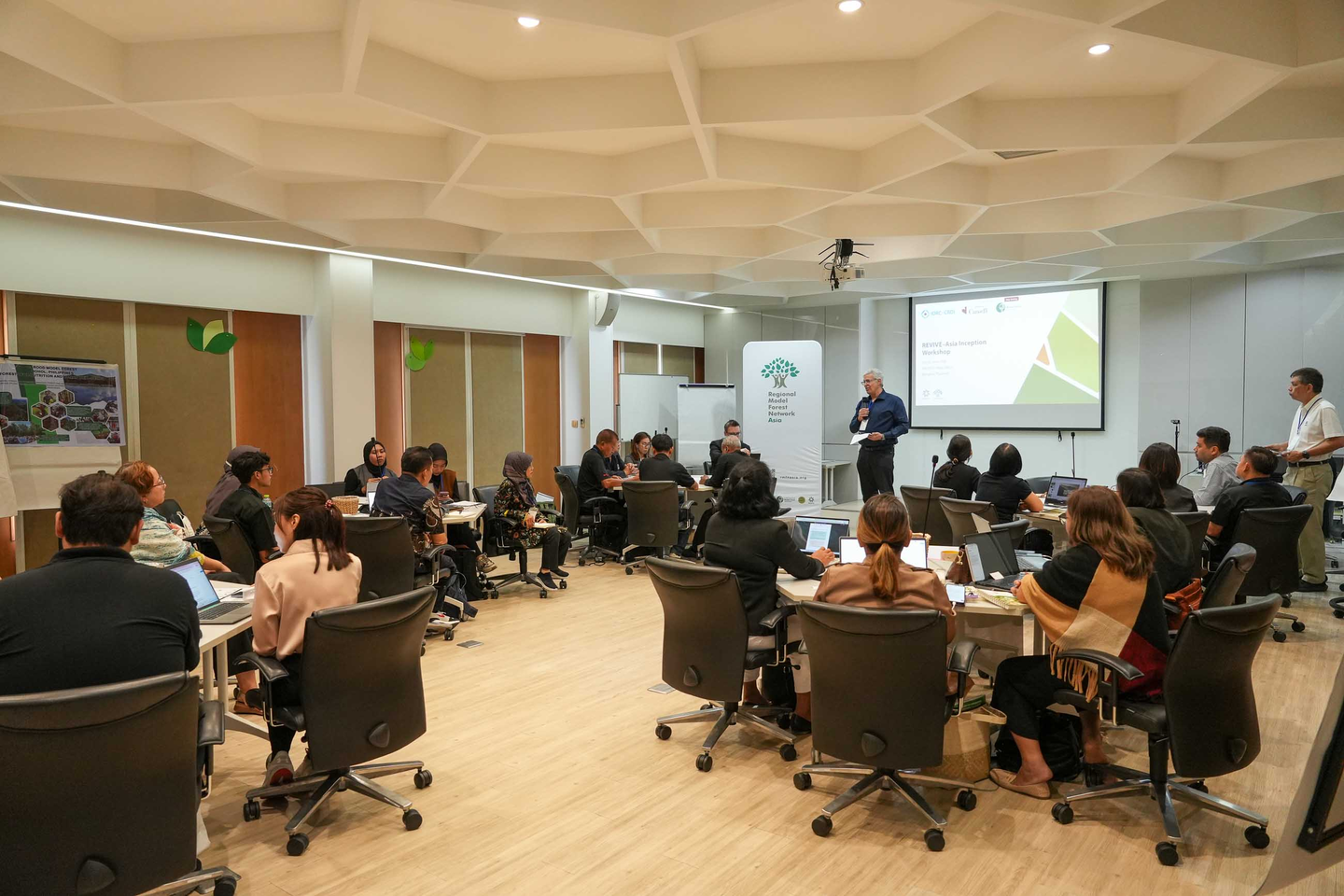
RECOFTC has launched REVIVE–Asia, a four-year project that will support communities in Indonesia, the Philippines and Thailand to restore fire-affected landscapes through nature-based solutions that strengthen ecosystem health and food security. The formal inception workshop was organized at RECOFTC’s main office in Bangkok from 23–25 June 2026.
With a strong emphasis on gender equality and social inclusion (GESI), the project focuses on strengthening partnerships, building local capacity and generating practical evidence for more resilient landscapes, improved food systems and stronger community-led responses to wildfire and climate-related challenges.
Nature based solutions for three Model Forest landscapes
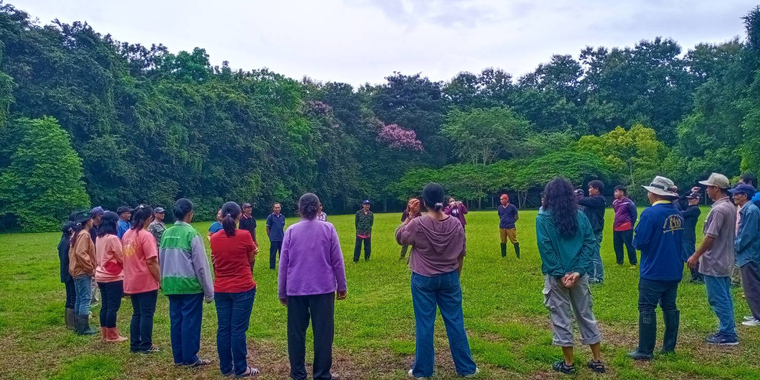
REVIVE–Asia uses participatory action research to bring together communities, governments and researchers to co-design and test context-specific, nature-based interventions. It works with communities, local governments, researchers and other stakeholders from three Model Forest landscapes: Margowitan Model Forest in Indonesia, Carood Watershed Model Forest in the Philippines and Ngao Model Forest in Thailand.
These landscapes face shared environmental pressures, including changing land use and the escalating risk of fires spreading under hotter, drier climatic conditions. “We need to address forest health and secure food systems simultaneously,” said David Ganz, RECOFTC’s executive director and a principal investigator for REVIVE–Asia at the workshop. “We want to see healthy, vibrant forests that provide livelihoods while ensuring secure food systems for the long term.”
A long-term commitment to restoration
Funded by the International Development Research Centre (IDRC) and Global Affairs Canada, the project is being implemented by RECOFTC as secretariat of the Regional Model Forest Network–Asia. Speaking at the inaugural, IDRC’s Kevin Tiessen, senior programme specialist, Climate Resilient Food Systems, noted, “We encourage everyone to think boldly about how we can support communities, generate learning and create impact across the region over the next four years.”