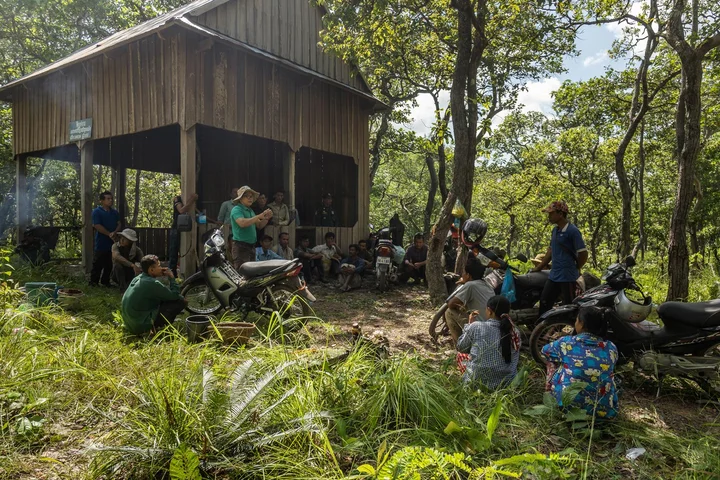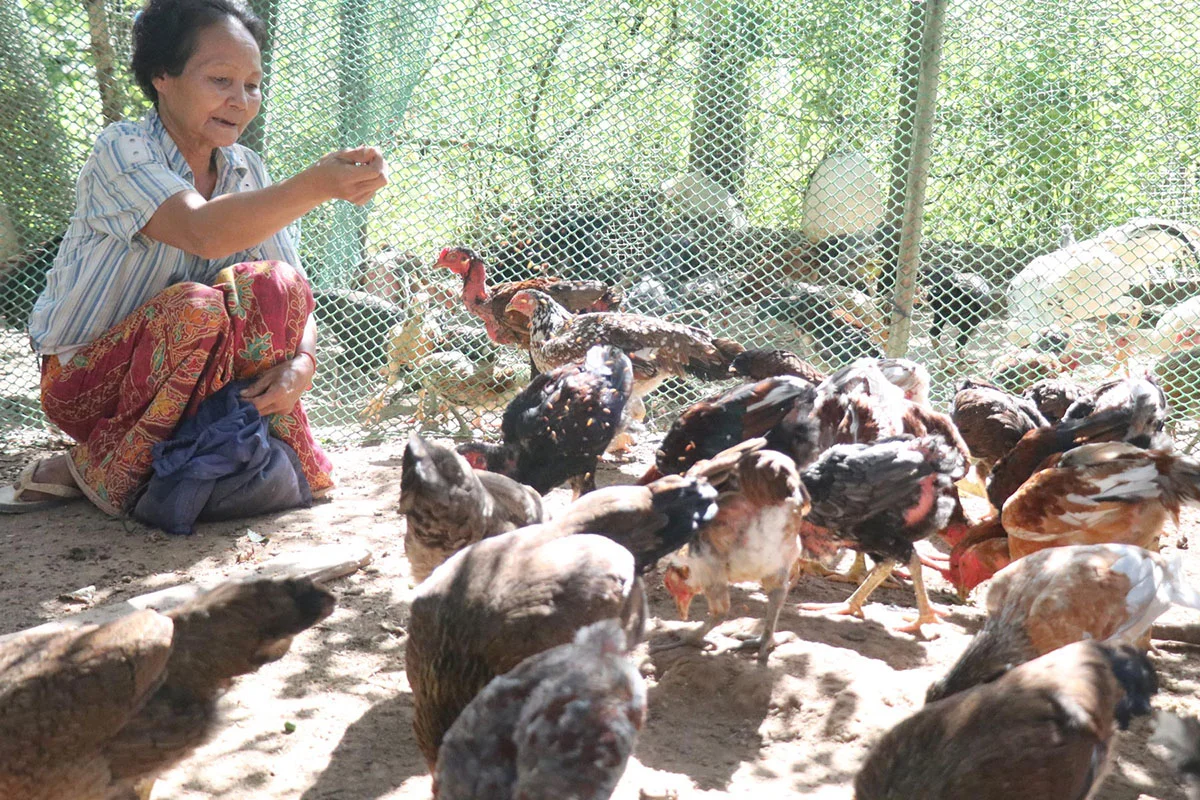

The Samaky Trapaeng Totim Community Forest in Preah Vihear Province is a source of food, materials and medicinal plants for 322 member families, who are mostly Kouy Indigenous Peoples. Since formalizing their rights to manage the area with PaFF’s support in 2016, the villagers say the forest quality has improved and the density and diversity of forest products they can harvest has increased.
“If we hadn’t formalized the community forest, I am sure that it would have vanished like the surrounding area that is now private farmland,” says Ton Mean, chief of Samaky Trapaeng Totim Community Forest. Thanks to PaFF’s activities, thousands of rural Cambodians like Ton Mean can now exercise their rights to manage, protect and benefit from local forest and fishery resources. To do this, PaFF focused on strengthening capacities among communities and government agencies, from the local to the national level. The resulting growth in the formalization of community-based natural resource management is sustaining livelihoods, reducing poverty and increasing people’s resilience to economic and environmental shocks.
Expanding community-based natural resource management
Around 65 percent of rural Cambodians depend on local natural resources for their livelihood and food security. But many people lack secure rights to take advantage of these resources. To address this, the Cambodian government developed three approaches that allow communities to formally apply for rights to manage local resources: community forests, community fisheries and community-protected areas.
Relatively few communities have seized the opportunities that the government’s three models provide. This is in part because they lack the knowledge, skills and financial resources to request formal recognition and to implement plans for managing resources sustainably. The urgent need to scale up adoption of these models prompted PaFF to work with communities to raise awareness of their rights, register their community forests, fisheries and protected areas and to develop and implement the required management plans.
In total, PaFF supported 120 community forests, 64 community fisheries and 11 community-protected areas. Together, they cover more than 221,000 hectares, or nearly 5 percent, of the total area of the four provinces in which PaFF was implemented.
PaFF also supported the preparation of management plans for 172 sites. National authorities had approved 122 of these plans at the time of writing, with the remainder awaiting approval. Official approval of these plans ensures the rights of the local communities over natural resources and provides the basis for securing and improving livelihoods.