
Menu
Stories
In focus

Bioengineering interventions in Jumla, Nepal

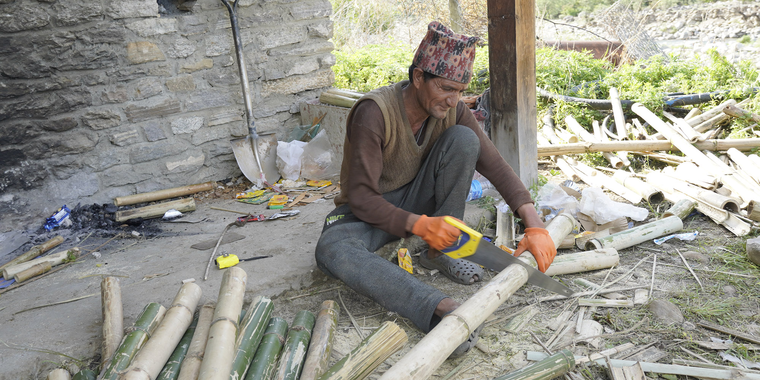
 local man prepares bamboo poles for use, cutting them according to the required specifications.
Bamboo is the primary construction material used in the bioengineered structures – the crib wall and retaining wall, for instance. A local man prepares bamboo poles for use, cutting them according to the required specifications.

As part of RECOFTC Nepal’s WISIONS Innovation Lab project, a bioengineering intervention is being implemented at Girikhola Jaalpadevi Rural Electricity Cooperative Limited, a micro hydro plant in Tatopani Rural Municipality, Jumla. The intervention includes nature-based solutions that protect the local micro hydro infrastructure from flooding and erosion risks. 

Key activities so far have included the construction of four retaining walls, each five meters long, and six crib walls made using layered bamboo poles secured with bamboo pegs. Thirty-five gabion boxes have also been installed to strengthen flood and erosion control. Seven of these are placed directly behind the powerhouse and the remainder along the riverbank. Additionally, three bamboo wattling fences have been built behind the powerhouse to slow surface runoff and trap sediments. 

To enhance long-term slope stability, live branches of Salix tetrasperma (known locally as bains), Ficus religiosa (known locally as peepal) and Prinsepia utilis (known locally as dhatelo) seedlings have been planted on and around the crib walls. With the exception of bamboo, the construction materials were sourced locally. 
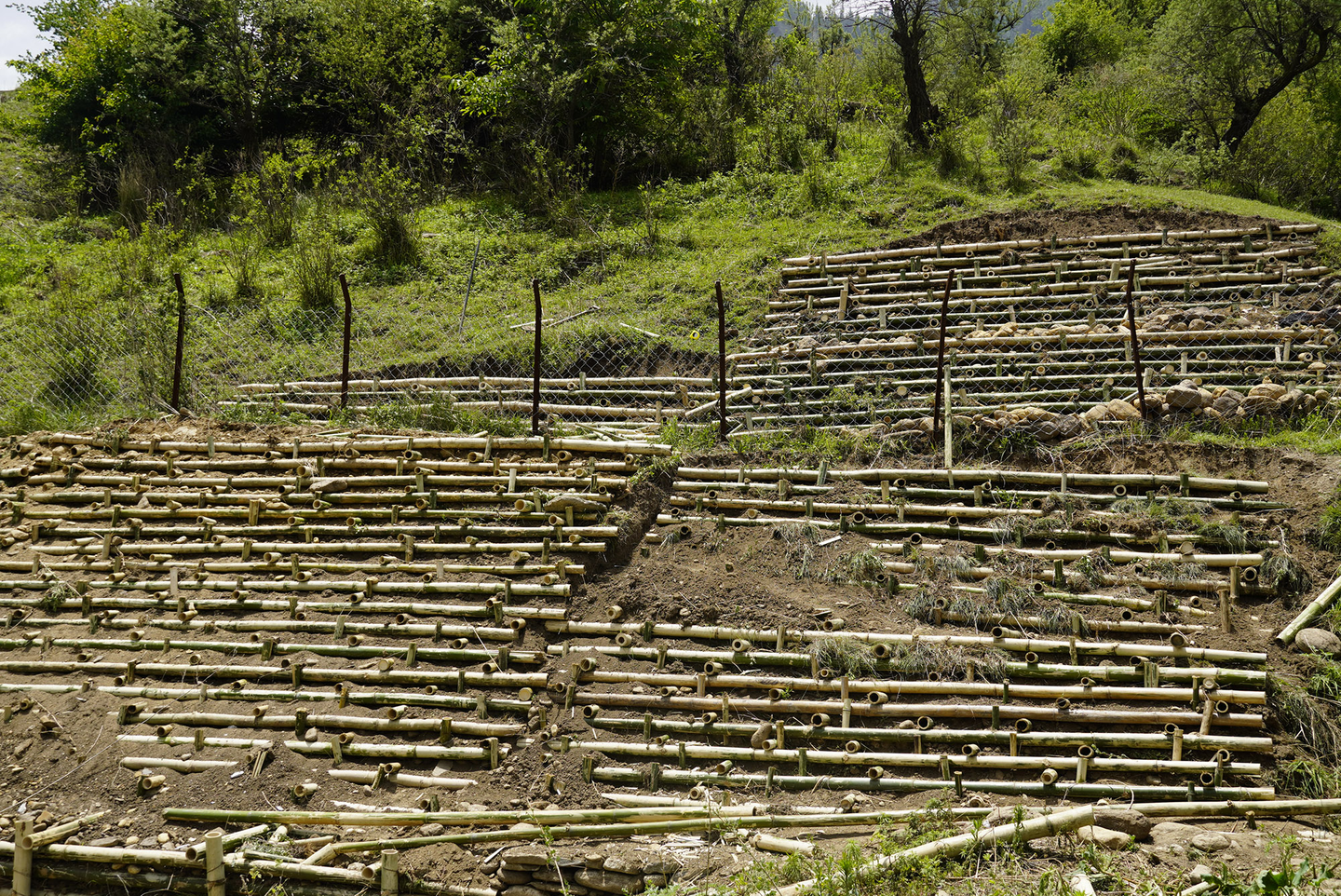
Construction of a crib-wall behind the powerhouse of the micro hydro plant.

With technical supervision from a field consultant, community members contributed their time and labour to the construction and planting initiatives.  The intervention has been well received by local stakeholders, including the beneficiaries of the micro-hydro project, ward representatives and the Soil and Watershed Management Office. 

Women carry stones in doko, traditional bamboo baskets, to construct gabion walls.

All stakeholders have shown ownership of the intervention and are committed to incorporating similar measures in future plans. During the final meeting held on 5 June 2025 at the municipality office to inform stakeholders about the progress of the project and related interventions, each stakeholder group also elected a representative to monitor and maintain the site.  

There is strong potential for replication, especially through the use of native materials like Salix tetrasperma to improve ecological integration. RECOFTC has recommended that such bioengineering practices be institutionalized in local government planning and that regular monitoring be carried out to assess the performance of vegetative components. Shared responsibility among the micro-hydro project, local government and watershed office will be key to long-term success.
 

###

Smriti Rokka is project associate at RECOFTC Nepal.

The WISIONS Innovation Lab in Nepal is a collaborative project aimed at improving rural livelihoods through sustainable energy and landscape management solutions.
 

Story details

Geographic focus
Nepal