Preparing the future
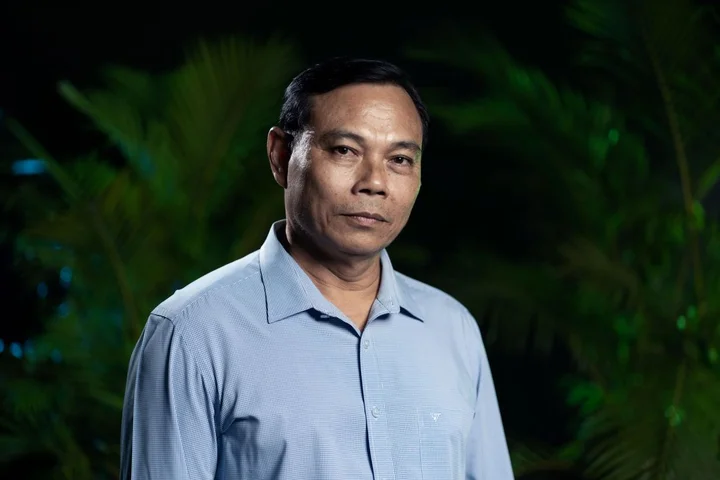
In neighbouring Thailand, university lecturer Surin Onprom is also focused on the future. Forests and communities in Southeast Asia face new challenges from climate change, along with longstanding issues of deforestation and inequality. Onprom says it is crucial to equip students with the skills and knowledge needed to tackle these challenges.
“Students are the future policy makers,” says Onprom, who teaches forest management at Kasetsart University in Bangkok. “If we want to change things in the future, we need to start with today’s generation.”
Onprom has worked in community forestry for more than 20 years. To safeguard the future of communities, he points to a need for progress in Thailand on tenure rights for communities, including more formal recognition of customary land rights.
Thailand recently passed a community forestry law, first drafted more than 30 years ago. It gives local people more say in managing natural resources. Onprom says the legislation does not do enough to strengthen land rights, particularly for ethnic and often vulnerable groups who have lived for generations in national parks and other forests controlled by the state.
Onprom started his career as a field research assistant at RECOFTC. Somsak Sukwong, RECOFTC’s founder, sent him to northern Thailand to learn first-hand how communities depend on forests in different ways.
His nine years at RECOFTC forged a belief that challenges need to be tackled in different ways, including by learning from local people themselves, because each community and forest is unique.
Today at Kasetsart University, Onprom regularly draws upon RECOFTC’s field work and case studies conducted throughout Thailand and the region to show students the different expectations among members of the same ethnic group. Karen people for example have different forest practices in Thailand’s northern hill areas than those Karen that live in the western lowlands.
“If we have diverse communities, students need to be aware of different solutions that may be needed. There is not just one way. One of the main problems in Thailand is that people think one solution is the best, but diversity is the issue.”
Onprom has great aspirations for his students. As members of the university’s forestry club, they recently became the first in Thailand to join a prestigious global forestry organization.
The students worked hard for membership in the International Forestry Students’ Association (IFSA), which accepts newcomers only after a rigorous vetting and evaluation process. In the lead up to gaining membership, they took part in a collaborative event hosted by RECOFTC that included IFSA, which seeks to connect students from around the world through its network of partnerships.
“It’s a great opportunity for them to open up their knowledge and their perspective,” says Onprom.
Onprom says he also has great hope for the young generations that continue to live in forests. He was recently inspired by a group in the Chiang Mai area that has developed a seed bank of local varieties of plants grown by traditional farmers in forests.
Onprom said he wants to devote time to helping this community develop this initiative, perhaps turning the seed bank into a profitable enterprise that can both conserve local biodiversity and maintain community knowledge and customs.
“I want to help them improve their livelihoods and find a new way forward. They need moral and other support. There is much work to be done.”
###
RECOFTC’s work is made possible with the support of the Swiss Agency for Development and Cooperation (SDC) and the Swedish International Development Cooperation Agency (Sida)