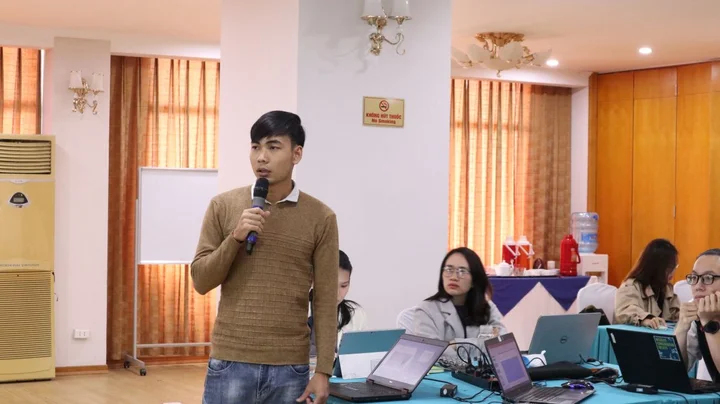

Vien Dang Cong, a technical officer at WWF-Vietnam, had never taken a data-related course before. So, the Data Literacy Training organized by the Open Development Initiative (ODI) in collaboration with the People and Nature Reconciliation (PanNature) was his first exposure to data science. The training was held in two, one-week phases in July and October 2020 in Quang Ninh and Hanoi, Viet Nam.
Data Literacy Training in Viet Nam
Watch a video recap of the Digital Literacy Training in Viet Nam in 2020.
More than 20 participants from civil society organizations, research institutes and press agencies participated in the Digital Literacy Training. The curriculum was localized based on the World Bank’s Data Literacy Program in order to equip participants with knowledge and skills on data literacy and data-driven storytelling.
Vien was charmed by the numbers that he had formerly considered dry and boring. Before the training, Vien found it challenging to read and understand data. His learning objective for taking the course was focused on connecting with other participants. However, through the course, he learned how to read and use data.
Vien is in charge of collecting and processing data from his fieldwork. The training was an opportunity for him to learn about cutting-edge technology platforms and tools to optimize his work. “I got to know some useful tools that I have never used before,” said Vien. “I want to apply them to my work in the future.”
After the first week of intensive learning and practice, each participant had to identify their topic for the final project. Vien chose to focus his data project on the environmental impact of hazardous waste, such as batteries, on the forests in central Truong Son.
“Waste, such as batteries, receive more attention in municipalities than in water catchment areas and forests,” said Vien. “This hazardous waste derives from the lack of environmental awareness and bad habits of local people and forest protection officers. They dispose of the batteries indiscriminately when collecting forest products and patrolling, causing negative impacts on the environment. I want to conduct a survey to learn the current state of wasted batteries in the forest and work towards solutions to purify water sources.”