Challenges to overcome
Yet community forestry faces major barriers. Forest areas available for community use are often far from villages and inaccessible to the poorest households, especially landless labourers who survive day-to-day. Another challenge is that it takes a long time for new applications for community forests to be approved. Unless these challenges are resolved, Myanmar will fall short of its goal to allocate one million hectares to community forestry by 2031. As of 2023, we had achieved only 46 percent of that target.
We also need a regulatory framework for carbon trade. Right now, Myanmar has no clear rules on how communities can access and benefit from carbon markets. Without legal clarity, they cannot earn from the carbon their forests store. This is a missed opportunity to incentivise mangrove protection and restoration, while improving rural livelihoods.
And we must change the way mangroves are perceived. When I studied forestry in the early 1980s, I had just three hours of lectures on mangroves during my six years at university. Today, foresters in Myanmar know so much more, but they still focus on how to plant and manage valuable timber species like teak and see mangroves as sources only of ‘minor’ forest products.
Five necessary actions
There is even less awareness among policymakers and private companies. We need them to understand just how important these ecosystems are – to food security, livelihoods, biodiversity, climate action and coastal resilience.
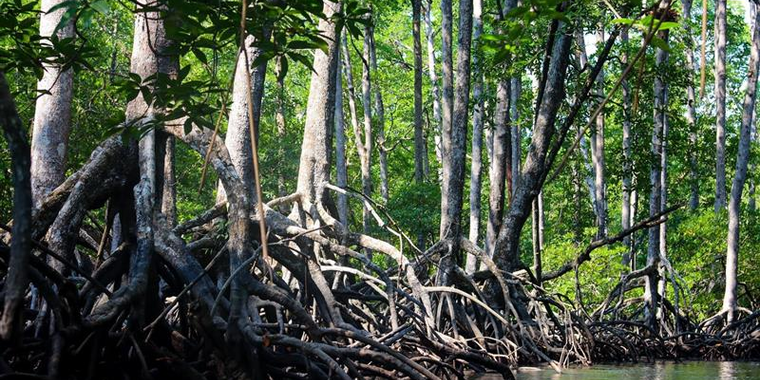
Mangroves are complex, beautiful and indispensable. They require a cross-sectoral approach where the fisheries sector pays attention to the mangroves that sustain it, where energy policy reduces demand for firewood and charcoal, and where climate finance reaches the people who conserve and restore mangrove forests.
To protect our mangroves and the communities that depend on them, we must:
- recognize mangroves as vital ecosystems, not minor forests
- remove barriers to community forestry and access to land
- establish a clear legal framework for carbon markets
- invest in clean energy alternatives to reduce charcoal and firewood dependence
- coordinate across sectors, especially among forestry, fisheries, energy and climate policy.
If we do not act now, we will lose not only trees, but everything tied to them – fisheries, food security, storm resilience and coastal communities themselves. But if we do act with knowledge, coordination, investment and the support of local people, then Myanmar’s mangroves can recover. I have seen it happen in individual community forests, and I believe it can happen again at scale.
* Note: Myanmar has both official and informal exchange rates. This estimate uses the local market rate to reflect actual purchasing power.
Maung Maung Than is director of RECOFTC Myanmar.