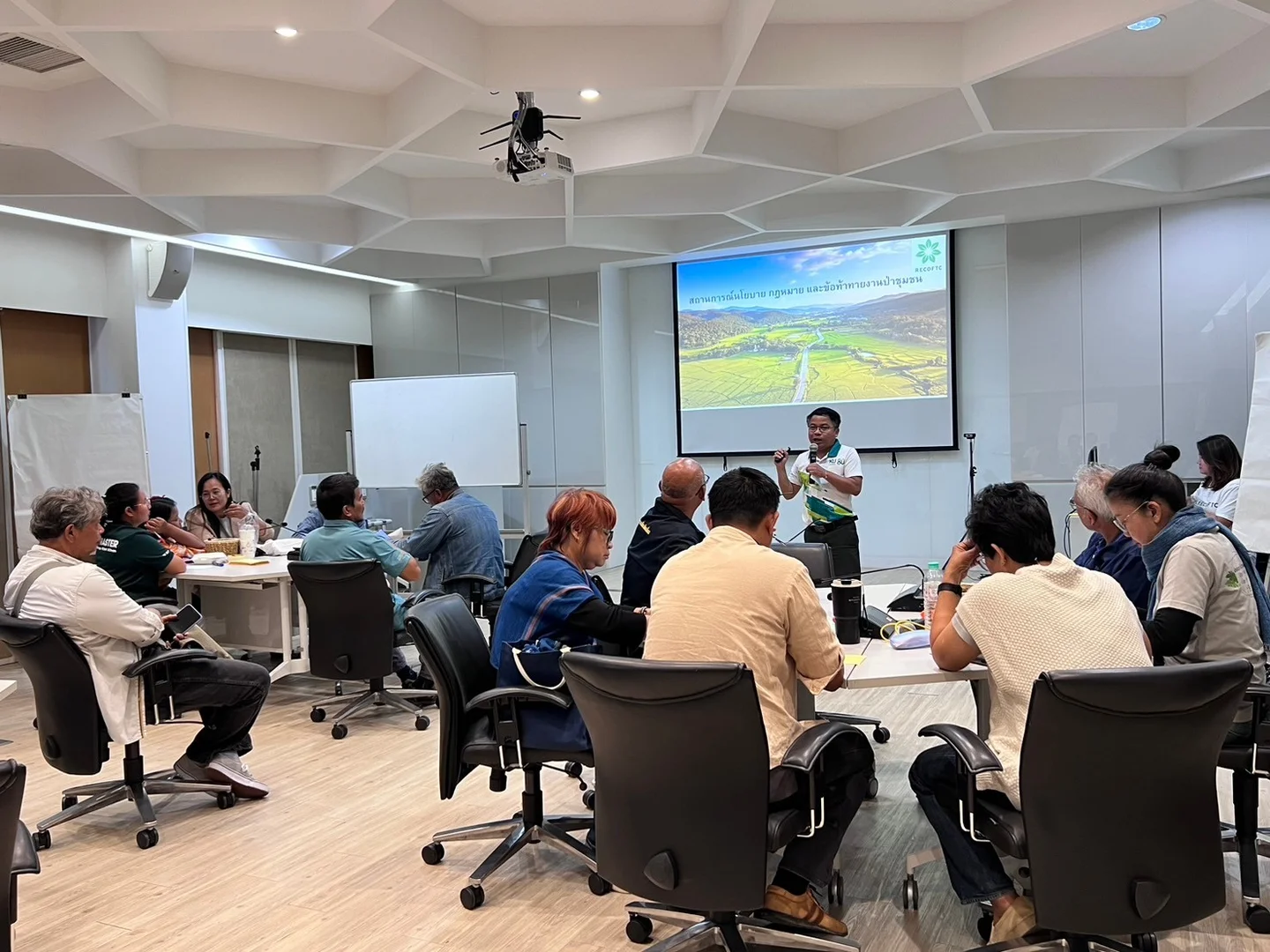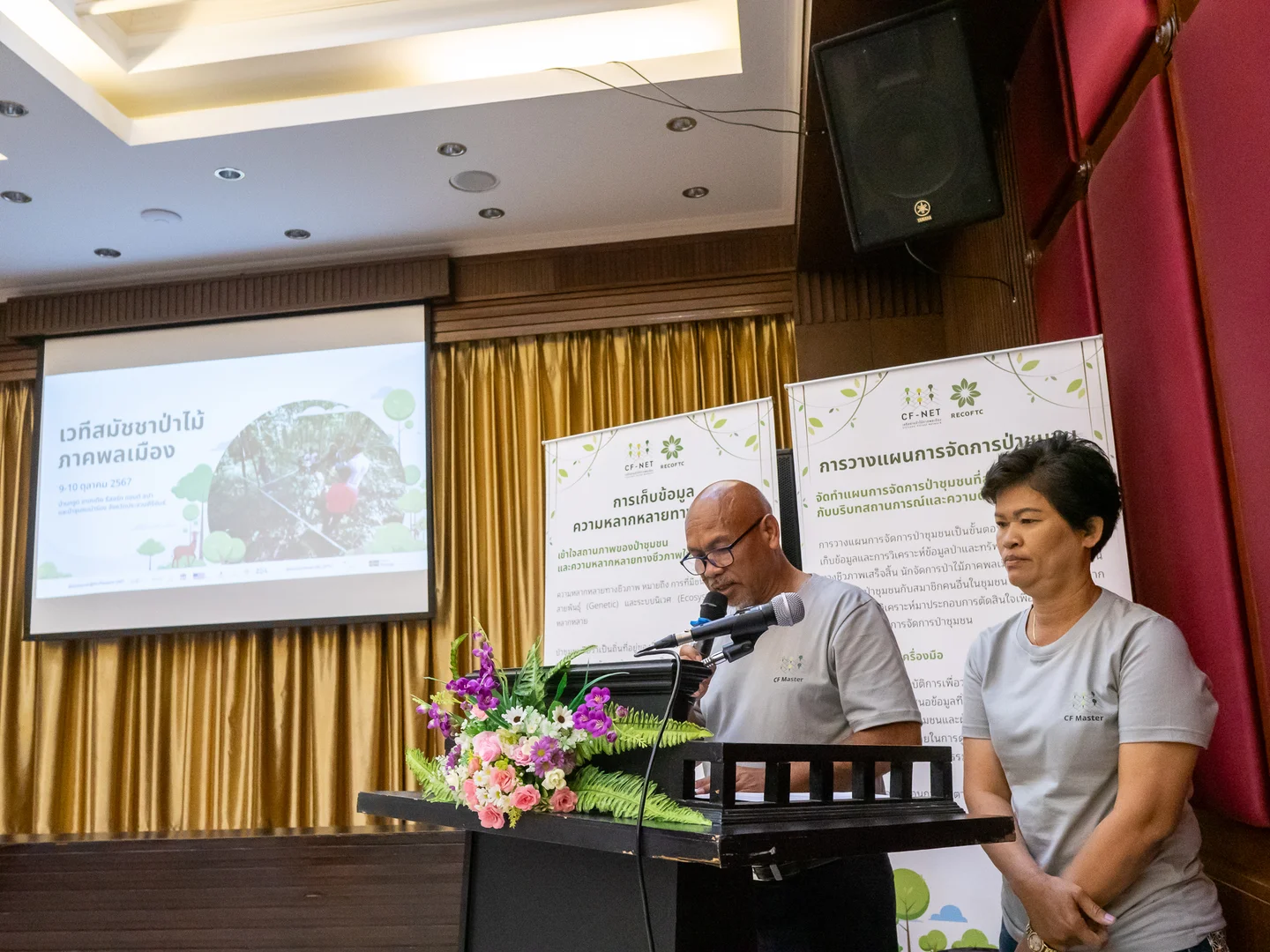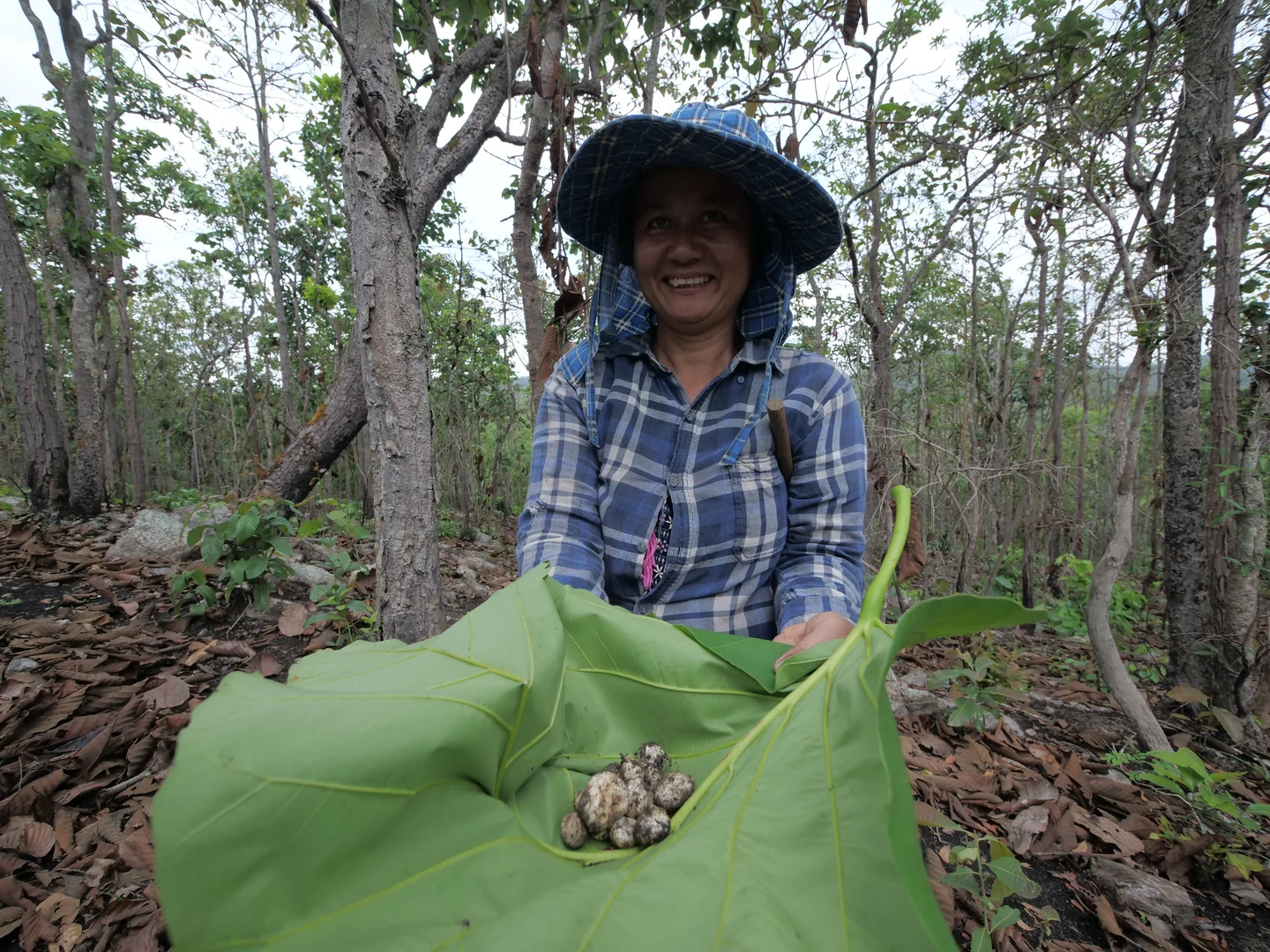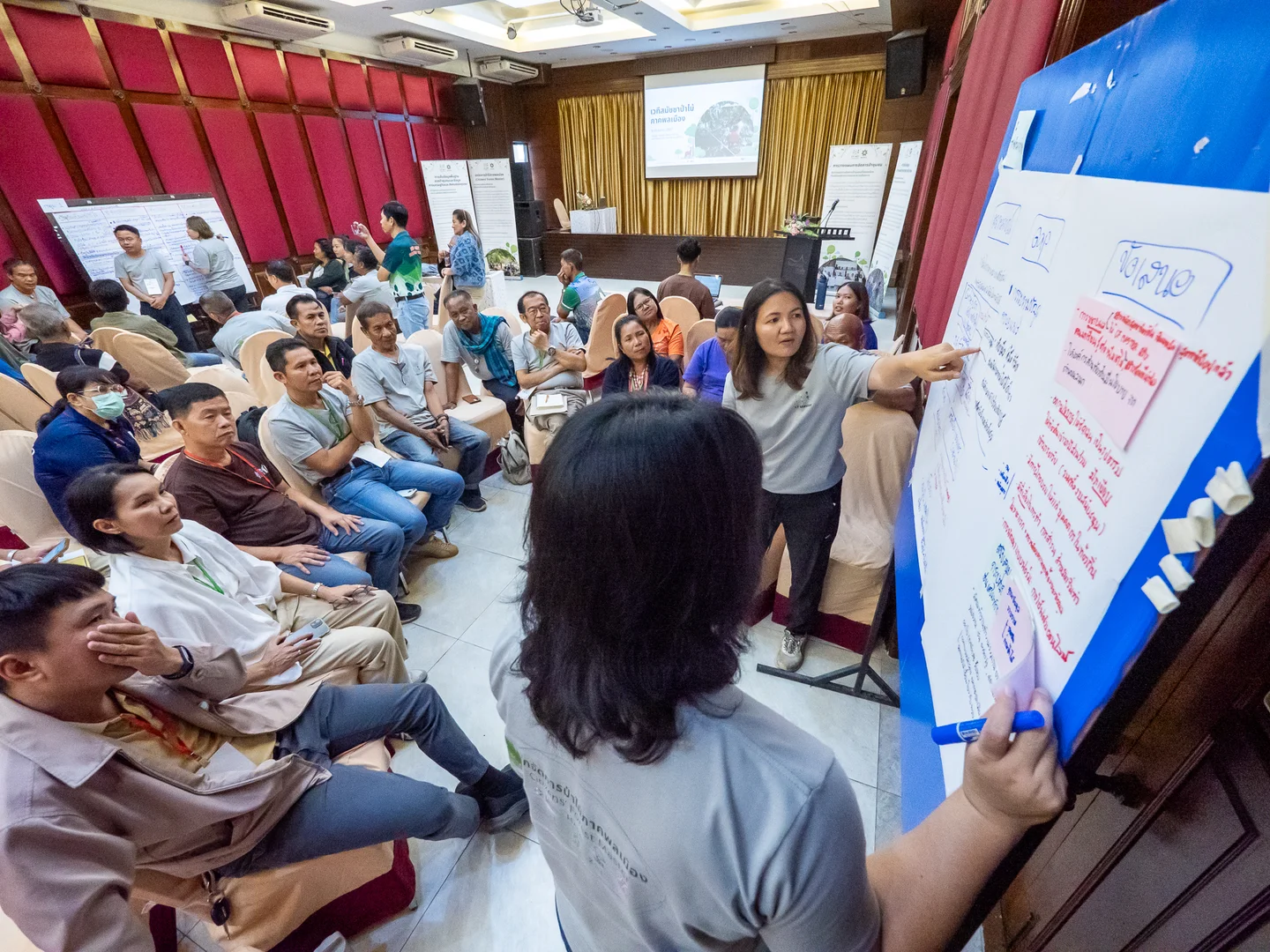
Thailand’s Community Forest Act BE 2562 defines community forests as forest areas outside of protected areas that are overseen by the Royal Forest Department (RFD). With an aim to promote co-management between communities and the state, the act requires communities to create a community forest management plan and submit it to the RFD for registration of their community forests.
This formal registration grants communities the right to manage and use their community forests sustainably in accordance with conditions specified by the law such as foraging and ecotourism development. To date, 11,984 community forests have been formally registered, spanning approximately 1.07 million hectares (6.57 million rai).
The act has also allowed the establishment of formal mechanisms for enhancing community forest management. These mechanisms comprise three levels of committees. The Community Forest or CF Policy Committee provides guidance on policy and regulation development; the Provincial Community Forest or PCF Committee oversees approval or rejection of community forest management plans and monitoring and evaluating forest management; and the Community Forest or CF Management Committee leads and facilitates community forest management planning.
The CF Policy Committee and PCF Committee have representatives from communities and civil society organizations working alongside experts from the government sector, while the CF Management Committee is a community-level structure comprised of community leaders and members knowledgeable about forests.
Citizens’ Forest Network: A citizen-led mechanism toward community-first laws
It has now been five years since the enactment of the Community Forest Act. The Citizens’ Forest Network (CF-NET) was established by RECOFTC Thailand and partners during this significant legal transition period.
Although informal, CF-NET serves as an essential mechanism for communities and civil society organizations to monitor developments related to community forest laws. The network fosters knowledge exchange, enabling members to discuss ways to enhance community participation in forest management. It also allows them to look at how community forest laws align with local contexts.