Menu
Stories
Practitioner's insights

Farmer champions lead the change to agroforestry

Farmer Field Schools, local champions and participatory monitoring help coffee growers in Viet Nam's Central Highlands embrace agroforestry
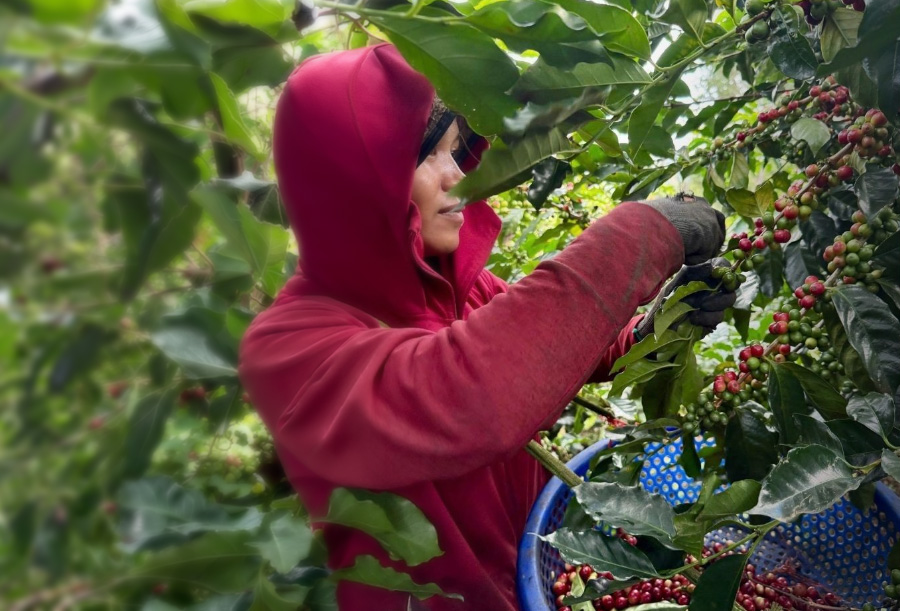
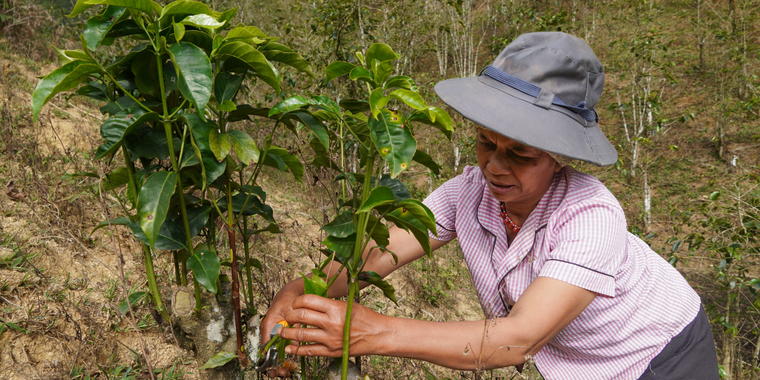
Farmer pruning coffee stems, Lam Dong, Viet Nam

If you have ever tried persuading a farmer to switch agricultural practices, you will know that technical advice alone is not enough. This is why our implementation of the ‘Chain of changes’ project in Viet Nam’s Central Highlands began with people, not technical solutions.

Since March 2024, RECOFTC Viet Nam has been working in Lam Dong province to help smallholder farmers switch from monoculture coffee plantations to more resilient agroforestry.

Demonstrating change from the ground up

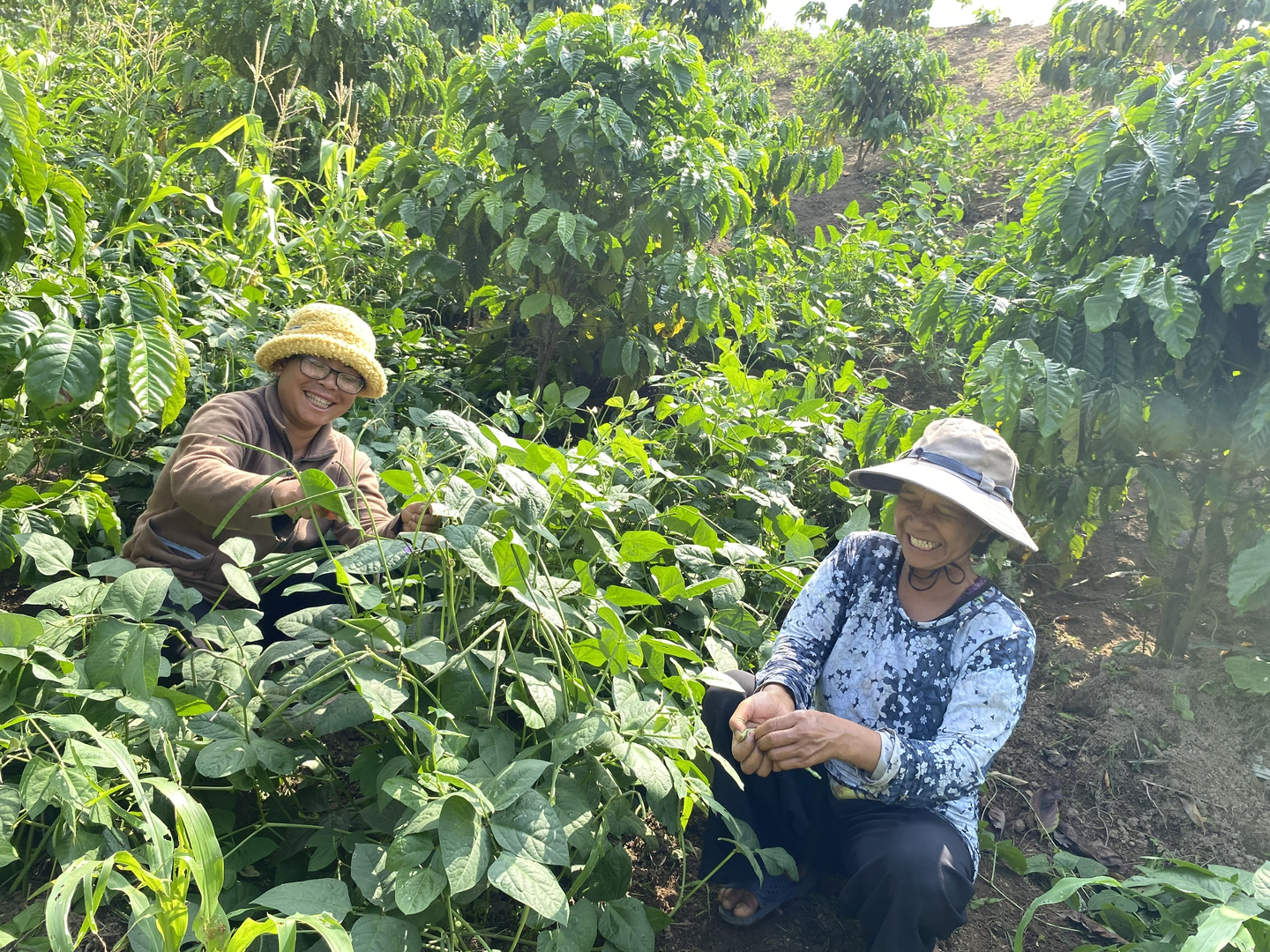
Two and a half years into the project, participating farmers are integrating fruit trees, native shade trees and other crops into their coffee plots. This agroforestry model – which improves soil health, reduces erosion, strengthens biodiversity and creates new sources of income – is not the most innovative aspect here. What is different is how change has been introduced and who is leading it.

We are working in Lang Biang ward – Da Lat and in Dam Rong 4 commune with two coffee-producing cooperatives, Da Nghit and K’Nớ’, whose members belong to Cil Kho ethnic groups. Through a baseline assessment, we identified farmers who are naturally curious, willing to experiment and respected by their neighbours. They are our ‘farmer champions’ without whom we would not be able to implement the project in its present form.
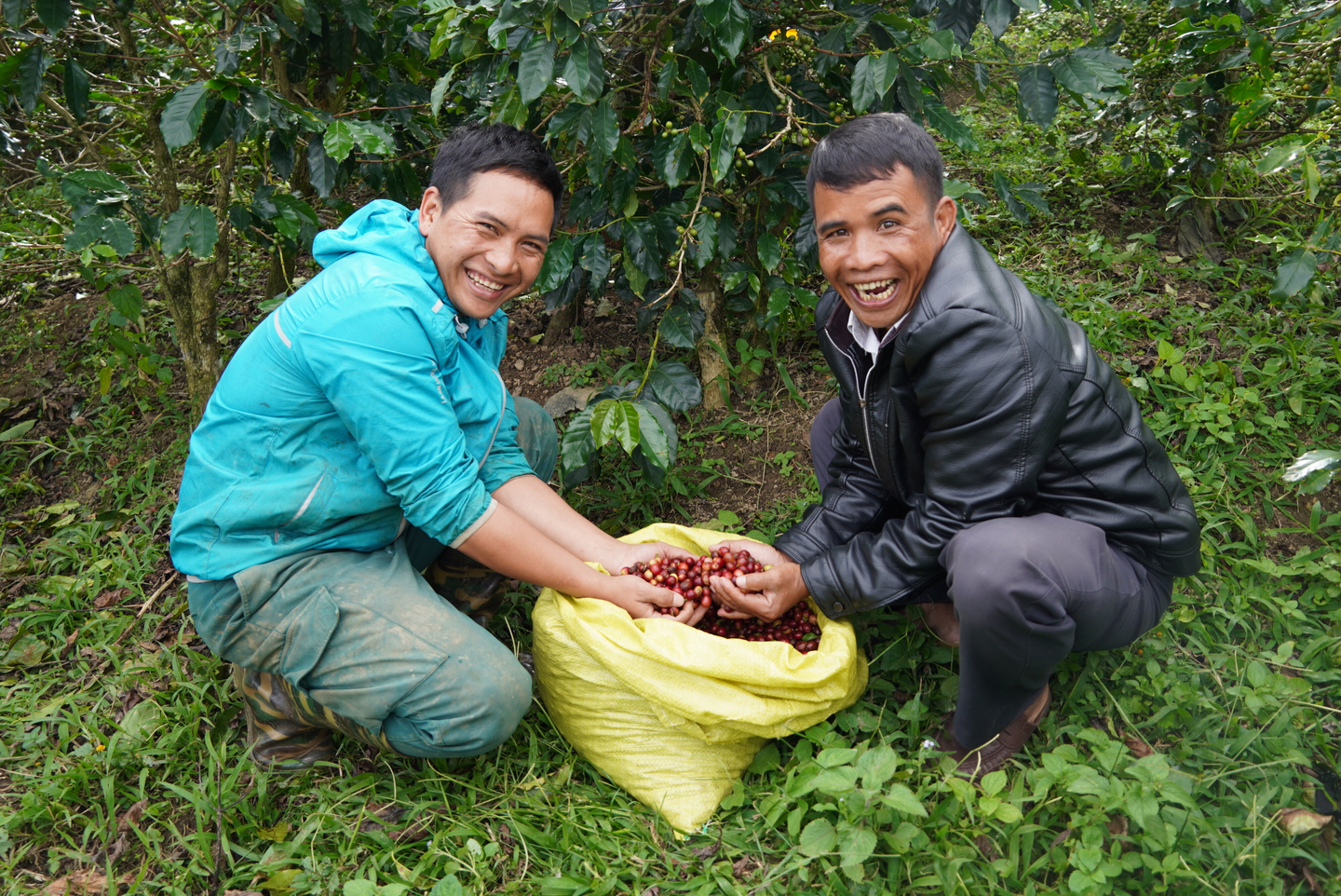
Coffee harvesting, farmer champion, Viet Nam

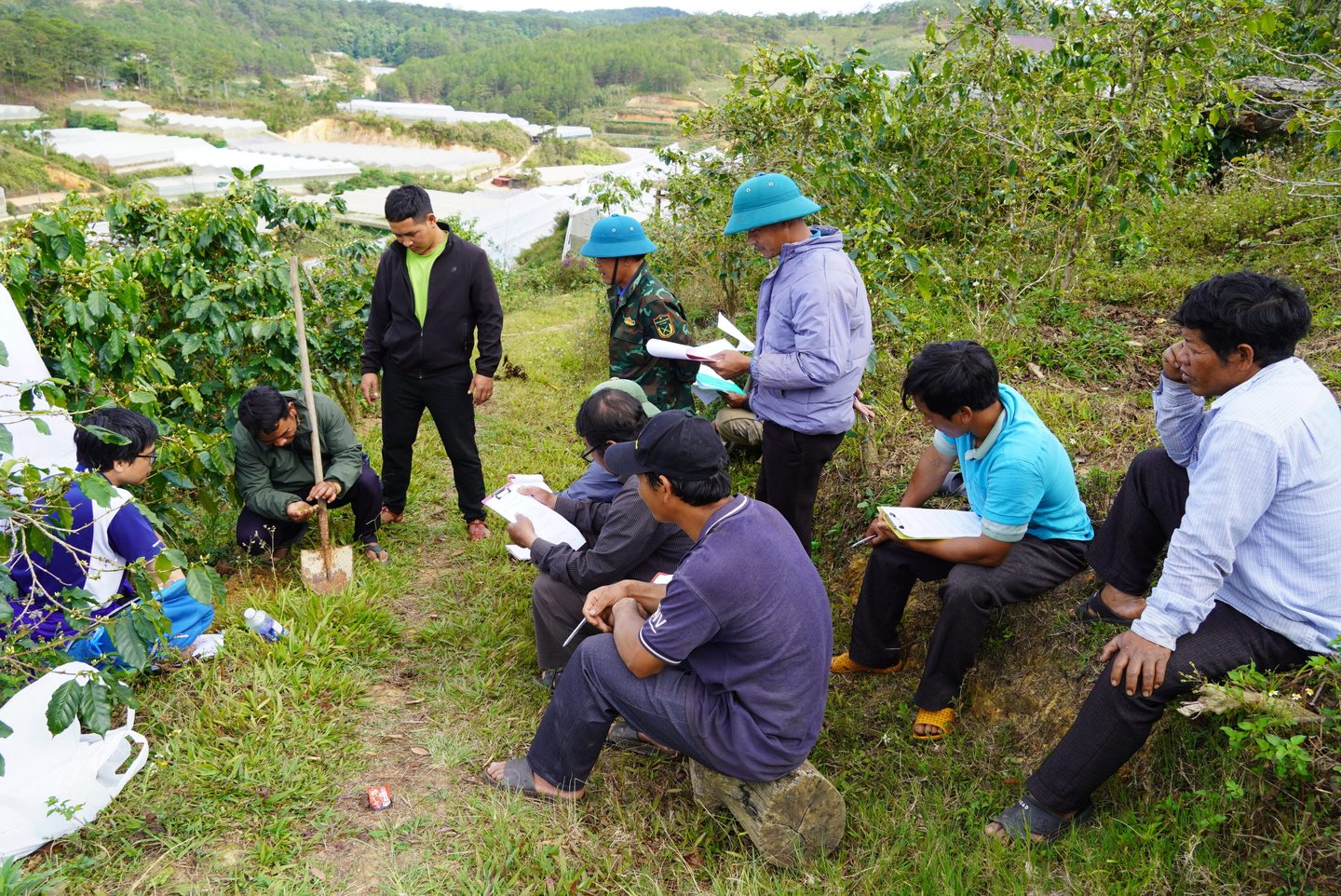
With project support, our farmer champions have transformed parts of their farms into practical demonstrations of sustainable coffee production. The demonstration plots, ranging from 0.2 to 0.8 hectares, have become Farmer Field Schools, where they test new practices and compare them against methods used on the rest of their land. Neighbouring farmers can see the changes, ask questions and learn from their peers.

Seeing a neighbour’s success is far more convincing than hearing an expert explain a theory. As farmers observe neighbouring demonstration plots become greener, healthier and more productive, they see for themselves that agroforestry can improve both environmental conditions and farm performance.

Learning from experience and tracking progress

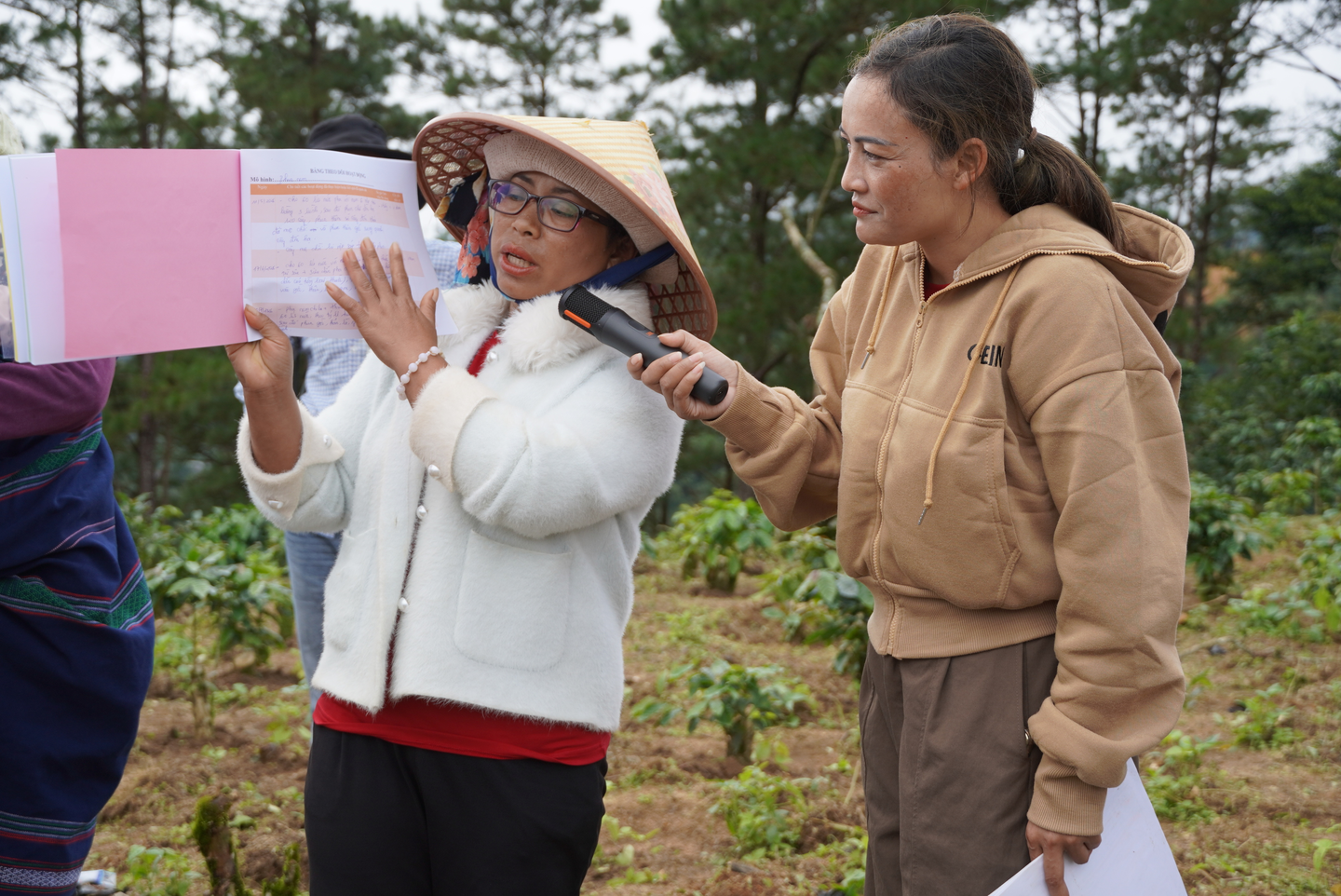
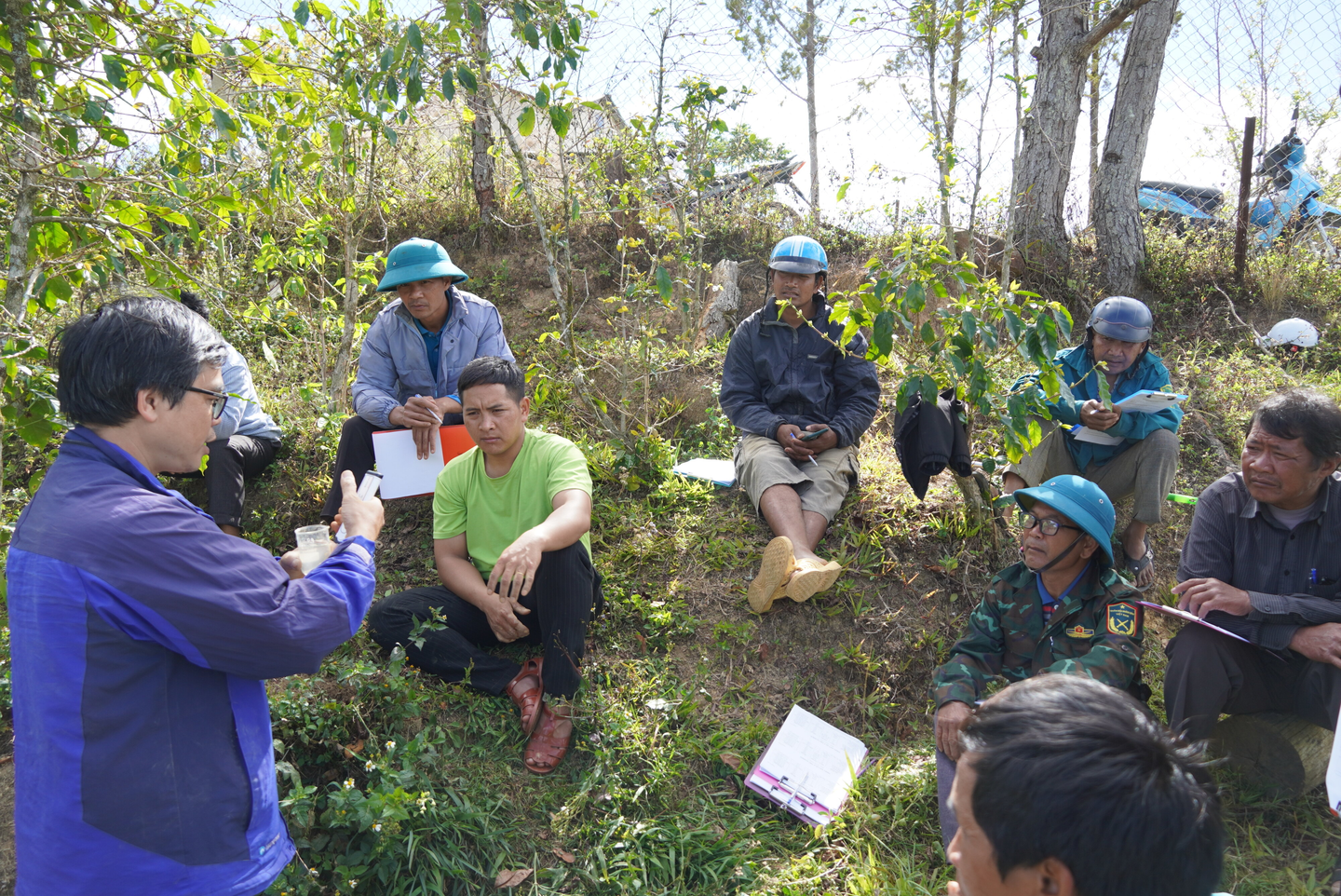
Through a participatory monitoring, evaluation and learning system, the farmer champions also help households collect information. This includes indicators ranging from coffee yields, production costs and incomes to soil health, biodiversity, water use and coffee quality. When indicators reveal that a household is struggling to implement recommended practices, project staff and farmer champions work with that family to understand the reasons and provide further guidance.

Soil and water training for PMEL in Da Nghit, farmer champion

Farmer champion Lieng Hot K'Dung from Da Nghit village joined the project in 2024. Before joining the project, she and her family depended on pre-fronted loans from intermediaries. This meant they had little bargaining power when it came to coffee prices. Once their yields were ready, the family was forced to sell to the same intermediaries at unfair prices. Over the past two and a half years, she has improved her farming skills, increased her coffee yields and gained access to more reliable buyers.

In fact, K’Dung had repaid her debts by 2025, ending her dependence on intermediaries and opening up avenues for direct negotiations with premium coffee buyers. Today, she is one of our most active farmer champions, featured in multiple YouTube tutorials that showcase local best practices with the wider farming community.

Coffee farmer in Viet Nam

Another farmer champion, Phi Sron K’Ham, is from the remote mountain village of K'Nớ 1 in Đam Rông 4 commune. For years, farming was her second source of income alongside her work at the Commune People’s Committee, a grassroots-level administrative body. After retiring from her position there, K’Ham resumed farming full time. By then, her ageing coffee plots had been left largely unattended for some years. When she returned to coffee farming, she had to find a way to bring her plots back to life.

With technical support from ‘Chain of changes’, she went about implementing some drastic changes. Despite resistance from her family, she cut the stems of her coffee trees back to just 15–20 centimetres above the ground to stimulate new shoots instead of removing them and planting new ones. She stumped nearly 0.6 hectares of old coffee trees. This revitalized the plants, and what had seemed like ‘dead’ plots turned green again. Her family members and neighbours saw, first hand, that the method worked.

Farmer champion K’Ham, Viet Nam

K’Ham currently mentors 11 demonstration households and around 30 neighbouring farmers while coordinating the participatory monitoring, evaluation and learning activities that help communities track progress and improve farming practices together. She also actively joins project-organized study tours across Lam Dong province to learn from other successful models and pass those insights on to local farmers.

Building resilience through collaboration

Climate change is bringing higher temperatures, prolonged droughts and increasing water stress to the Central Highlands. At the same time, international markets are demanding coffee that is both sustainably produced and free from deforestation.

Soil and water training for PMEL in Da Nghit, farmer champion

Improving productivity within existing coffee landscapes, rather than expanding cultivation into forests, has therefore become both an environmental and an economic priority. And agroforestry is a way to achieve these goals simultaneously.

It is important that our work helps ensure that successful approaches become embedded in local institutions. To do so, we are working closely with commune authorities and provincial government agencies. We make sure that agricultural extension officers, experts from various organizations and skilled farmers from across Viet Nam come to share their experiences and learn alongside the local farmers. Such cooperation increases the likelihood that agroforestry practices will continue spreading after the project ends in April 2027.

Despite its modest size and focus on coffee, ‘Chain of changes’ offers lessons for other community-based natural resource management initiatives. Its combination of local leadership, practical demonstration, participatory learning, evidence-based monitoring and market development could be adapted to many other activities such as landscape restoration, community forestry, biodiversity conservation and forest carbon projects.

Farmer champion K’Ham in the field, Viet Nam

By putting farmers at the centre of innovation, as the people who test new ideas, improve them and inspire others to adopt them, we have demonstrated a model of change that could help build resilient agricultural landscapes across Viet Nam’s Central Highlands and beyond.

###

Ly Thi Minh Hai is country director of RECOFTC Viet Nam and Nguyen Chien Cuong is community forestry partnership coordinator at RECOFTC Viet Nam.

The ‘Chain of changes’ project aims to develop sustainable and inclusive business models in Myanmar and Viet Nam, addressing environmental degradation through nature-positive restoration.

Story details

Geographic focus
Viet Nam