Menu
Notes from the field

Local knowledge shapes sustainable forest management in Lao PDR

A field exchange in La district brings customary knowledge and technical expertise together
Featured image

For generations, the forests surrounding Mokhong and Tadmouan villages in Lao PDR's La district in Oudomxay province have sustained local Khmu communities. They provide water for farming, food for families and forest products that support local livelihoods. These forests are protected through customary knowledge and long-standing community rules that have been passed from one generation to the next.

In May 2026, RECOFTC facilitated a sustainable forest management (SFM) field activity under the EnABLE project. The dialogue and exchange was among Khmu community members – half of them women – and district forestry officers. Rather than focusing only on technical training, the activity created opportunities for community members to exchange experiences with forestry officials and for both groups to learn from one another. The discussions reinforced an important message: sustainable forest management is most effective when local knowledge and technical guidance work together.
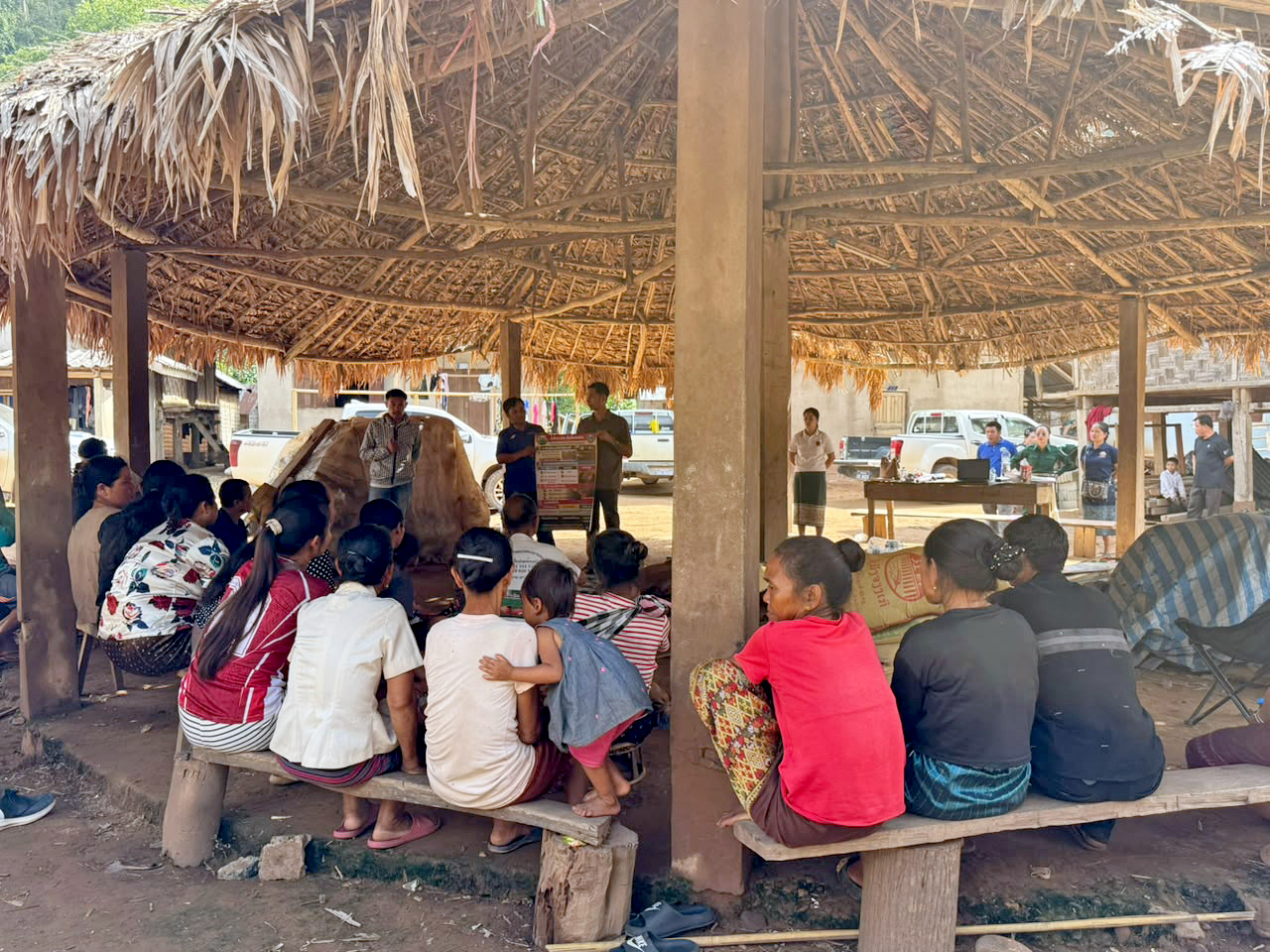
Women and men from Tadmouan village sit together during a discussion on sustainable forest management.
Women and men from Tadmouan village discuss sustainable forest management and the role of inclusive participation in community forest governance.

Participants explored the principles of sustainable forest management, discussed how SFM activities support their community action plan and examined the role of gender equality and social inclusion (GESI) in forest governance. The activities helped villagers integrate GESI into their community action plan, which has been approved by the district. Field demonstrations covered forest boundary demarcation, fire prevention, patrolling, forest protection and forest restoration, giving participants the opportunity to practice alongside forestry officers from district, provincial and national levels.

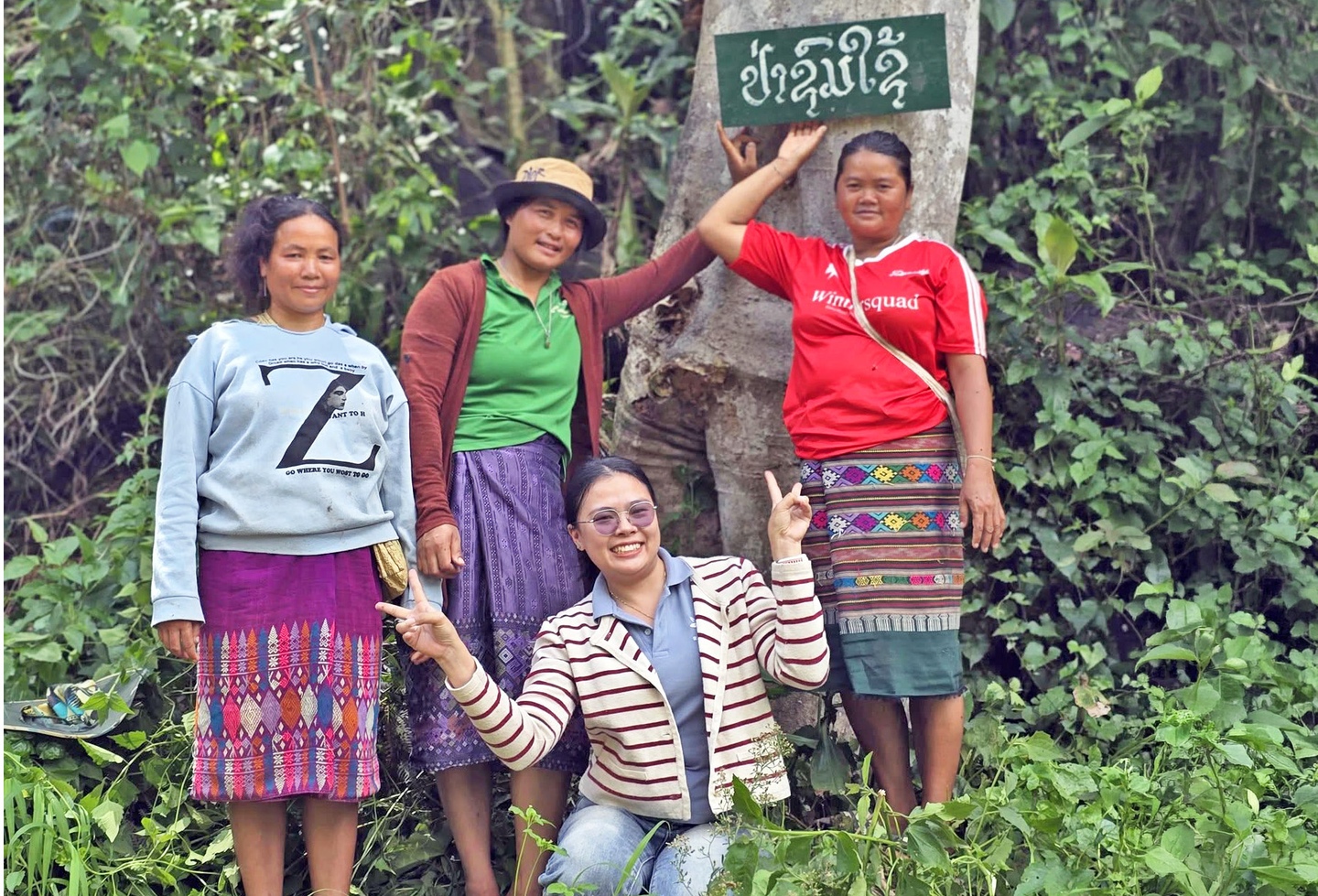
Participants attach a boundary marker to a tree during a sustainable forest management field activity in Tadmouan village.
Participants learn about forest boundary demarcation while combining traditional community knowledge with technical guidance.

Local knowledge and women's roles

One of the most valuable lessons from the field activity was that sustainable forest management is not entirely new to these communities. Many traditional practices have protected forests for generations.

Community members explained how sacred spirit forests are respected and protected, even where no formal signboards exist. Everyone knows the forest boundaries and understands their cultural significance. Watershed forests have long been protected through village agreements that prohibit tree cutting and agricultural expansion. These locally developed rules have helped safeguard important water sources that sustain both people and agriculture.

The discussions also highlighted traditional fire management practices. Community members described how they assess weather conditions before burning agricultural land and establish firebreaks to reduce the risk of forest fires. Through the EnABLE field activity, these existing practices were strengthened with additional technical guidance on safer and more effective fire prevention.

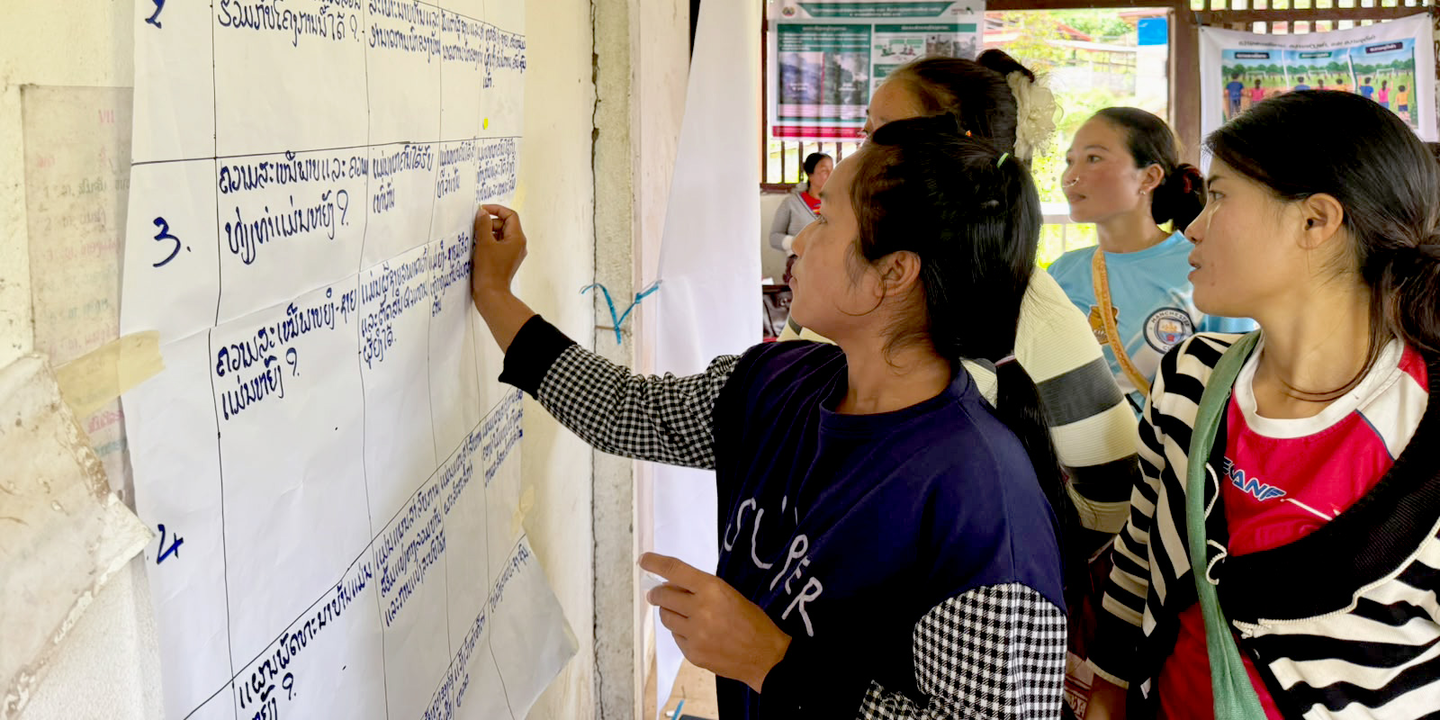
Women take part in a participatory training exercise using a wall chart during an EnABLE activity in Lao PDR.
Women take part in a participatory exercise on gender equality and social inclusion in sustainable forest management in Lao PDR.

Integrating GESI into sustainable forest management helps ensure that local knowledge, diverse experiences and community voices help shape how forests are managed and conserved. Vanhphone Siluangphet, chair of the Lao Women's Union in Mokhong village, joined discussions on forest protection, restoration, patrolling and boundary demarcation. She said the experience strengthened both her technical knowledge and her confidence as a community leader. “I gained practical knowledge during the field activity. I can now share this with others in my community,” she said. “I have supported village activities for a long time, but I want a deeper understanding of forest management so that I can encourage wider participation, particularly among women.”

Making participation meaningful

Meaningful participation depends on creating space for everyone to contribute. At the dialogue and exchange, district forestry officers used the Khmu language to explain technical concepts, making it easier for participants to ask questions and share their own experiences.

Participants discussed challenges that continue to affect forest management, including mining concessions in upland areas, limited water resources and constraints on forest patrolling and boundary demarcation. They reinforced the need for continued collaboration between communities, local authorities and project partners as the community action plan moves into implementation.

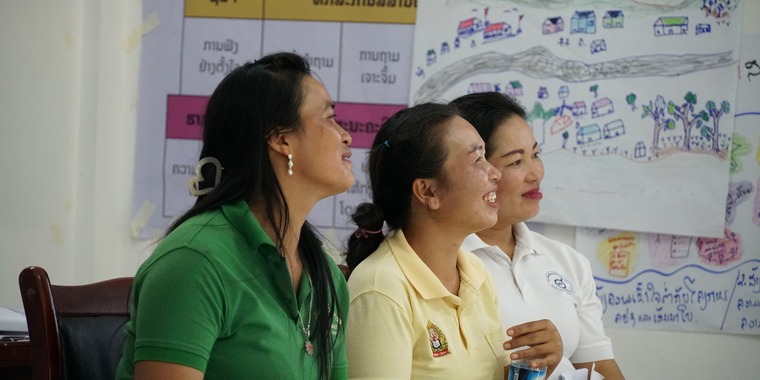
Women and members of ethnic communities contributed local knowledge alongside forestry officials, helping connect customary practices with technical approaches to forest management.

For Vanna, communicating in Khmu made it easier to participate in the discussion. "Because communication took place in our local language, there were no barriers to receiving information. This made us feel more comfortable to speak up and discuss our ideas on forest management.”

Vanhphone Siluangphet and other women from Mokhong village stand beside a forest boundary sign.
Vanhphone Siluangphet (second from left), chair of the Lao Women's Union in Mokhong village, sees women's participation as essential for sustainable forest management.

The interactions highlighted that effective forest management is built not only on scientific knowledge, but also on the experience and stewardship that communities have developed over generations. For EnABLE, the activity marked a step towards strengthening community-led forest management by bringing these different forms of knowledge together.

###

Chinda Milayvong is deputy country director of RECOFTC Lao PDR.

The EnABLE project focuses on strengthening land tenure, village forest management, climate-smart livelihoods and gender equality and social inclusion. Implemented by RECOFTC with support from the World Bank, EnABLE works to ensure that women, ethnic groups and local communities can access carbon and non-carbon benefits under the Lao PDR Emission Reduction Programme.

Story details

Geographic focus
Lao PDR