
Menu
News

RECOFTC presents research and chairs session at Nepal forestry conference

RECOFTC delegates at the IoF forestry conference in Nepal

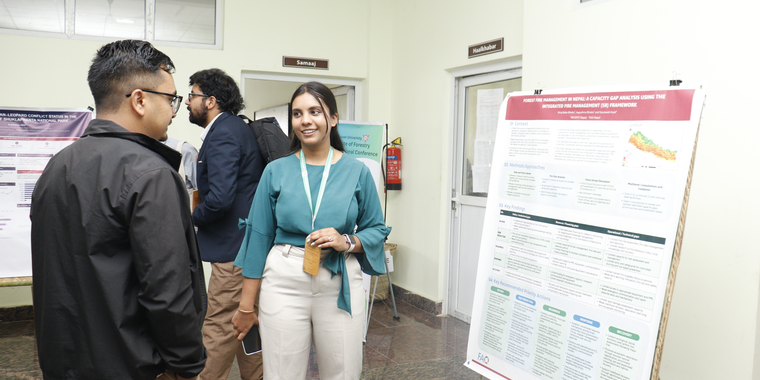
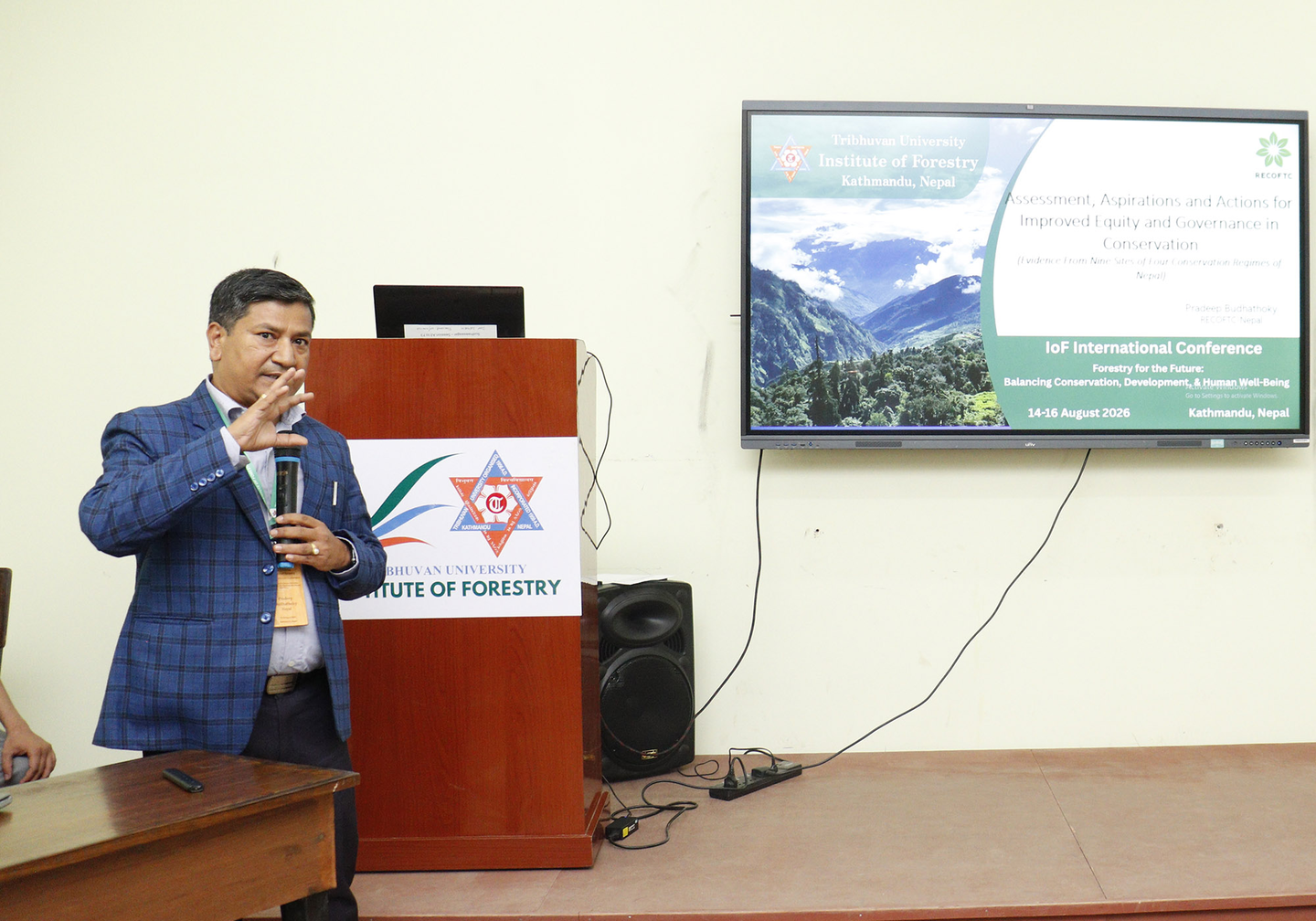
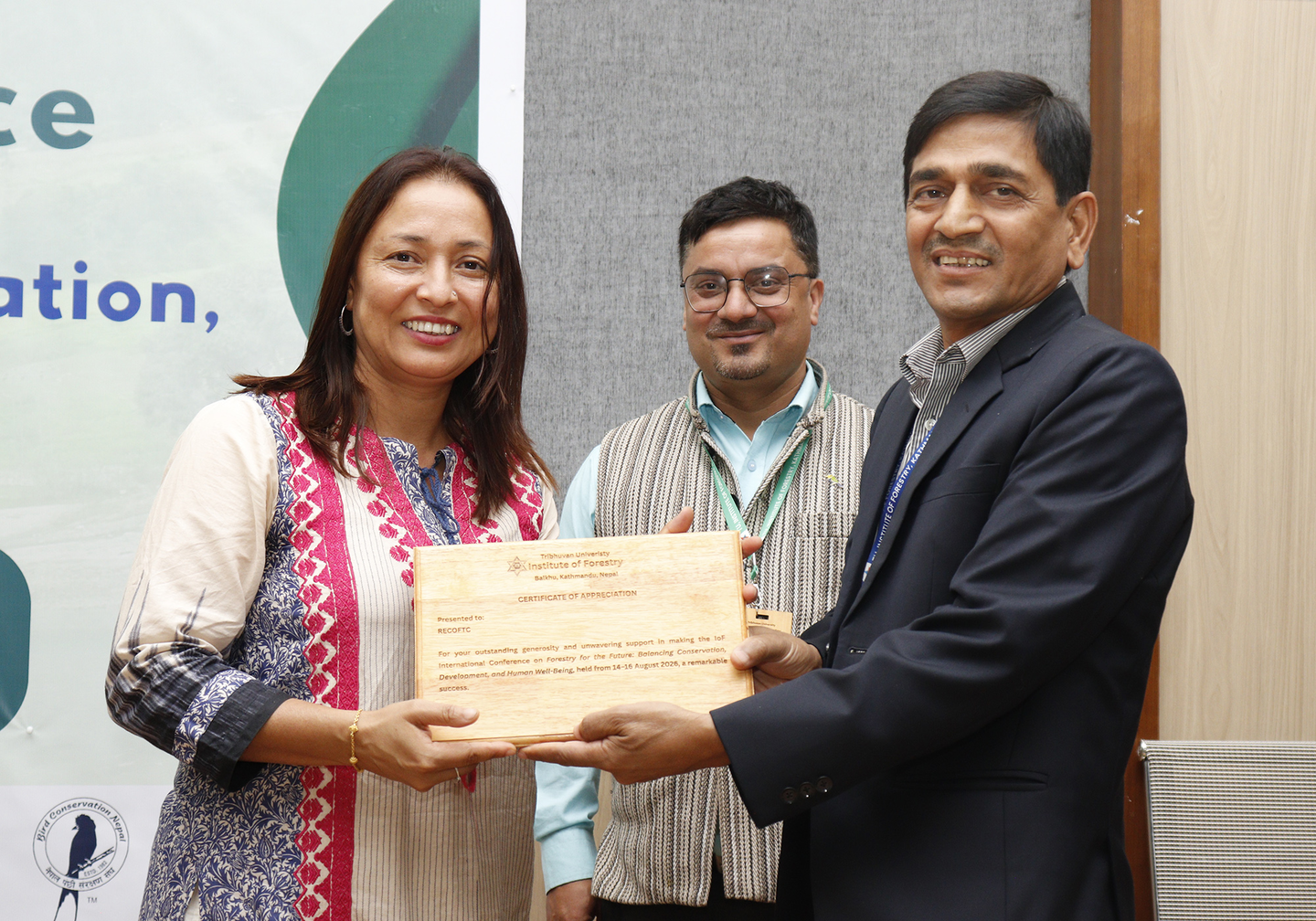
RECOFTC Nepal participated in the International Forestry Conference organized by the Institute of Forestry (IoF), Tribhuvan University, Nepal from 14–16 August 2026. We contributed five presentations and chaired a parallel session corresponding to the theme 'Forestry for the future: Balancing conservation, development and human well-being'.

The event brought together more than 250 forestry students, researchers, practitioners, policymakers and professionals from academia, non-government organizations, civil society organizations and other institutions. Participants from Nepal and other countries, including Bangladesh and India, exchanged knowledge, experiences and perspectives on the future of forestry. Discussions covered forest fire management, agroforestry's role in carbon stocks, soil health, the relationship between people and community forests, youth participation and forest governance.
RECOFTC delegation at the IoF international forestry conference, Nepal

RECOFTC's five presentations reflected several of these themes. They examined agroforestry's role in enhancing carbon stocks and soil nutrients in Surkhet and Palpa; capacity gaps in forest fire management using the 5R framework; equity and governance in community-based conservation; youth participation in community forest management; and changing relationships between people and community forests in Nepal.

Sudha Khadka, country director of RECOFTC Nepal, chaired a parallel session, 'Reimagining Community Forest in the Changing Context'. The session explored how changing social and environmental contexts are shaping relationships between communities and forests, and the implications for future forest management.

Sudha Khadka chairing a session at the IoF forestry conference

Khadka said, "Community forestry is changing in response to social, environmental and economic changes. Continued dialogue among researchers, policy makers, practitioners and communities is important for understanding these changes and strengthening approaches to forest management that respond to local needs."

The conference highlighted the importance of connecting research with field realities, strengthening community participation, creating meaningful opportunities for youth and promoting inclusive governance.

RECOFTC's participation enabled us to share research and exchange perspectives while highlighting the need for more inclusive, collaborative and people-centred approaches to sustainable forest management.

###

Aayushma Bhatta is a research and documentation assistant at RECOFTC Nepal.