Presentations at the Conservation Asia Congress
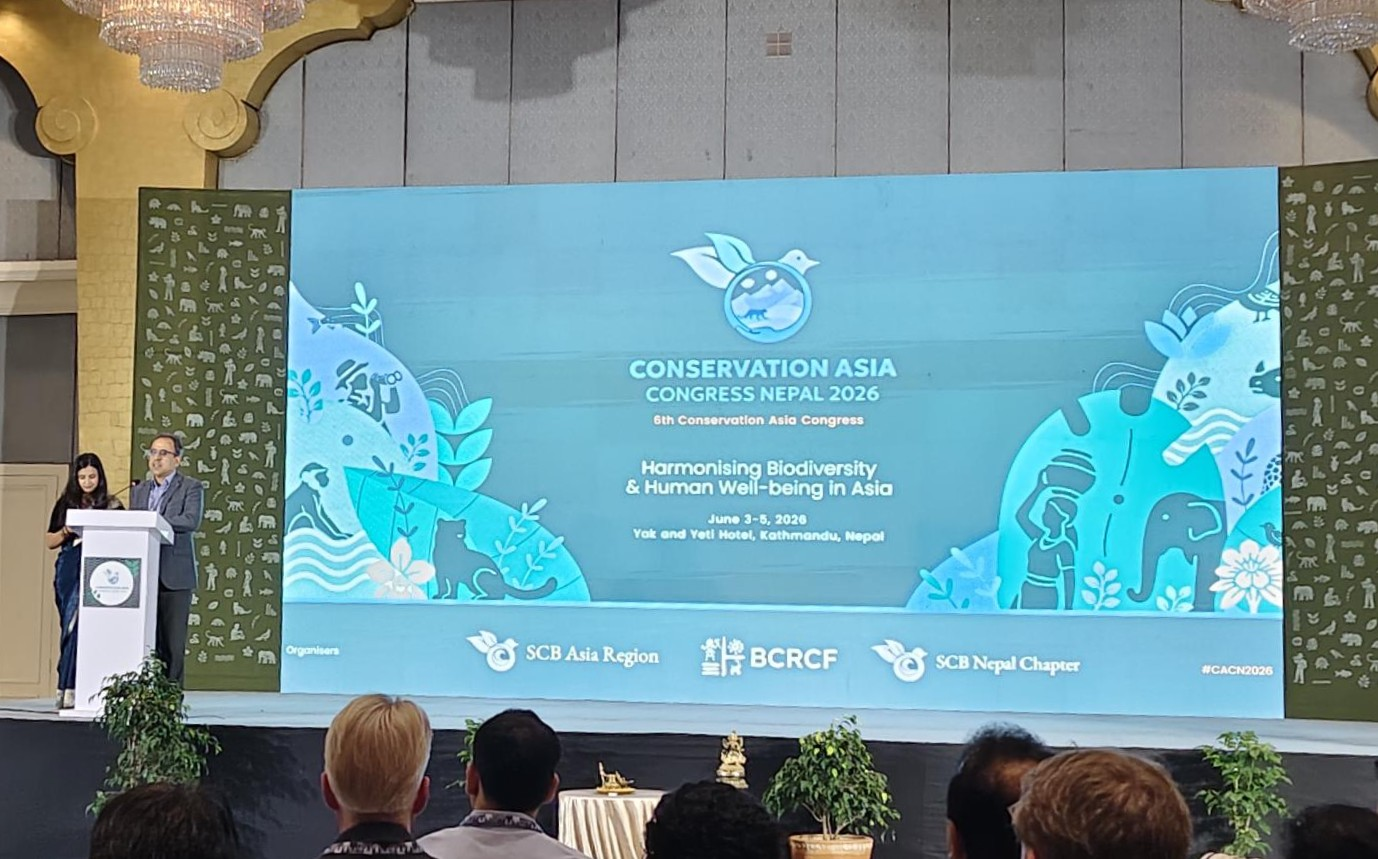
Research teams from RECOFTC are giving two presentations in Kathmandu.
- Community fisheries, flooded forests, and fire: reconciling livelihoods and biodiversity around Cambodia’s Tonle Sap
I am presenting on behalf of both myself and Tol Sokchea, deputy director of RECOFTC Cambodia. This talk examines how 15 communities in Cambodia are developing fire management plans, rehabilitating flooded forest and strengthening landscape governance around the Tonle Sap. It looks at how Cambodia’s existing community fisheries mechanism could serve as a low-cost vehicle for advancing biodiversity, ecosystem integrity, food security and climate adaptation simultaneously drawing from our EU-funded ‘Our Tonle Sap’ programme and the USDA-supported ‘Community-based fire management’ project.
- Assessing governance and equity in Nepal’s protected area buffer zones: Implications for wildlife conservation outcomes
RECOFTC Nepal’s Pradeep Budhathoky, deputy director and Pawan Karki, programme officer are presenting a poster on the work being done in Nepal using the Site-level Assessment of Governance and Equity (SAGE) tool. The team has comparatively evaluated buffer zone user committees in Parsa, Langtang, Banke and Chitwan.
SAGE assessment results point to ‘moderate’ governance performance in these areas, with strengths in transparency and law enforcement. However, the team has also found that human-wildlife conflict and persistent gaps in coordination and equitable benefit-sharing erode community incentives to invest in biodiversity protection.
Supporting communities in conservation
The design and quality of community-based governance – whether community fisheries on a tropical floodplain or buffer zone user committees in the Himalaya – fundamentally shape whether biodiversity outcomes are achieved.
Across Cambodia and Nepal, the evidence points the same way: governance quality within community institutions is central to achieving biodiversity outcomes.
###
Peter Cutter is director of the Programme Coordination and Technical Services unit at RECOFTC.