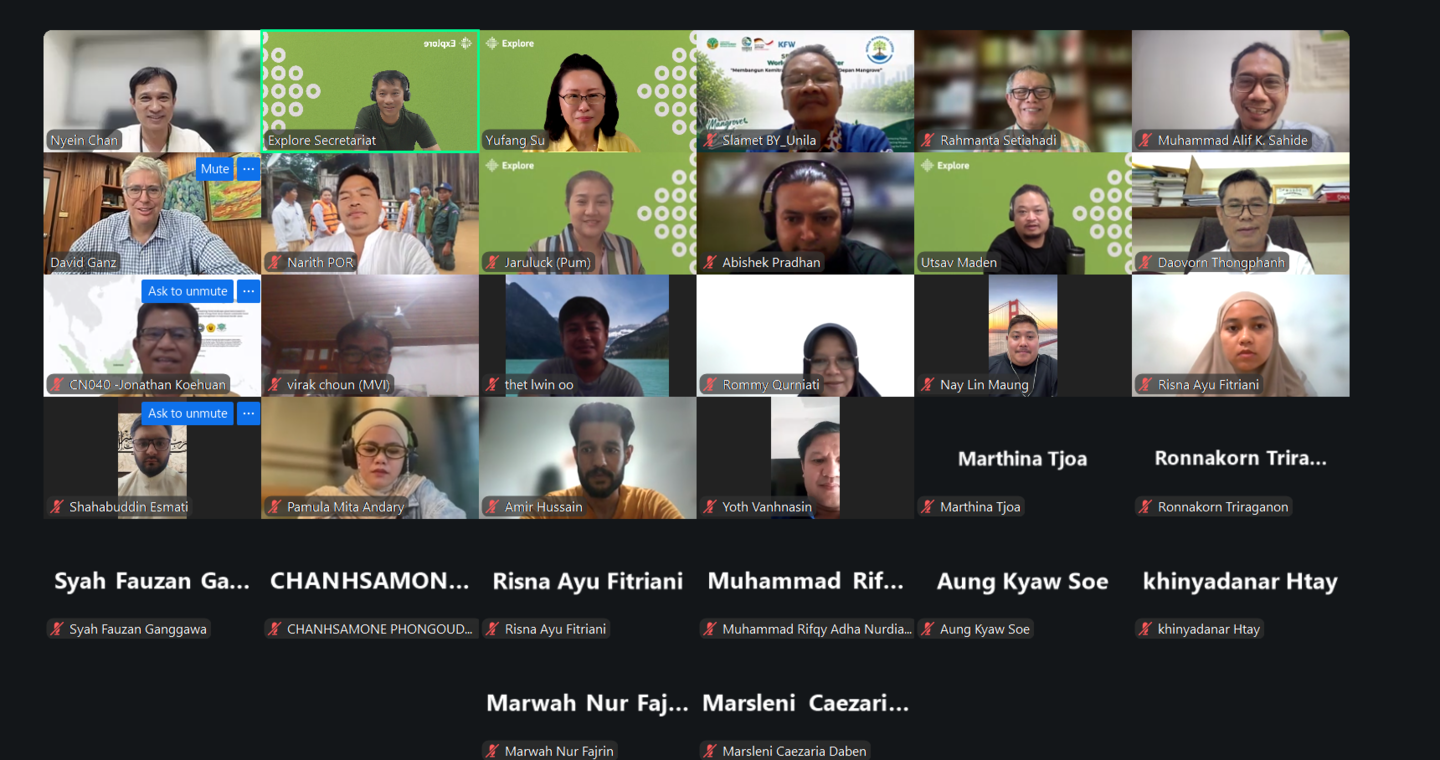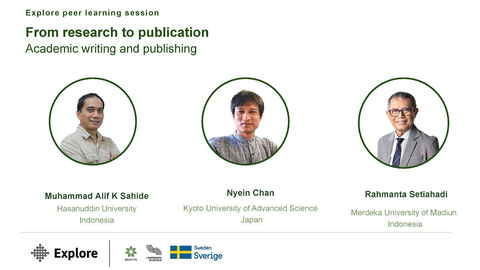
On 3 September 2026, a peer-learning session organized by the Explore programme – 'From research to publication: Academic writing and publishing', covered preparing manuscripts, selecting suitable journals, responding to peer review and planning publications. The session attracted 139 registrants, largely researchers and academics, from 21 countries.
David Ganz, executive director of RECOFTC, linked academic publishing to Explore’s wider goal of translating research into practice and policy. “As the final stage of a broader effort, publications are a key metric for measuring our success,” he said.
Ganz emphasized Explore’s contribution to institutional capacity building, noting that many participating institutions were managing direct international research grants for the first time.
Building their capacity to manage and report on these grants, he said, was transformative and important for future research proposals and project implementation.
The session featured three Explore researchers who shared lessons from their own research and publication journeys.
Foregrounding the research
Muhammad Alif K Sahide, professor of forest governance at Hasanuddin University and editor-in-chief of Forest and Society, encouraged researchers to begin with the story behind their research.
A strong paper, he explained, should have a clear central argument. He noted that researchers should be selective about the evidence and literature they include and focus on what their findings add to existing scholarly conversation.
Sahide also shared practical advice on responding to peer review, emphasising that rejection and requests for major revisions are a normal part of academic publishing.