Menu
Conference

Community forests for a biodiverse future

Governance, knowledge and action in the Asia-Pacific region
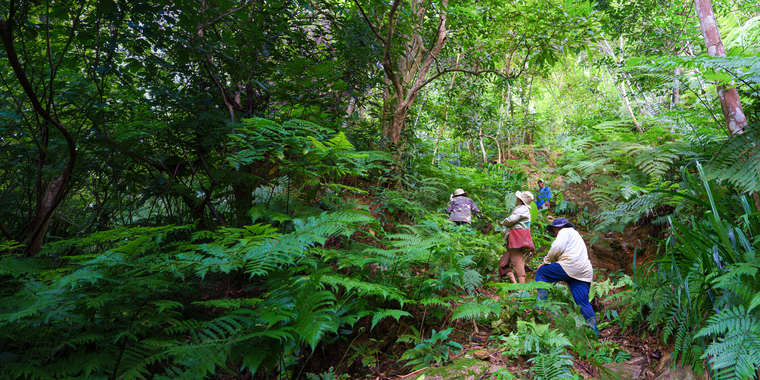
Community forest members .make their way up a steep, fern-filled hillside
Community forest members in Lao PDR make their way up a steep, fern-filled hillside to monitor and manage their community forest.

The world is facing interconnected crises of biodiversity loss, climate change and pollution. These challenges are especially acute in the Asia-Pacific region, which is home to irreplaceable biodiversity found nowhere else on Earth. We are losing biodiversity at an alarming rate, driven in particular by land-use change, infrastructure development and the overuse of natural resources, with serious consequences for ecosystems, species and the communities whose lives and livelihoods depend on them.

Community forests already play a major role in responding to this crisis and in contributing to many of the targets under the Kunming-Montreal Global Biodiversity Framework. They help restore degraded land, conserve ecosystems, protect species and support sustainable local livelihoods. The effectiveness and impact of these efforts depend on strong community governance, recognition of rights, meaningful participation by Indigenous Peoples and local communities, and practical ways to connect local experience with national policies and global commitments.

RECOFTC in partnership with Cornell University and Oregon State University, will host a regional conference on biodiversity and community forestry in the Asia-Pacific region. The conference will bring together community leaders, government agencies, researchers, practitioners and partners to share practical solutions and strengthen action on biodiversity through community forestry. It will focus on how community forests can contribute more directly and measurably to the Kunming-Montreal Global Biodiversity Framework, clarify priority actions, build a shared understanding of effective approaches and foster collaboration to scale up community-led biodiversity conservation across the region.

Timezone
+07
Time [+07] Session details
07:30-08:50 - +07

Registration

08:50-10:30 - +07

Security briefing and overview of the day


Opening session

Welcome remarks: Dr David Ganz, Executive Director, RECOFTC 


Conference objectives: Dr Janita Gurung, Programme lead for improved governance and respect for rights, RECOFTC


Remarks by:

  • Dr Reem Hajjar, Associate Professor, Department of Natural Resources and the Environment, Cornell University
  • Ms Long Pisey, Community facilitator, Cambodia
  • Mr Orlahanh Boungnaphalom, Deputy Director General, Department of Forestry, Ministry of Agriculture and Forestry, Lao PDR


Vote of thanks: Ms Chinda Milayvong, Deputy Director, RECOFTC Lao PDR


Keynote speech: Mr Ke Zining, Mueang-Nam Sustainable Development Services Center, China

10:30-11:00 - +07

Group photo

Tea/coffee break

11:00-12:30 - +07

Plenary session 1: Living with nature

Indigenous Peoples and local communities have deep, place-based relationships with forests and biodiversity that are central to their cultures, identities, livelihoods and wellbeing. For generations, these relationships have shaped diverse ways of valuing, governing and caring for forest landscapes, sustaining ecological integrity while meeting community needs.

Drawing on lived experience, the speakers will share how community stewardship, customary governance systems and local knowledge contribute to biodiversity conservation in community forests. At the same time, communities face growing pressures from land-use change, infrastructure development and resource extraction, with direct implications for biodiversity and community resilience. By reflecting on community-defined priorities, challenges and solutions, participants will co-develop key messages that highlight the importance of rights, governance and lived knowledge in sustaining biodiversity. 


Moderated by: Mr Lok Mani Sapkota, PhD Student, Department of Natural Resources and the Environment, Cornell University


Panel discussion with:

  • Ms Sorn Sopheap, Chief of Community Forestry, Kampong Thom Province, Cambodia
  • Mr Sichanh, Head of Khoklouang Village Sawmill, Lao PDR
  • Mr Aung Zaw Tun, Chairperson, Inn Ni Community Forest, Myanmar 
  • Ms Tara Devi Paudel, Member, Panchase Forest Conservation Area Main Council, Nepal
  • Ms Juthamas Saisuwan, Secretary, Ban Nong Chok Community Forest, Thailand 


12:30-13:30 - +07

Lunch break

13:30-15:30 - +07

Parallel session 2A: Advancing youth leadership in community forestry and biodiversity

Young people are shaping the future of community forests through innovation, stewardship and the transmission of knowledge across generations. As rights holders, forest users, advocates and leaders, youth bring new perspectives, skills and energies to biodiversity governance while remaining deeply connected to local landscapes and community values.

The speakers will share experiences of leading conservation initiatives, strengthening community monitoring, revitalizing traditional knowledge and building networks that link local action with national and regional processes. These experiences highlight the role of youth in sustaining biodiversity in community forests, as well as their contributions to climate resilience, livelihood innovation and social inclusion.

At the same time, youth often face constraints related to access to knowledge, resources, decision-making spaces and long-term livelihood opportunities. Reflecting on these challenges alongside youth-led solutions helps provide pathways for meaningful participation, leadership and intergenerational collaboration. 


Speakers:

  • Ms Long Pisey, Community facilitator, Cambodia 
  • Mr Jag Narayan Bot, Secretary, Panchpandav Users Committee, Nepal 
  • Ms Praephan Kedsawad, Forestry Technical Officer, Royal Forest Department, Thailand 
  • Mr Muhammad Fawzaan, Head of RECOFTC Sub‑Commission, IFSA 
13:30-15:30 - +07

Parallel session 2B: Advancing women’s leadership in community forestry and biodiversity

Women play critical roles in governing, managing and sustaining community forests and biodiversity across the Asia Pacific region. As forest managers, knowledge holders, caregivers and leaders, women contribute directly to conservation outcomes, livelihood resilience and intergenerational stewardship of nature. Yet their leadership, decision-making power, and knowledge often remain undervalued or constrained by structural, social and institutional barriers.

The speakers will share their experiences in forest governance, conservation and monitoring, and how women’s ecological knowledge contributes to biodiversity conservation and restoration. The barriers affecting women’s leadership and engagement will also be discussed to identify traditional and emerging leadership pathways.


Moderated by: Dr Srijana Baral, Programme lead for gender equality and social inclusion, RECOFTC and Ms Chinda Milayvong, Deputy Director, RECOFTC Lao PDR


Speakers:

  • Ms Kritsana Fuengdee, Working Group Member, Citizens’ Forest Network Women’s Group, Thailand
  • Ms Tara Devi Paudel, Member, Panchase Forest Conservation Area Main Council, Nepal
  • Dr Ratih Damayanti, Director of Environment, Maritime, Natural Resources, and Nuclear Policy, National Research and Innovation Agency, Indonesia
  • Dr Ei Ei Swe Hlaing, Focal Point, ASEAN Social Forestry Working Group, Forest Department, Myanmar
  • Ms Noudsavanh Fuengsavanh, Associate Trainer and Communication, LIFE Project, Lao PDR
  • Mr Tsheltrim Dorji, Senior Forestry Officer, Department of Forests and Park Services, Ministry of Energy and Natural Resources, Bhutan
15:30-16:00 - +07

Coffee/tea break

16:00-17:00 - +07

Plenary session 3: Indigenous Peoples and local communities in primary forests

‘Primary forests’ are naturally regenerated forests composed mainly of native species, with no clearly visible signs of human activity, and where ecological processes remain largely undisturbed. In Southeast Asia and the Pacific region, these forests exist both within and outside protected areas, with the majority located outside formal protection. Therefore, the role of Indigenous Peoples and local communities in conserving and ensuring their sustainable use is significantly important. 


This session will present current knowledge on primary forests in Southeast Asia and the Pacific, and engage communities, civil society organizations, and other stakeholders to explore how they can meaningfully participate in primary forest conservation.


Presentation: Dr Satrio Wicaksano, Regional Coordinator, Forest and Drylands, IUCN Asia 

18:00 - +07

Reception dinner

Time [+07] Session details
08:50-09:00 - +07

Recap of day 1 and agenda for day 2

09:00-10:30 - +07

Plenary session 4: Community forest dynamics and local livelihoods amidst institutional changes

Across the Asia-Pacific region, there is strong evidence on how locally driven governance and community stewardship sustain biodiversity and build resilient landscapes. The speakers will share concrete evidence demonstrating how Indigenous Peoples and local communities conserve biodiversity within and beyond protected areas. These experiences will illustrate practical approaches to forest management, habitat restoration, and species conservation. 


Moderated by Dr Peter Cutter, Director, Programme Coordination and Technical Services, RECOFTC


Speakers:

  • A national-level analysis of the impacts of community forestry on forest conservation and poverty in Cambodia, Dr Reem Hajjar, Associate Professor, Department of Natural Resources and the Environment, Cornell University and Dr Samuel Bell, Assistant Professor (Sr Res), Oregon State University
  • Do households receive more benefits or more burdens from community forestry? A benefit-cost analysis of households in Prey Lang, Cambodia, Mr Lok Mani Sapkota, PhD Student, Department of Natural Resources and the Environment, Cornell University
  • Community forests and biodiversity in Cambodia: What we learned from the field, Dr Jessica Hightower, Lead Scientist, Conservation Science Partners 

    Q&A

10:30-11:00 - +07

Coffee/tea break

11:00-12:30 - +07

Parallel session 5A: Biodiversity guidelines for tropical timber production landscapes

The ITTO/IUCN Biodiversity Guidelines for Tropical Timber Production Landscapes provide practical guidance for conserving biodiversity within forests used for timber production. They emphasize maintaining ecosystem functions, protecting high conservation value areas, minimizing environmental damage from logging, and integrating biodiversity considerations into forest planning and management. The guidelines promote a landscape approach, balancing production with conservation, and aligning forest management with international sustainability standards.


The Guidelines, published in 2009 as an updated version of earlier guidelines from the 1990s, are currently being revised to reflect evolving socio-ecological contexts. The proposed updates will be shared with one of the key stakeholders of the Guidelines, i.e. community forestry actors, to gather feedback and improve its relevance and applicability. 


Speakers:

  • Dr Tetra Yanuariadi, Projects Manager, Trade and Industry Division, International Tropical Timber Organization (ITTO)
  • Dr Youngyut Trisurat, Professor, Faculty of Forestry, Kasetsart University


Discussion

11:00-12:30 - +07

Parallel session 5b: Explore: Science and policy on landscape governance in Southeast Asia’s forests

This session highlights research and practical insights from RECOFTC’s Explore programme, a regional research network and community of practice focused on forest landscape governance in Southeast Asia. The session brings together researchers and practitioners to examine how evidence-based approaches can support more inclusive, resilient and sustainable landscape governance.
Presentations will explore gender and forest governance among ethnic communities in Lao PDR, climate resilience and livelihoods in forest-dependent communities in Viet Nam, and the forest-water-energy-food nexus in Indonesia’s border landscapes. Together, the session will demonstrate how applied research, local knowledge and community-centred approaches can inform policy and strengthen landscape governance across the region.
 

Speakers:

  • Explore: Advancing forest landscape governance research in Southeast Asia, Dr Yufang Su, Explore Programme Manager, RECOFTC
  • Gender in forest landscape governance: The case of Eudou and Ngouang Ethnic Groups in Lao PDR, Dr Sypha Chanthavong, Vice Dean, Faculty of Law and Political Science, National University of Laos
  • Climate change, livelihood resilience, and gender: Evidence from forest-dependent communities near Pu Mat National Park, Viet Nam, Dr Ho Thi Phuong, Lecturer and Researcher, Graduate School of Chemistry, Biology and Environment, Vinh University
  • The forest-water-energy-food nexus for sustainable forest landscape management in Indonesia’s border areas, Dr Jonathan Ebet Koehuan, Lecturer and Researcher, Artha Wacana Christian University, Department of Agricultural Engineering, Indonesia

    Q&A
     

12:30-13:30 - +07

Lunch break

13:30-15:00 - +07

Plenary session 6: From Demonstration to transformation: Scaling community forestry solutions for biodiversity and livelihoods in the Asia-Pacific

The Asia-Pacific region faces accelerating biodiversity loss driven by land-use change, infrastructure development, and unsustainable resource use. Community forestry has demonstrated significant potential to restore ecosystems, conserve biodiversity, and support local livelihoods. However, challenges remain in translating successful local practices into scalable, policy-supported, and finance-enabled solutions.

APFNet has supported a wide range of demonstration projects across the region, alongside long-term capacity-building initiatives, such as its scholarship program. These efforts have generated practical experiences and nurtured professionals who now contribute directly to forest governance and policy processes in their home economies.

This session will highlight both field-based evidence and human capacity development outcomes, moving beyond pilot-level success to contribute to transformative, large-scale biodiversity outcomes aligned with the Kunming-Montreal Global Biodiversity Framework.


Speakers:

  • Linking forest genetic conservation to local livelihoods in Cambodia, Mr Syneath Sreng, Chief of Forest Development and Botanical Research Centre, Institute of Forest and Wildlife Research and Development, Cambodia
  • Promoting biodiversity conservation and restoration with community participation in semi-arid desertification control, Dr Wang Shusen, Professor, Inner Mongolia Agricultural University, China 
  • Protected area management division on biodiversity and community, Mr Bounpasakxay Khamphoumi, Technical Officer, Department of Forestry, Ministry of Agriculture and Forestry, Lao PDR
  • How APFNet demonstration projects help transform communities and build a biodiverse future in the region, Ms Laura Chan, Project Manager, APFNet 

Q&A

15:00-15:30 - +07

Coffee/tea break

15:30-17:00 - +07

Plenary session 7: Community forests and One Health

Community forests are forests protected and managed by local communities and defined as OECMs (Other Effective Area-Based Conservation Measures). They are commons, in the sense of Ostrom, and nature-based solutions for preventing health risks. One Health is a tool to empower community management capacities. Based on participatory approach, this session explores the contribution of Community Forests to biodiversity and well-being of communities, with implications for governance.


Speakers:

  • Introduction of the session: Why community forests and One Health, Dr Serge Morand, Director, International Research Laboratory, HealthDEEP
  • Preventing zoonotic disease at the ecosystem level "Community forest and One Health approach”, Ms Areeya Kriengudom, Research Project Manager, International Research Laboratory, HealthDEEP
  • Integrating biodiversity into sustainable livelihood practices, Ms Inpreeya Choknakhawaro and Mr M. Piyapoom Chongchimpree,  International Research Laboratory, HealthDEEP
  • Will Thailand’s ageing population impact the future of community forest governance and how to preserve the legacy, Ms Elisa Prigent, HealthDEEP – CNRS
  • Community forest protection through accountable governance, Dr Claire Lajaunie, Environmental Law and Governance Researcher, Institut National de la Santé et de la Recherche Médicale (INSERM) 
Time [+07] Session details
08:50-09:00 - +07

Brief recap of day 2 and agenda for day 3

09:00-10:30 - +07

Plenary session 8: Sustainable financing for biodiversity conservation in community forests

Community forests across Asia and the Pacific are at the frontline of biodiversity conservation, yet communities that steward them remain largely excluded from the financing systems designed to protect nature.  Sustaining biodiversity in community forests requires incentives and financing mechanisms that recognize and support the stewardship of Indigenous Peoples and local communities. Across the Asia-Pacific region, communities and their partners are engaging with a growing range of financial instruments that link biodiversity conservation with long-term forest management and livelihood sustainability. This session explores how sustainable financing mechanisms can be designed to reach and strengthen community forest governance.  


Speakers: 

  • Mr Jean-Marc Champagne, Principal and Managing Director, Seneca Impact Advisors
  • Ms Joan Laura S. Abes, Programme Officer, Forest Foundation Philippines
  • Ms Kasturi Navalkar, Head of Partnerships and Strategic Collaborations, Value Network Ventures  
  • Ms Dian Novarina, Deputy Director for Sustainability and Stakeholder Engagement, APRIL Group (tbc)
  • Mr Dhananjaya Lamichhane, Deputy Director General, Department of Forest and Soil Conservation, Nepal

    Q&A

10:30-11:00 - +07

Coffee/tea break

11:00-12:30 - +07

Plenary session 9: Community-led nature positive livelihoods

Nature-positive livelihoods play a vital role in sustaining biodiversity while supporting the well-being, resilience and economic security of Indigenous Peoples and local communities. Across the Asia Pacific region, livelihoods linked to community forests, such as sustainable forest-based enterprises, non-timber forest products, eco-cultural initiatives and restoration activities, demonstrate how conservation and development goals can be mutually reinforcing. When rooted in local priorities, knowledge systems and stewardship, these livelihood pathways strengthen incentives for long term care of forests and biodiversity.

The speakers will share their experiences on community led initiatives that contribute to a sustainable future by aligning biodiversity conservation with social and economic outcomes. They will highlight lessons on what enables such livelihoods to thrive, including governance arrangements, access to markets and finance, skills development and supportive policy environments. 


Speakers:

  • Mr Y Cuong Long Dung, Representative, Da Nghit Agricultural and Tourism Service Cooperative, Viet Nam and Ms Ton Nu Hanh Linh, Project Officer, RECOFTC Viet Nam
  • Mr Aung Zaw Tun, Chairperson, Inn Ni Community Forest, Myanmar
  • Ms Lampheuy Kaensombath, Project Manager, Association ANOULAK and Representative, Thaphaiban Handicraft Group, Lao PDR


Remarks: Mr Ekanath Khatiwada, Sector Leader Agri-Food Systems and Energy, SNV, Lao PDR 

Q&A
 

12:30-13:30 - +07

Lunch break

13:30-15:00 - +07

Plenary session 10: Enabling factors for community forest conservation and restoration


Speakers:

  • Mr Tsheltrim Dorji, Senior Forestry Officer, Department of Forests and Park Services, Bhutan
  • Ms Manpreet Kaur, Senior Project Associate, IUCN India 
  • Mr Lok Mani Sapkota, PhD Student, Department of Natural Resources and the Environment, Cornell University

Q&A

15:00-15:30 - +07

Coffee/tea break

15:30-16:30 - +07

Plenary session 11: Monitoring biodiversity: From frameworks to citizen science

A BioBlitz is a rapid, participatory biodiversity survey where communities, experts, and citizens document species within a defined area over a short period. In this conference context, it highlights the value of community knowledge, fosters engagement, and strengthens local capacity for biodiversity monitoring and conservation in community forests.

Presentation on "Measuring biodiversity change from local to regional scales: Applications for community forests in Southeast Asia" by Dr Jessica Hightower, Lead Scientist, Conservation Science Partners, USA

16:30-16:45 - +07

Field trip briefing

16:45-17:00 - +07

Remarks, Dr. David Ganz, Executive Director, RECOFTC

Time [+07] Session details
08:00-17:00 - +07

Skills lab

Full-day field visit to Ban Nambo Village, Phonexay District, Luang Prabang Province

Time [+07] Session details
08:50-09:00 - +07

Brief recap of day 4 and agenda for day 5

09:00-10:30 - +07

Plenary session 12: Strengthening the policy environment

Strong and enabling policy environments are essential for ensuring that community forests can contribute effectively to biodiversity conservation while upholding the rights of Indigenous Peoples and local communities. Across the Asia Pacific region, policy frameworks shape how rights are recognized, how governance systems function, and how community led conservation is supported or constrained. Policies related to land tenure, forestry, biodiversity and participation play a decisive role in determining whether community forestry can deliver equitable and lasting nature positive outcomes.

This session brings together policymakers to share experiences, lessons and challenges in strengthening policy and regulatory frameworks that support community forestry and biodiversity conservation. Drawing on national and regional perspectives, policymakers reflect on what has worked, what has been difficult, and where opportunities exist to better align policies with community realities and global commitments, including the Kunming Montreal Global Biodiversity Framework.


Panel discussion on national, regional and global policies for biodiversity integration and conservation and community forests:

  • Mr Long Ratanakoma, Deputy Director, Department of Natural Forest Production Management, Cambodia
  • Mr Bounpasakxay Khamphoumy, Protected Forest Division, Department of Forest, and ASEAN Biodiversity Centre Secretariat of Lao PDR
  • Dr Ei Ei Swe Hlaing, Focal Point – ASEAN SF Working Group, Forest Department, Myanmar
  • Mr Dhananjaya Lamichhane, Deputy Director General, Department of Forests and Soil Conservation, Ministry of Agriculture, Forests and Environment, Nepal
  • Ms Sawitree Boonyalug, Environmentalist, Practitioner level, Office of Natural Resources and Environmental Policy and Planning (ONEPP), Thailand
     

Q&A

10:30-11:00 - +07

Coffee/tea break

11:00-12:30 - +07

Plenary session 13: Equitable governance for biodiverse community forests

Equitable governance is fundamental to ensuring that community forests deliver positive outcomes for biodiversity while supporting the rights, wellbeing and livelihoods of Indigenous Peoples and local communities. Governance arrangements shape who makes decisions, whose knowledge and priorities are recognized, and how benefits, responsibilities and risks are distributed. When governance is inclusive, transparent and accountable, community forests are better positioned to sustain biodiversity and adapt to social, ecological and climate change.

Speakers will share tools and evidence on governance arrangements that enable meaningful participation of Indigenous Peoples and local communities, identify challenges and structural barriers that affect equitable governance, and suggest practical approaches to strengthen accountability, transparency and shared decision-making.


Speakers:

  • The SEGA toolkit for ensuring equitable governance in protected and conserved areas, Mr Pradeep Budhathoky, Deputy Director, RECOFTC Nepal
  • Carbon market toolkit for Indigenous Peoples and local communities, Dr Peter Cutter, Director, Programme Coordination and Technical Services, RECOFTC
  • Transformative governance for biodiversity conservation in community forests, Dr Janita Gurung, Programme lead for improved governance and respect for rights, RECOFTC

Q&A 

12:30-13:30 - +07

Lunch break

13:30-15:30   - +07

Working roundtables to deliberate and reflect on policy messages


Roundtable discussions in five groups

  • Indigenous Peoples and local communities including youth and women
  • Organizations and networks
  • Research and academia
  • Government 

Sharing and discussion on policy messages

15:30-15:40 - +07

Post-conference survey

15:40-16:00 - +07

Coffee/tea break

16:00-17:00 - +07

Closing session

Next steps: Actions after the conference, Dr Janita Gurung, Programme lead for improved governance and respect for rights, RECOFTC

Closing remarks 

  • Community representative
  • Mr Jean-Gabriel Duss, Regional Director of Cooperation for the Mekong Region, SDC Lao PDR
  • Mr Orlahanh Boungnaphalom, Deputy Director General, Department of Forestry, Lao PDR


Vote of thanks and closing, Dr Peter Cutter, Director, Programme Coordination and Technical Services, RECOFTC

Objectives

The conference aims to:

  • Amplify Indigenous, community and youth voices and knowledge on biodiversity governance in community forests.
  • Identify governance and policy pathways for integrating biodiversity in community forestry in line with the Kunming-Montreal Global Biodiversity Framework.
  • Promote partnerships and financing that catalyze and scale transformative, community-led conservation with equitable benefits-sharing.

Participants

The conference will bring together Indigenous Peoples and community representatives, including youth, as well as representatives of academic and research institutions, government agencies responsible for forestry, environment and biodiversity, civil society and non-governmental organizations supporting rights-based natural resource governance and regional partners and networks focused on biodiversity and community forestry.

Themes

Theme 1: Communities, forests and biodiversity

Indigenous Peoples and local communities will share how they value and govern nature and the challenges of living in and with nature. By sharing practices that link community stewardship to ecological integrity in community forests, participants will co-define key messages that will feed into Theme 5. This theme will highlight how Indigenous and local governance systems drive transformative change through holistic and relational approaches to sustaining biodiversity.

Theme 2: Youth leadership in the future of community forests

This theme will highlight youth-led innovation, stewardship, intergenerational knowledge transfer and emerging youth networks that shape biodiversity governance in community forests. It will also explore gaps in knowledge and skills and how youth can drive transformative narratives and action.
 

Theme 3: Science, evidence and monitoring 

Researchers and practitioners will share findings and case studies on biodiversity assessments, ecological monitoring and the links between biodiversity, climate resilience and livelihoods. This theme will also present tools and methods for biodiversity monitoring, with demonstrations of how they can be applied in practice.
 

Theme 4: Incentives, finance and benefit-sharing for biodiversity conservation

Financing mechanisms will be explored such as payments for environmental services (PES), biodiversity credits, and climate and restoration finance that reward conservation outcomes in community forests. Case studies of equitable benefit-sharing arrangements for communities will also be shared.


Theme 5: Policy, rights and governance for nature-positive community forests

This theme will focus on legal frameworks, rights recognition, inclusive governance, safeguards and policy pathways that strengthen the role of community forests in achieving the goals and targets of the Kunming-Montreal Global Biodiversity Framework. Draft policy briefs will be presented and further refined to identify enabling conditions that support equitable, community-led biodiversity outcomes and advance transformative change.

Format

The conference will include oral and poster presentations, panel and roundtable discussions and a hands-on training session in the field. A marketplace will provide space for informal exchange of knowledge, information, products and technologies among participants. Simultaneous interpretation will be available in English, Burmese, Khmer, Lao, Nepali, Thai and Vietnamese to support active participation, especially by Indigenous and local community representatives.

Expected outputs

A compendium of case studies and evidence presented at the conference will be published after the event. It will highlight practical experiences in biodiversity planning, implementation and monitoring in community forests, challenges encountered, contributions to ecological integrity and local livelihoods and lessons learned to inform future efforts. 

In addition, a set of policy briefs will be produced that outline actionable policy and governance recommendations to advance community-led biodiversity. These briefs will propose pathways to strengthen inclusive, rights-based and equitable biodiversity governance and ensure Indigenous Peoples and local communities are central actors and beneficiaries in nature-positive futures.