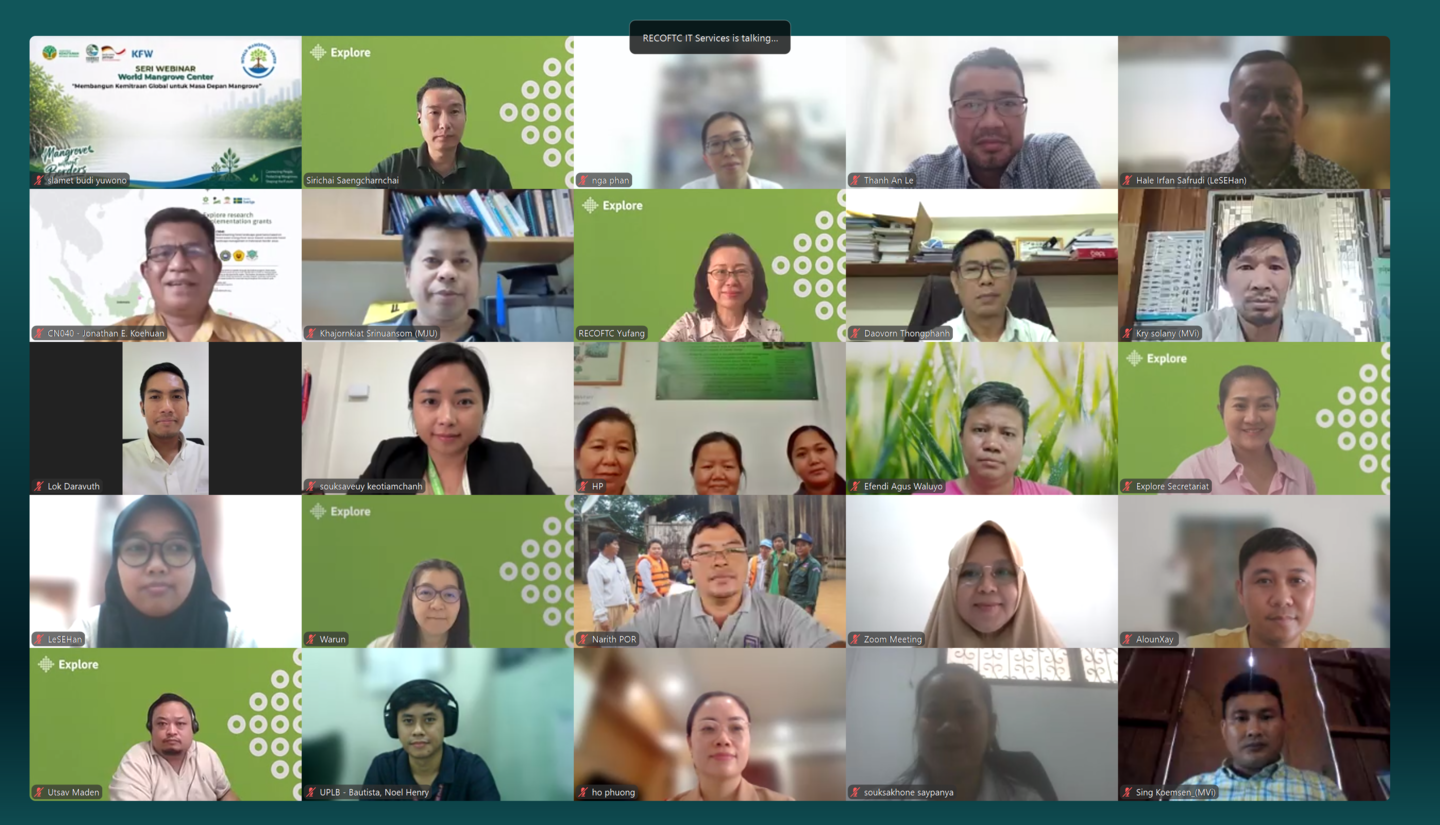

As part of Explore’s continuing support for research teams, the programme Secretariat at RECOFTC organized an online financial management clinic on 13 August 2026. The peer-learning event focused on early identification of financial risks, audit preparation and cross-border transactions.
It followed two financial management workshops delivered in 2026. The focus on fund transfers across countries, foreign exchange conversions and documenting expenses in remote areas was informed by a pre-clinic survey among participants. Responding to the survey, 80 per cent of the research teams had expressed interest in learning more about budget management and audit preparation.
Learning from peers
Finance focal points from two Explore research teams shared practical lessons from managing their respective projects.
Lecturer Phan Thi Quynh Nga from Vinh University in Viet Nam, shared experiences of audit preparation and procurement for a project active in Lao PDR, Myanmar and Viet Nam. With partners working across several countries, she emphasized the importance of maintaining consistent documentation and engaging auditors early to clarify requirements.
Hale Irfan Safrudi, director, and Syarifah R Kartika Sari, finance manager, from Lembaga Studi Ekosistem Hutan (LeSEHan), Indonesia, shared lessons from a project taking place in Indonesia and Lao PDR. Safrudi and Sari highlighted the importance of selecting banks with integrated international services. They also recommended initiating transfers early in the day to meet same-day processing cut-off times and preparing supporting documents in advance.
These presentations and discussions also addressed the challenges of documenting expenditure in remote areas where official receipts may not always be available. The presenters emphasized the importance of having clear procedures and maintaining a strong audit trail.
Identifying risks early
RECOFTC’s Yufang Su, programme manager for Explore, said, “Most projects don’t run into major problems overnight. It’s the small issues, left unaddressed, that accumulate and end up affecting delivery.”
She highlighted several early warning signs, including delayed financial reports, expenditure falling significantly behind implementation and high staff turnover. She stressed that regular review of financial and implementation progress can help teams identify issues before they affect project delivery.
Overall, the clinic reinforced the message that effective financial management is not simply about compliance. Planning ahead, maintaining clear documentation and communicating early emerged as key to managing financial risks and keeping implementation on track.
The peer-learning clinic will be followed by further learning opportunities, including a session on academic writing and publishing on 3 September 2026.