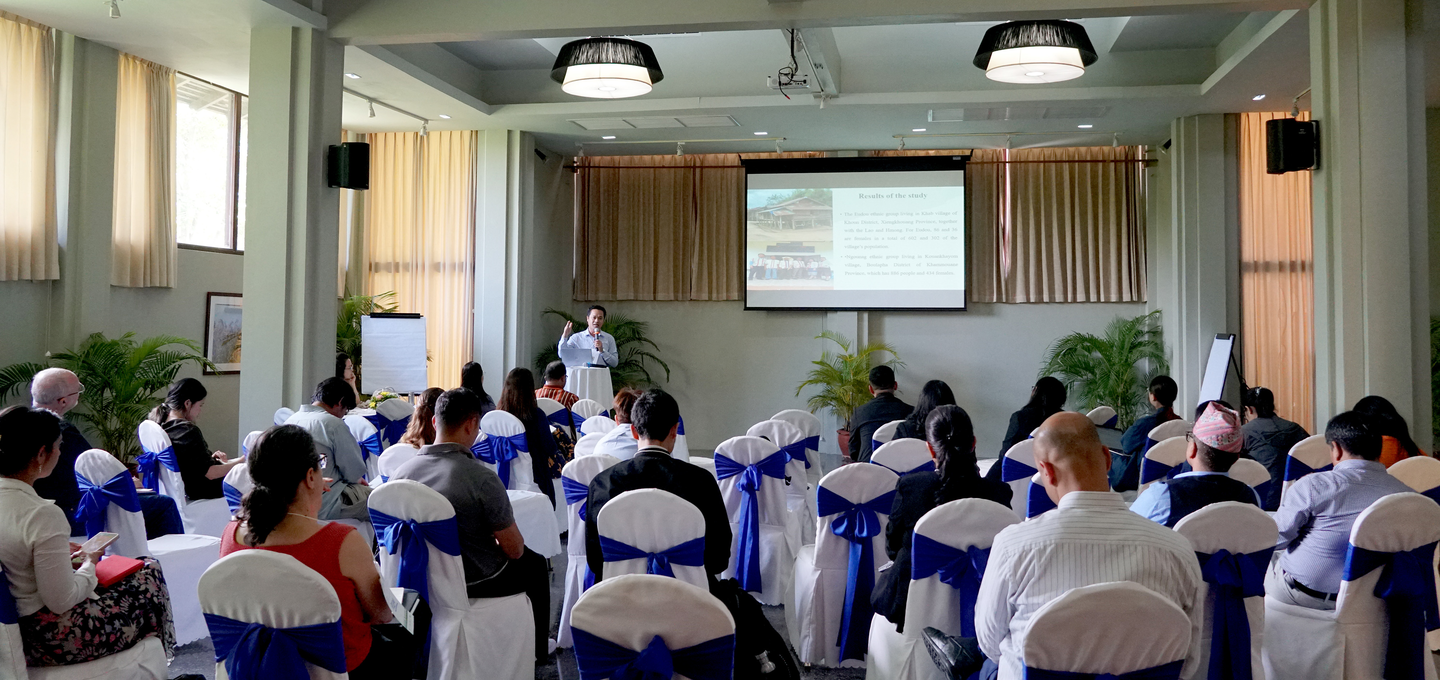
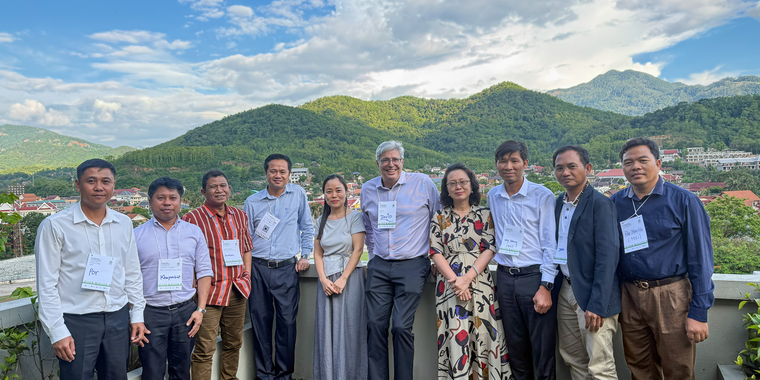
The Explore programme showcased research findings and community-based actions from across Southeast Asia at RECOFTC’s ‘Community forests for a biodiverse future: Governance, knowledge and action in the Asia-Pacific Region’ conference held in Luang Prabang, Lao PDR.
We brought together researchers from Cambodia, Indonesia, Lao PDR, Thailand and Viet Nam for a dedicated session. Speaking at the event, programme manager of Explore, Yufang Su, highlighted the programme’s growth during its second phase (2022–2027).
Indonesia: Linking forests, water, energy and food security
Jonathan Ebet Koehuan of Artha Wacana Christian University presented research from sites in Timor, Kalimantan and Papua in Indonesia’s border areas. Using structural equation modelling, their study has found that forest management influences water, energy and food security outcomes. The research team has initiated village stakeholder dialogues involving traditional leaders, women and youth to support the development of inclusive local governance regulations and encourage integrated management of the forest-water-energy-food nexus.
Lao PDR: Strengthening local environmental governance
Sypha Chanthavong of the National University of Laos presented findings from research involving the Eudou and Ngouang ethnic groups in Xiangkhouang and Khammouane provinces. The study highlights the central role women play in forest-dependent livelihoods and the challenges created by changing access to natural resources.
Their research has identified gaps between national commitments to gender equality and local governance practices. The team is working with communities to develop participatory village regulations on environmental management that build on existing local governance systems while ensuring women and youth involvement in decision making.
Viet Nam: Supporting community resilience
Ho Thi Phuong of Vinh University presented research from communities in the buffer zone of Pu Mat National Park, where nearly 40 per cent of households live below the poverty line. The study found a gender gap in livelihood resilience, with women scoring lower than men due to differences in access to social networks, training opportunities and other resources. Limited savings and insecure land rights were also identified as major constraints affecting community resilience.
The research team has implemented a range of community-based activities, including medicinal plant nurseries for 19 households, biosecure pig husbandry training for 15 women and climate-smart agriculture training for 22 participants. Gender integration plans have also been developed with two buffer-zone communes to support women's participation in climate adaptation initiatives.