Menu
News

Community forests show the way: Highlights from the regional biodiversity conference

Organized in the spirit of this year’s International Day for Biological Diversity theme – acting locally for global impact, a RECOFTC-organized conference examines how community forestry can contribute directly and measurably to the Kunming–Montreal Global Biodiversity Framework.
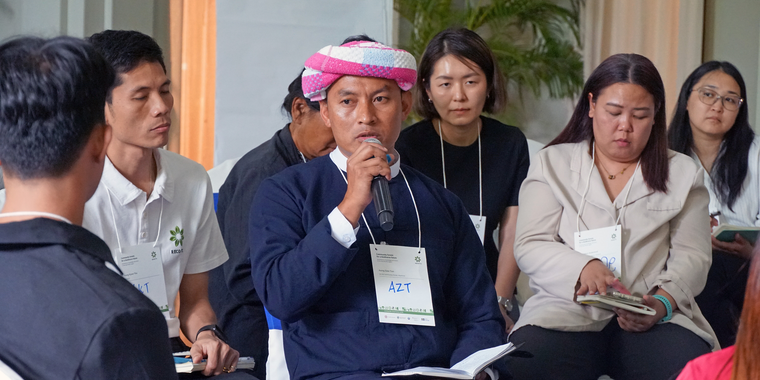
Indigenous Peoples speaking during a conference session on community forests and biodiversity.

Over 100 representatives from 15 countries – representing Indigenous Peoples, local communities and government, research and academic institutions and partners – gathered in Luang Prabang, Lao PDR from 25 to 29 May 2026 for the regional conference, ‘Community forests for a biodiverse future: Governance, knowledge and action in the Asia-Pacific region’.

The five-day conference, organized by RECOFTC in partnership with the Department of Forestry of the Ministry of Agriculture and Forestry of Lao PDR, Cornell University and Oregon State University, featured 13 technical sessions, one field visit and one working roundtable. Participants shared on-the-ground experiences and examined emerging evidence, policy and financing pathways to scale up community-led conservation.

Participants during the opening session of Community Forests for a Biodiverse Future.

Community forestry practitioners in forest protection

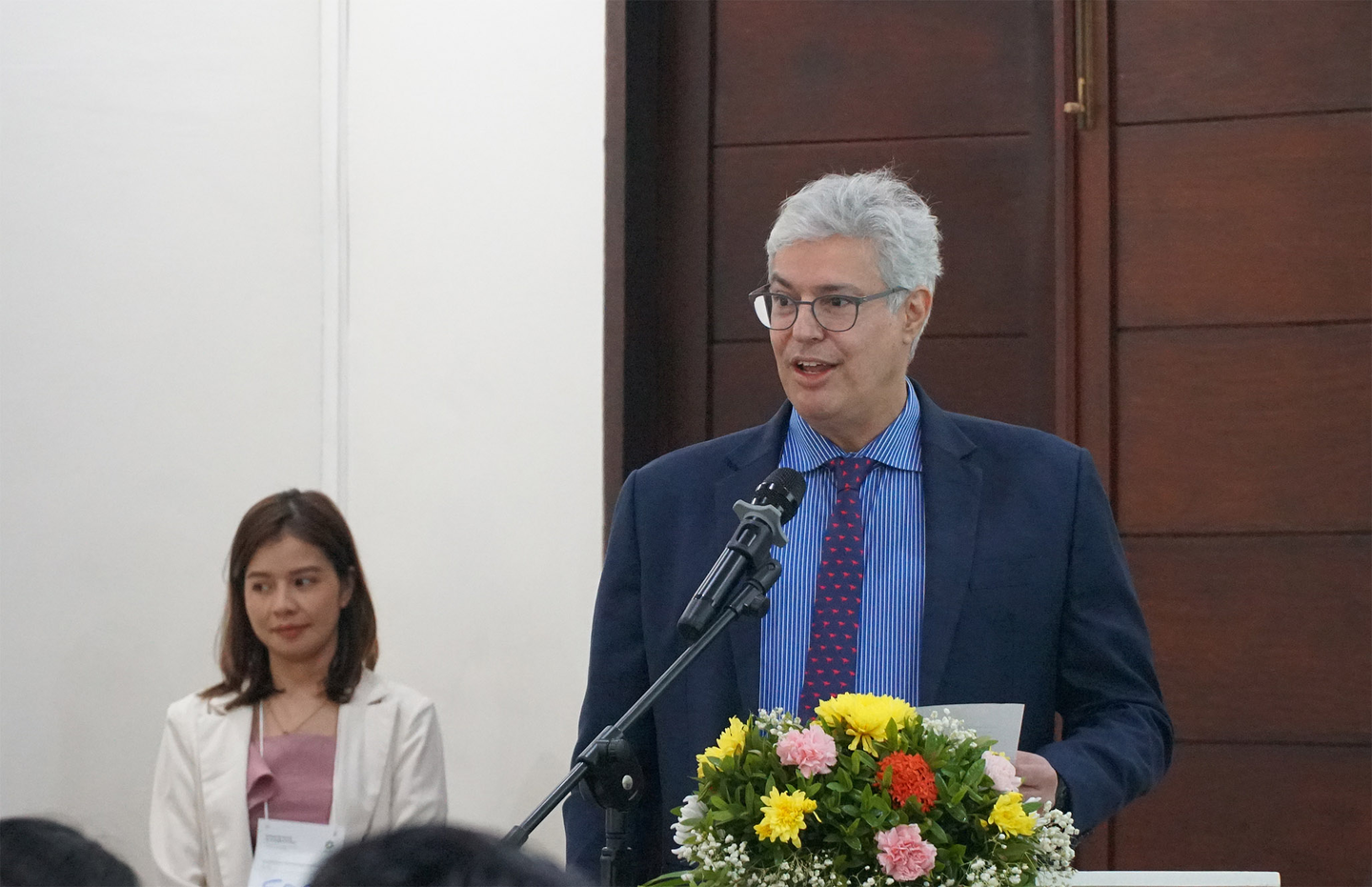
Speaking at the inaugural, David Ganz, executive director of RECOFTC, underlined that for community forestry practitioners, every day is International Day for Biological Diversity.

David ganz speaking at the biodiversity conference

Ganz stressed that Indigenous Peoples and local communities are key actors in forest restoration and protection. “Their knowledge and governance systems must be matched with stronger and better-aligned biodiversity and climate finance,” he said.

Representing the Government of Lao PDR, Orlahanh Boungnaphalom, deputy director general of the Department of Forests at the Ministry of Agriculture and Forestry, highlighted how community forests across the region are already helping to address the triple planetary crisis of climate change, biodiversity loss and pollution.

Orlahanh Boungnaphalom of Lao PDR’s Department of Forests speaking at the event.”

Boungnaphalom emphasized that these contributions can only be sustained and scaled with strong community governance, clear recognition of community rights and meaningful participation in decision-making from local to national levels.

Indigenous Peoples and local communities at the centre

Speaking on the first day of the conference, community facilitator Long Pisey from Cambodia spoke as a collective voice for youth, women and community members working to protect their forests. "The forest is not just part of our livelihood. It is our home, our culture and our life," she said. "We are the managers of biodiversity, and we cannot protect it without the full participation of women and youth on the ground."

Long Pisey seated in the front row on the left during the event.

Her words set the tone for the rest of the week. Community leaders from Cambodia, Lao PDR, Myanmar, Nepal and Thailand reinforced the message that when rights are secure and governance is inclusive, communities are among the most effective stewards of biodiversity.

Throughout the conference, discussions on gender and social inclusion underscored that women are often the first to see ecosystem change yet continue to face unequal land and resource rights and have limited access to finance and decision-making. Participants called for biodiversity and climate finance that meaningfully reaches women- and youth-led initiatives on the ground.

Participant speaking during a conference session

Evidence for policy and financing impact

The conference also served as a platform to share new research and knowledge products from the DISES project, an effort to understand how community forestry practices and governance impact community economics, forest cover and biodiversity. New releases include knowledge briefs on the impacts of community forestry on reducing deforestation and community motivations to participate in forest management

Drawing on spatial data, household surveys and field evidence, the papers and complementary governance and resource-mobilization materials coming out of the DISES project are designed to help decision-makers and practitioners translate robust evidence into policy and financing for community-led conservation.

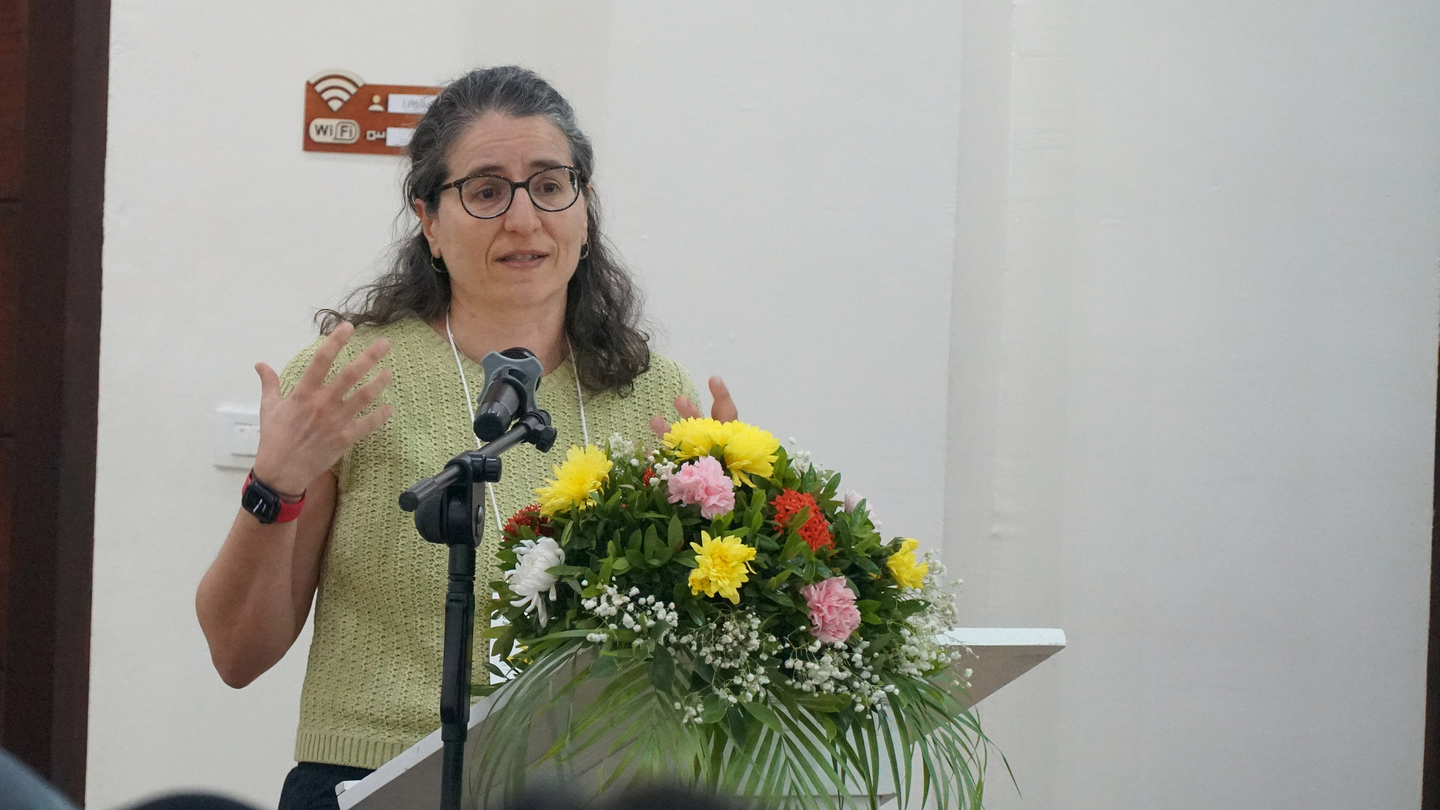
Reem Hajjar of Cornell University speaking during the conference.

Research lead, Reem Hajjar of Cornell University, said the research helps make community forestry more visible within policy debates. “Community forests are delivering real conservation impacts,” she said. “Using robust evidence helps make those contributions more visible and gives solid data for why community forests should be recognized and supported as part of national biodiversity and climate strategies.”

###

Mayan Mojado is communication and engagement manager at RECOFTC.

‘DISES: Modelling interactions between community forest dynamics and local livelihoods amidst institutional changes’ is an interdisciplinary research initiative led by researchers at Cornell University, Oregon State University, Spatial Informatics Group and RECOFTC. Through national-level and landscape-level analyses, the study evaluates the effects of community forest management on forest cover, biodiversity and community livelihoods. The work is funded by the U.S. National Science Foundation program on the Dynamics of Integrated Socio-Environmental Systems.