
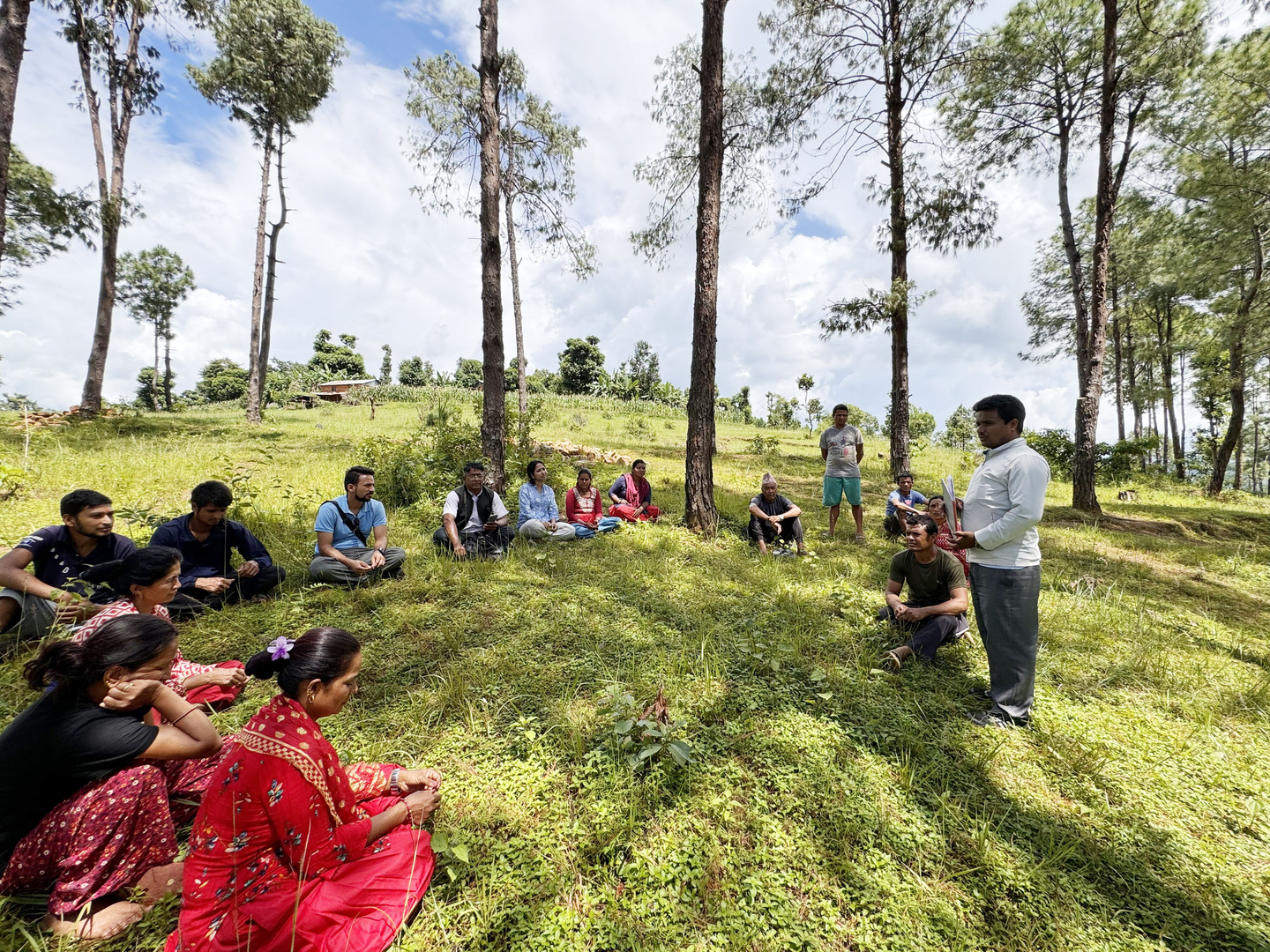
In Nepal's mid-hills, communities are self-financing recharge ponds and taking ownership of their water future
In Sindhupalchok, Nepal, around 400 households from two community forest user groups are supporting the construction of recharge ponds to strengthen water security. These ponds collect rainwater, letting it slowly percolate into the ground to replenish aquifers that feed community springs and wells.
Nature-based solutions for water security
In 2024, RECOFTC provided support to the community forest user groups of Bimreni and Tamakhani to build one recharge pond each to show that these nature-based solutions help revive water sources. Ward 13 of Sindhupalchok's Chautara Sangachokgadhi Municipality even provided matching funds for this phase.
Both community forest user groups have since built community support and partnerships with local government and the Division Forest Office to construct two more ponds in Tamakhani and one more in Bimreni, bringing the total to five ponds in their ward.
