
Buffer zone user committees in Chitwan National Park become more representative through legal reform
Buffer zone user committees (BZUCs) in Nepal's Chitwan National Park hold an important space between park authorities and local communities. They support the co-management of resources and ecosystems within buffer zones, ensuring communities and conservation authorities share responsibility for managing the land.
However, BZUCs also present governance challenges. Unclear legal roles and limited representation can weaken their ability to function effectively, and some have been operating with expired five-year mandates. Furthermore, Indigenous Peoples and marginalized groups, who actually live alongside the park, have often had limited influence in decision making.
From assessment to reform
Through the 'Scaling-up equitable governance in area-based conservation' (SEGA) project, RECOFTC Nepal conducted participatory assessments of governance and equity in Chitwan's BZUCs. Using the 'site-level assessment of governance and equity' (SAGE) approach, we worked with 10 BZUCs to identify governance gaps and support more inclusive processes.
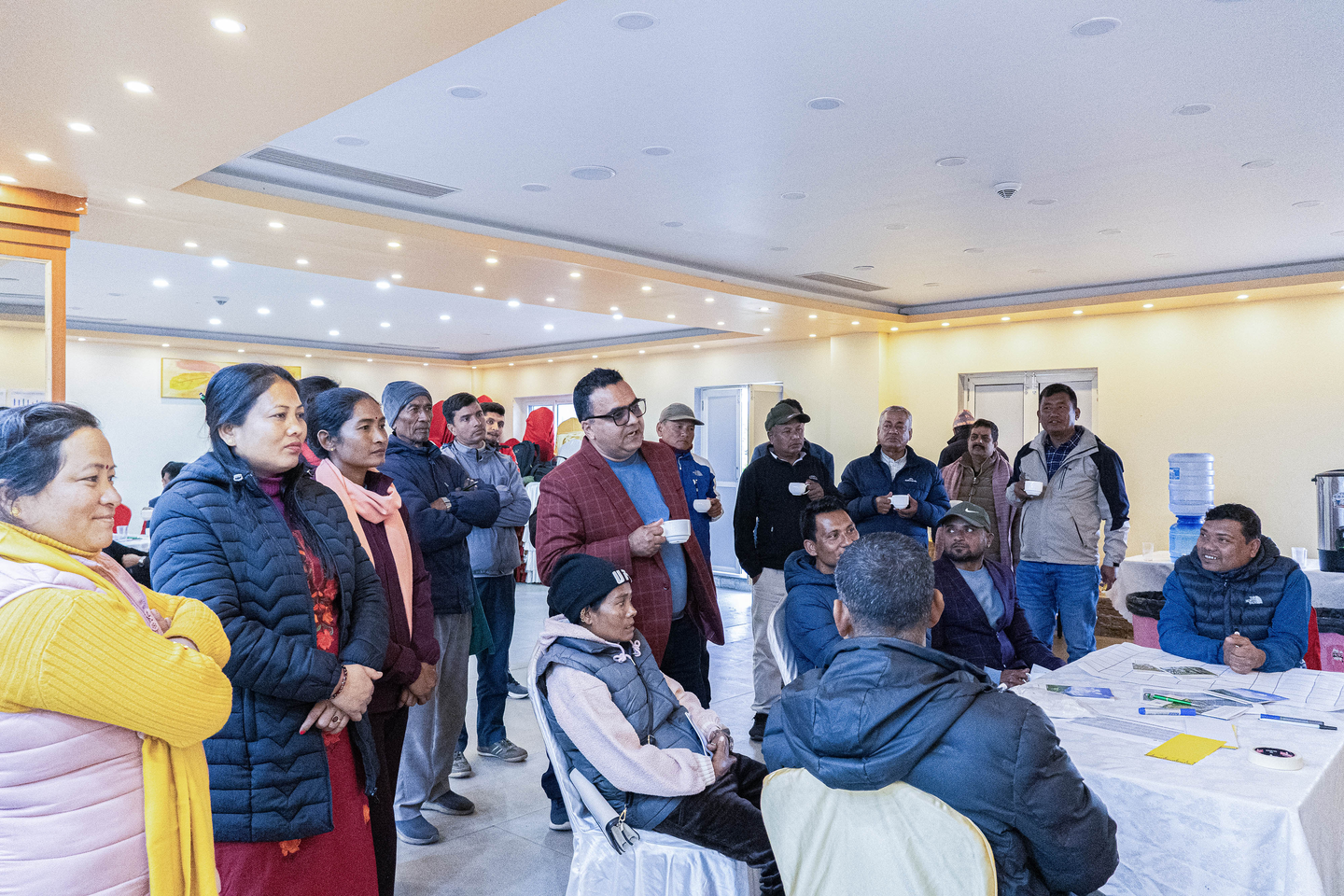
The work included conservation-related legal literacy programmes and governance orientation sessions for BZUC members. These sessions covered conservation laws, buffer zone management guidelines, the BZUC reformation process and barriers to inclusion.
As a result, by 2025, five BZUCs had been legally reformed and institutionalized with renewed five-year mandates and more inclusive structures. Other BZUCs are undergoing reformation processes, with progress made towards stronger representation of Indigenous Peoples and local communities.
Strengthening institutions through inclusion
The reformed BZUCs have already begun putting community priorities at the centre of buffer zone management. This includes distributing relief funds for human–wildlife conflict, protecting buffer zone forests and supporting community-based conservation activities.
"Our members have lived their whole lives along these buffer zones," said Maya Ram Chaudary, Chair of the reformed Meghauli BZUC. "They know how the animals move and how the forest behaves across seasons. They know what it means to manage resources in the buffer zone."