Menu
Seedling delivery for coffee farming in Viet Nam
Ensuring forest landscapes provide climate solutions

Moving beyond monoculture in Viet Nam’s coffee farms

Coffee farmers in Lam Dong are adopting more diversified farming systems that improve soil health, strengthen resilience and reduce pressure on surrounding forests.

Much of the coffee landscape in Viet Nam's Lam Dong province remains dominated by monoculture. Over time, this model has contributed to soil acidification, declining and contaminated groundwater and continued pressure on surrounding forests.

Rethinking how coffee is grown

Beginning in December 2024, RECOFTC Viet Nam worked with coffee farmers in Da Lat and Dam Rong 4 communes of Lang Biang Ward through locally led research to explore practical alternatives to monoculture farming. We used the Farmer Field School approach to support practical, farmer-led learning as we examined the limitations of existing production systems to explore practical alternatives.

The research identified common challenges across farms: routine use of chemical inputs, dependence on a single crop and limited opportunities to diversify household income. By September 2025, 56 households had committed to testing alternative approaches through demonstration sites.

Farmers visited successful shade-grown coffee farms, joined study tours across Lam Dong and neighbouring Dak Lak province, and exchanged experiences through farmer-to-farmer learning. Rather than introducing unfamiliar techniques, the activities allowed farmers to observe what was already working in conditions similar to their own.

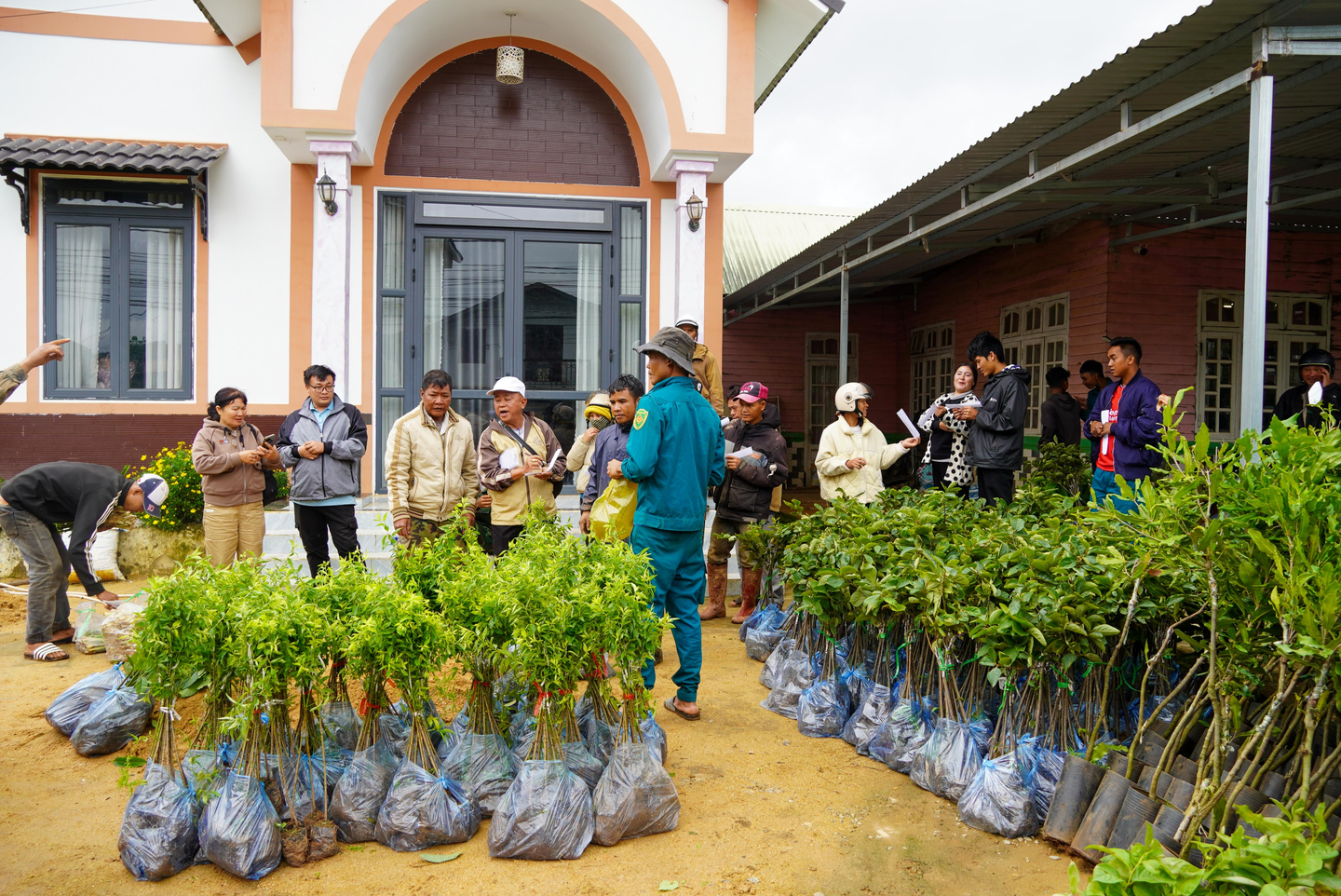
Study visit on sustainable coffee farming in Viet Nam

Diversifying the farm

Participating households have begun intercropping fruit trees — avocado, persimmon and macadamia — into existing coffee plots. They are also pruning old coffee trees and planting annual crops like lemongrass, pumpkin and black bean alongside new coffee plantings.

On a typical 1,200-square-metre coffee plot, intercropped fruit trees are expected to generate an average of USD 76 (VND 1,840,650) during their first year of fruiting, increasing to more than USD 180 (VND 4,733,100) from the third year onwards. Annual intercrops already provide supplementary food and income while reducing farmers' dependence on coffee alone.

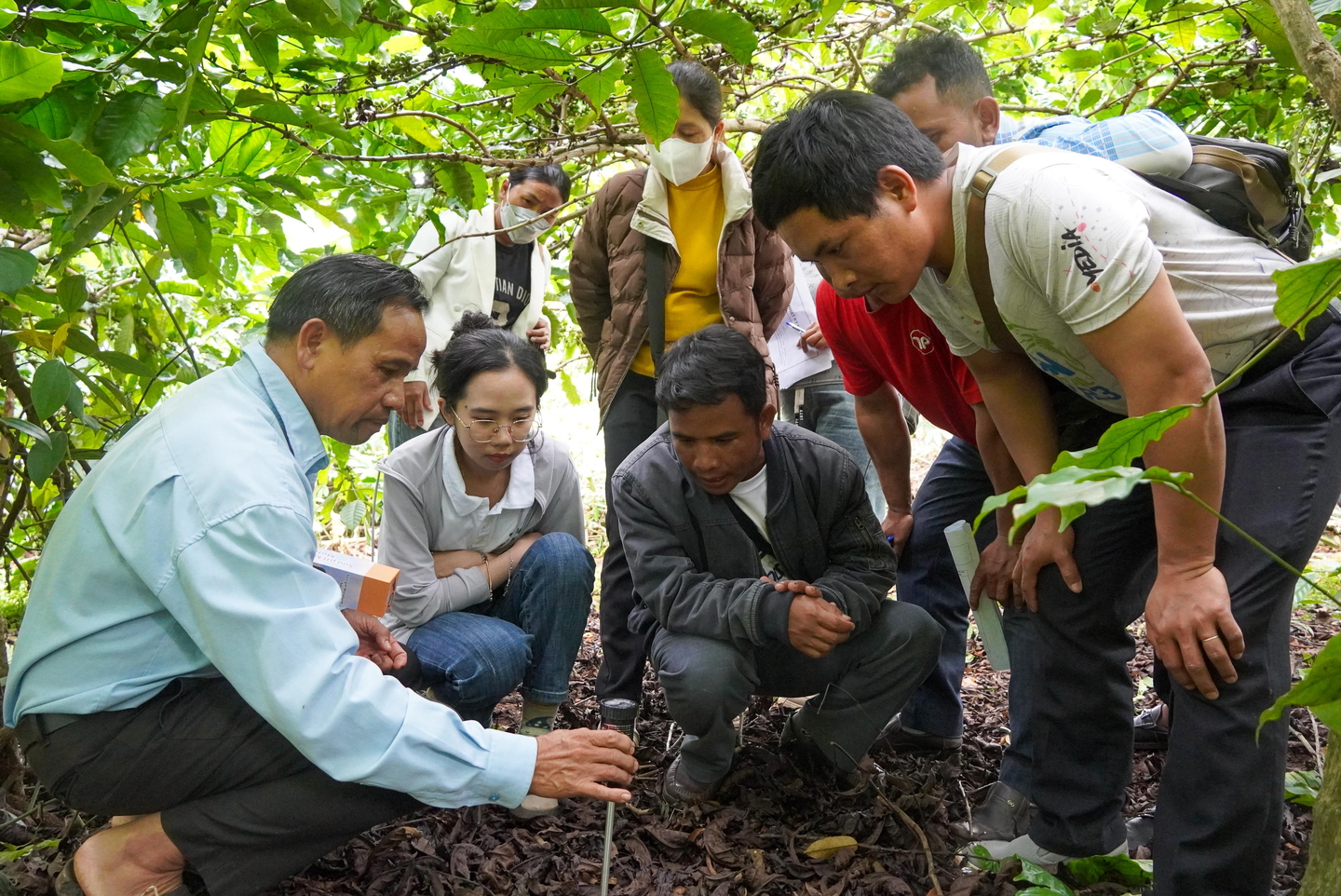
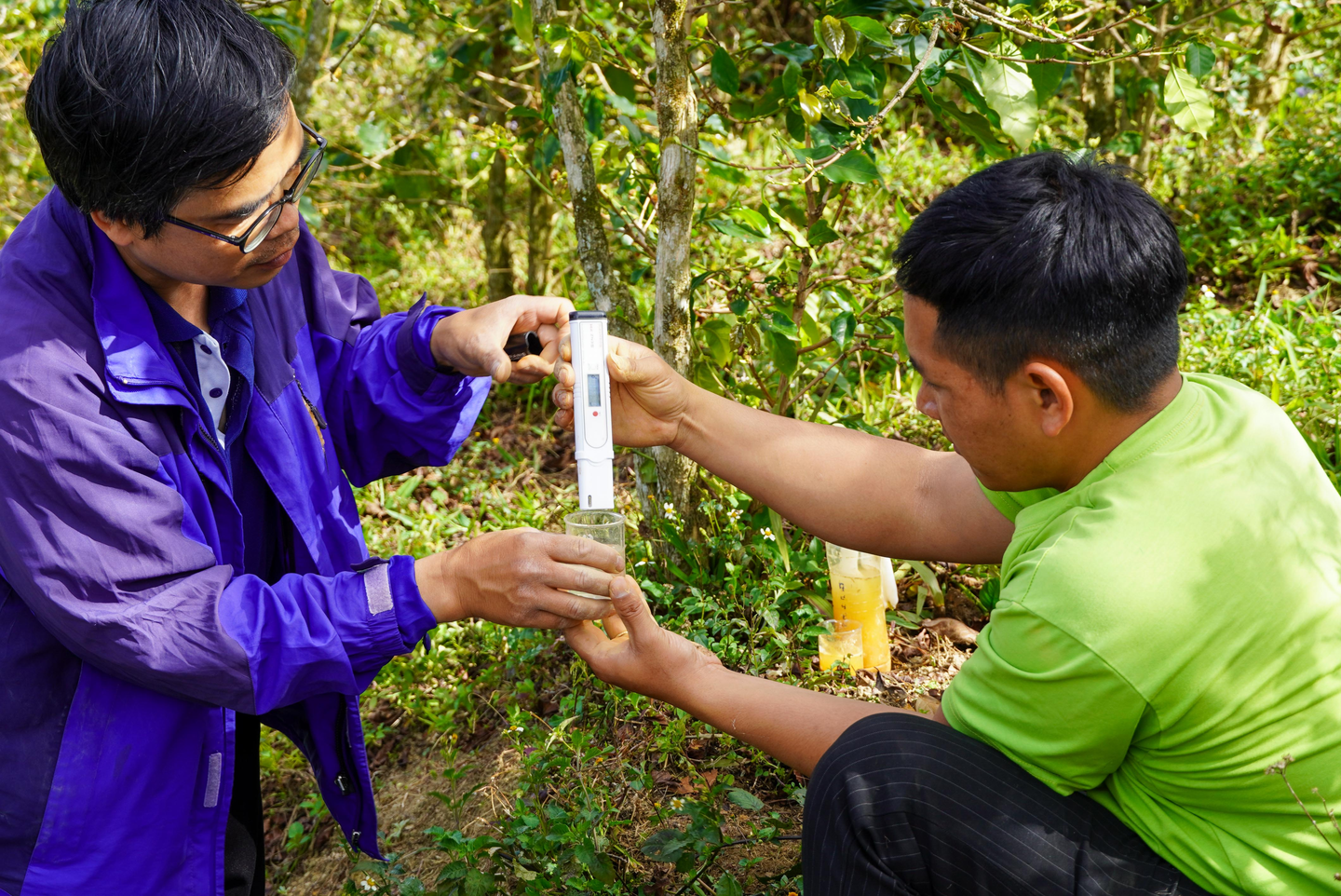
Soil and water training for coffee farming in Viet Nam

The integration of fruit trees will diversify farmers' incomes while reducing heat stress on coffee plants and improving soil quality. Already, some farmers are producing compost from locally available materials and planting vetiver grass to stabilize slopes on their land. Many have reduced herbicide use, opting instead for techniques like mulching and weeding to suppress weeds and regulate moisture.

For now, these changes remain modest in scale, but they demonstrate practical ways to build more resilient farming systems. The community members are moving towards diversified production, improved soil, groundwater health and climate resilience one coffee plot at a time.